- Empty cart.
- Continue Shopping

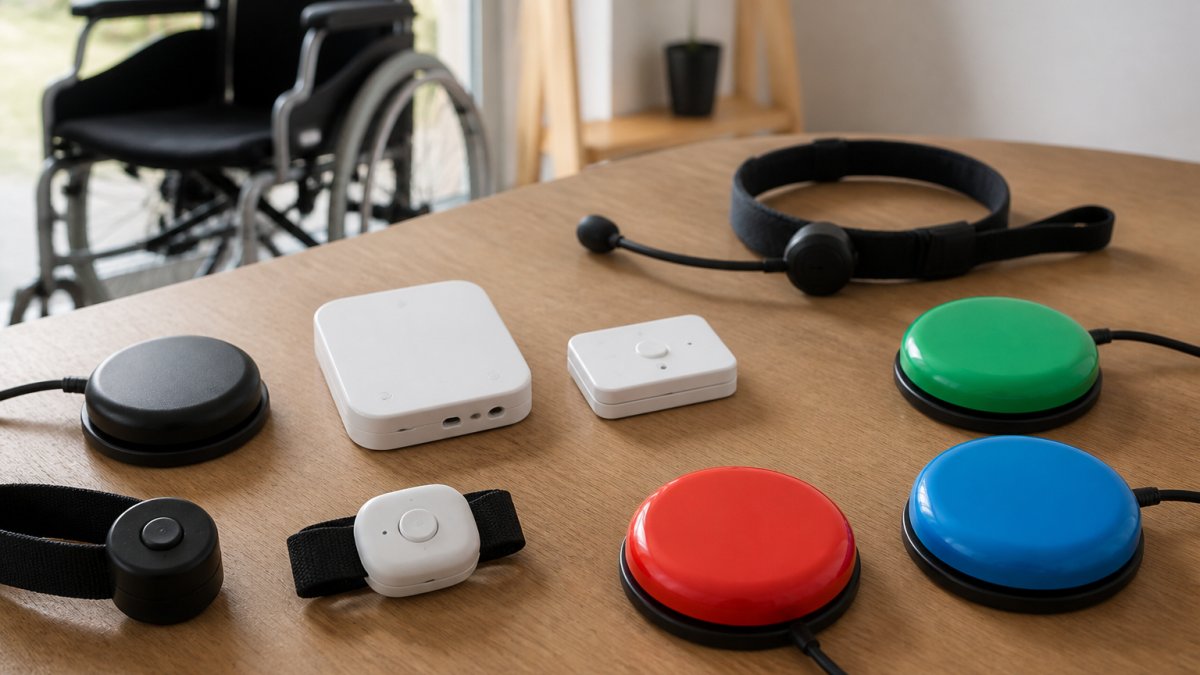
Table of Contents
- What Wireless Switch Kits for Disability Support Actually Do
- Adaptive Switches for Limited Mobility
- Accessible Lighting Controls Without Rewiring
- Wireless Switch Compatibility Across Your Home
- Switch Access for Assistive Technology Integration
- Cost and Labour Savings for Installers and Homeowners
- Why Wireless Switch Kits Matter for Disability Environments
- Frequently Asked Questions
Last Updated: 14 October 2026
What Wireless Switch Kits for Disability Support Actually Do
Wireless switch kits for disability support transform how people interact with their environments. Instead of struggling with fixed wall switches, users can control lighting and electrical devices from anywhere in a room, or from across the home, using remote controls, mobile apps, or voice commands.
For people with limited mobility, arthritis, or other disabilities, this flexibility matters enormously. A person using a wheelchair doesn’t need to navigate to a wall switch. Someone with tremors can use a stable remote instead of reaching for a precise button. Families managing aged care environments can adjust lighting without disturbing a sleeping resident.
The core technology is straightforward: wireless modules replace the need for rewiring walls. Instead of running new cables through plasterboard, electricians install a receiver module behind an existing switch or light fitting. The system pairs with wireless remotes or apps. No structural changes. No weeks of renovation dust.
Wireless switch kits for disability support aren’t a luxury, they’re a practical solution that restores independence and dignity. When someone can control their own lighting without asking for help, that changes how they experience their space.
Adaptive Switches for Limited Mobility
Adaptive switches for limited mobility address a real problem: standard wall switches assume a level of dexterity and reach that many people don’t have. A person with cerebral palsy might struggle with the fine motor control a traditional switch requires. Someone recovering from a stroke needs options that work with their current abilities, not their pre-injury baseline.
Wireless switch kits solve this by offering multiple control methods. A large wireless remote with oversized buttons works for people with limited dexterity. A voice-activated option suits those who can’t reach or manipulate physical controls. A mobile app lets someone control lights from bed or a comfortable chair.
The practical benefit is straightforward: control moves from the wall to wherever the person is. No more calling out for help. No more navigating across a room to reach a switch. The person regains agency over their immediate environment.

For electricians installing these systems, the workflow is simpler than traditional rewiring. You’re not chasing cables through walls or coordinating with plasterers. You install the receiver module, pair the remote, and test. The installation time drops significantly compared to running new circuits.
Caregivers also benefit. Instead of manually adjusting lights for a resident, the caregiver can control them from the doorway or from another room. During night shifts, this reduces disruption, a caregiver can adjust lighting without entering a dark room or waking a sleeping resident unnecessarily.
Accessible Lighting Controls Without Rewiring
The traditional approach to upgrading lighting control means one thing: rewire the walls. Run new cables from the switch to the light fitting. Patch plasterboard. Paint. It’s expensive, disruptive, and often impractical in heritage properties or rented homes where structural changes aren’t permitted.
Wireless switch kits for disability support sidestep this entirely. The system works with existing wiring. You install a small receiver module at the light fitting or behind the current switch. The wireless remote communicates with that module. No new cables running through walls. No plasterboard damage.
This approach has real advantages for older buildings. Many heritage homes have limited or awkwardly positioned switches. Running new wiring would require consent from heritage authorities or landlords. A wireless retrofit avoids that friction entirely.
For renters, the benefit is even clearer. A tenant can install wireless controls without losing their deposit or needing landlord approval for permanent changes. When they move, the system comes with them, it’s not tied to the property.
The cost difference matters too. Rewiring a room or property involves electricians, plasterers, painters, and time. Wireless installation is faster and requires fewer trades. For homeowners and property managers, that translates to lower labour costs and less disruption.
Wireless Switch Compatibility Across Your Home
A key question for anyone considering wireless switch kits for disability support: will the system work throughout the home, or are you locked into one room or one type of fitting?
Compatibility varies by system, but the best options work across different light types and fittings. A wireless module should pair with ceiling lights, wall lights, downlights, and portable lamps. Some systems work with existing dimmers. Others integrate with smart home platforms, voice assistants, mobile apps, automation routines.
This flexibility matters in practice. A person doesn’t want separate systems for different rooms. They want one remote or app that controls all their lights. They want consistency in how the system works, whether they’re in the bedroom, kitchen, or lounge.
When evaluating wireless switch kits for disability support, ask whether the system supports:
- Multiple light fittings in one room
- Different room zones controlled from one remote
- Integration with voice assistants (if the user prefers voice control)
- Mobile app control from anywhere in the home
- Dimming and on-off functionality
The best systems let you add modules gradually. Install in the bedroom first. Add the lounge next month. Expand to the kitchen when budget allows. You’re not locked into a full-home installation upfront.
For caregivers managing multiple properties, aged care facilities, group homes, rental properties, system compatibility across different building types matters. A system that works in modern apartments should also work in older homes with different wiring configurations.
Switch Access for Assistive Technology Integration
Some users benefit from integrating wireless switches with broader assistive technology. A person using eye-tracking software might want their lights to respond to eye-gaze commands. Someone using a speech-controlled device might want voice integration. A person with severe mobility limitations might use a head pointer or sip-and-puff switch.
Modern wireless switch kits for disability support increasingly support this kind of integration. Systems that connect to smart home platforms can pair with various assistive devices. A user’s existing technology stack, whatever they already rely on, can potentially control the lights.
This integration isn’t universal yet. Before purchasing, check whether the wireless system integrates with the assistive technologies the user already depends on. Some systems work with mainstream voice assistants. Others require custom integration or don’t support it at all.
For families and caregivers, this is worth investigating early. The goal is to reduce the number of separate remotes, apps, and control methods someone needs to manage. Consolidation reduces cognitive load and simplifies daily life.
Cost and Labour Savings for Installers and Homeowners
Electricians and installers see immediate cost benefits. A traditional lighting upgrade means running new circuits, coordinating with other trades, managing site disruption. Wireless switch kits for disability support cut installation time substantially.
No wall chasing. No new cables. No plasterboard repair. The electrician installs the module, pairs the remote, tests the system, and finishes. The job takes hours instead of days. Labour costs drop. The electrician can move to the next job faster.
For homeowners and property managers, the maths is equally clear. A full rewire of a property is expensive. A wireless retrofit costs significantly less. The property still gains modern lighting control, just without the structural changes and extended timeline.
Renters benefit most. They get modern control without permanent changes. No bond disputes. No landlord negotiations. The system is theirs to take when they move.
For aged care facilities and disability support environments, scaling matters. Outfitting multiple rooms or multiple properties with wireless control is cheaper and faster than traditional rewiring. Budget stretches further. More residents get better control over their environment.
The trade-off is worth understanding: wireless systems can offer significant cost savings when factoring in installation labour, disruption, and the cost of other trades, leading to a lower total project cost for many applications.
Why Wireless Switch Kits Matter for Disability Environments
In disability support settings, aged care homes, group homes, rehabilitation facilities, environmental control is about more than convenience. It’s about dignity and independence. When someone can control their own lighting, they’re not dependent on staff or family to adjust their environment.
This autonomy matters psychologically. It reduces learned helplessness. It gives the person agency over their immediate surroundings. Over time, that contributes to better wellbeing outcomes.
For staff and caregivers, wireless systems reduce workload. Instead of manually adjusting lights for multiple residents, carers can focus on direct care. Night shifts become less disruptive, lighting adjustments don’t require entering a dark room or waking sleeping residents.
The technology is straightforward. The human impact is significant.
For electricians and builders, wireless switch kits for disability support represent a growing market. As awareness of accessibility needs increases, demand for these systems will grow. Early adoption positions installers as specialists in accessible design, a valuable differentiator.
Frequently Asked Questions
What is a wireless switch kit for disability support?
A wireless switch kit for disability support is a plug-and-play automation system that allows users to control lighting without traditional wall switches. Instead of rewiring walls, the system uses wireless modules that communicate with receivers, enabling control via remote, mobile app, or voice commands. This is particularly valuable for people with limited mobility, dexterity challenges, or those managing aged care environments where accessible lighting control improves independence and safety.
Can wireless switch kits work in older homes with no neutral wire?
Many older properties lack neutral wires in their switch circuits, which can complicate traditional smart home installations. Wireless switch kits bypass this issue entirely because they don’t require in-wall rewiring. The system operates independently of your existing electrical circuit configuration, making it compatible with older setups. Always verify compatibility with your specific installation before purchasing, and consult an electrician if you’re unsure about your property’s wiring.
How do wireless switch kits integrate with assistive technology?
Wireless switch kits for disability support often connect with mobile applications, voice assistants, and remote controls, making them adaptable for various assistive technologies. Users with limited hand strength can operate lighting via voice commands or large-button remotes. Some systems allow customisation of control methods, so caregivers can set up the most accessible option for each individual. This flexibility is essential in disability support environments where one-size-fits-all solutions don’t work.
Are wireless switch kits cheaper than running new wiring?
Wireless switch kits can offer significant cost savings compared to running new wiring because they eliminate the labour-intensive process of cutting walls, running cables, and making good after installation. There’s no need for electricians to spend hours on rewiring work. The exact cost comparison depends on your property size, complexity, and local labour rates, but the plug-and-play nature of wireless systems can reduce both material and installation costs. Contact Gem Wireless for a quote tailored to your situation.
Accessibility in the home isn’t a niche concern, it’s a practical need for millions of people. Wireless switch kits for disability support remove barriers and restore control. If you’re managing a property, planning a renovation, or supporting someone with limited mobility, the technology deserves serious consideration. Get in touch with Gem Wireless today to discuss how wireless automation can transform your space.
accessible lighting controlsadaptive switches for limited mobilityswitch access for assistive technologywireless switch compatibilitywireless switch kits for disability support