- Empty cart.
- Continue Shopping
Can You Put a Light Switch on Any Wall? Your Australian Guide
- Posted on
 Strong Digital
- 0
- Categories: Uncategorized
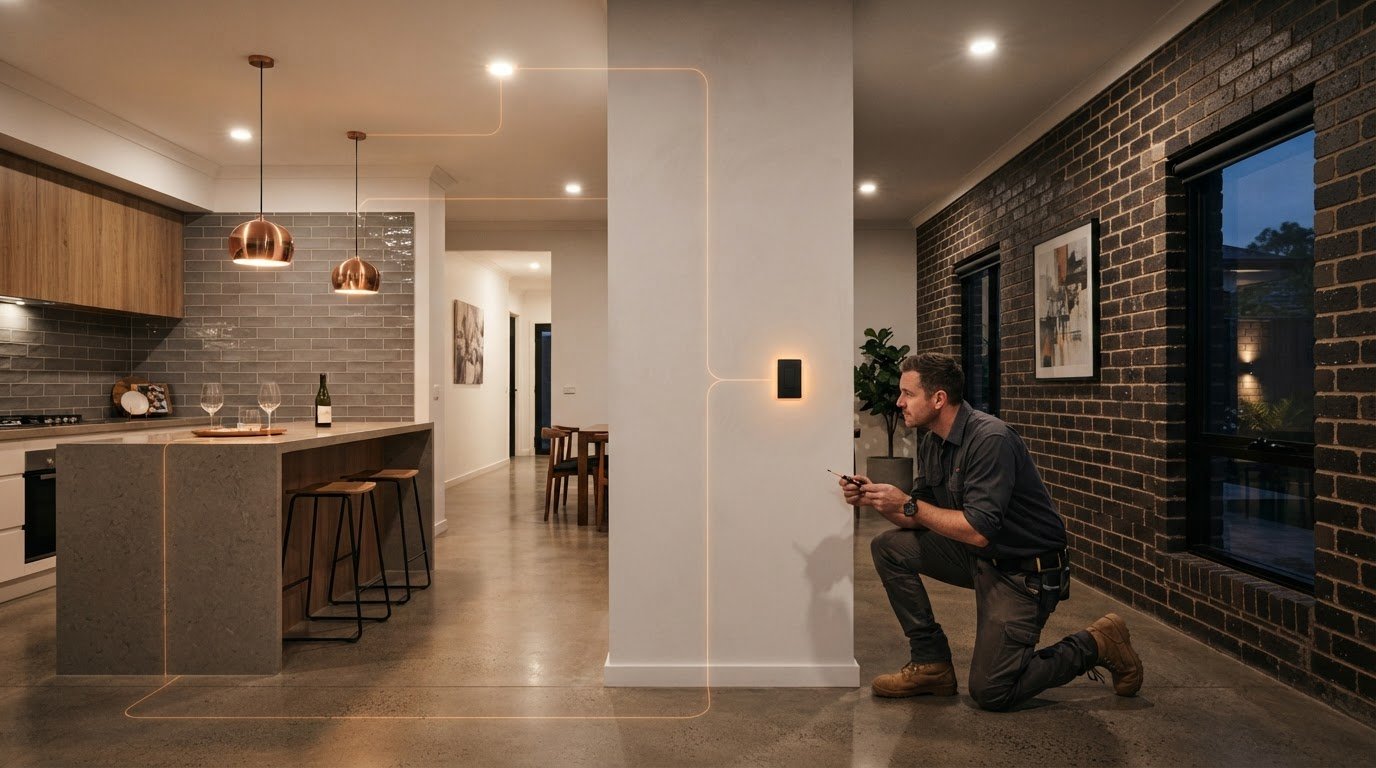
What if the wall you want is across the room, behind a tiled splashback or made of brick? If you’re asking, “can you put a light switch on any wall?”, the short answer is often yes, but the wiring route, wall construction and lighting circuit determine what’s practical.
It’s reasonable to worry that a new switch means cutting into finished walls. A wired switch may need a new cable run, but wireless switching offers another option. Gem Wireless systems connect the control point and light without rewiring for the wireless control link. The receiver still needs an electrical connection, so a licensed electrician must handle that work.
This guide explains what affects switch placement, when a new cable may be needed and how wired and wireless approaches compare. You’ll also learn why hardwired electrical work in Australia isn’t a DIY job, so you can plan a suitable location with safety in mind.
Key Takeaways
- Wondering “can you put a light switch on any wall”? The location may be possible, but wall construction and access to the lighting circuit affect your options.
- A new wired switch may need a cable route to the light, which can mean accessing the wall or ceiling.
- Compare a new wired switch, wireless control and keeping the existing switch to see which suits your wall and how you want to control the light.
- Before choosing a location, identify the light, current controls and whether you want to move a switch or add another control point.
- Gem Wireless hardware works with existing switches and lights, offering an option when a new cable run would otherwise be needed.
Can you put a light switch on any wall? The short answer
Usually, yes, but the wall and the way the switch connects to the light matter. A new wired switch needs an electrical connection to the lighting circuit. Reaching your preferred position may mean running a cable behind or through a wall, ceiling or floor, depending on the building and existing wiring.
Moving a switch and adding another control point are different jobs. Relocating a switch changes where the light is controlled from. Adding a point lets you control the same light from a new position while keeping the existing switch. The two goals can require different wiring arrangements, so decide which outcome you want before choosing a wall.
So, can you put a light switch on any wall? Placement is often flexible, but not every wall or lighting setup suits every approach. Hardwired electrical work in Australia must be carried out by a licensed electrician. A general overview of light switch types and design can help explain the basics, but an electrician needs to assess the specific installation.
What can make a wall suitable for a light switch?
The key question is whether the intended position can be reached safely from the relevant circuit. Wall construction, nearby access points and available cable routes all affect the work involved. A wall that’s easy to access may present a different job from solid masonry or a finished surface you’d prefer not to disturb. Where mounting onto uneven wall surfaces or tiled splashbacks is required, solutions from SocketSpacers.com can provide custom-fit spacer plates to ensure switches sit flush and securely.
Consider everyday use as well. A switch should be convenient to reach, with a clear approach that won’t be blocked by furniture, doors or other fixtures. These practical details can help narrow down the location before the electrical layout is assessed.
- Identify which light or group of lights you want to control.
- Note where the current switch is and where you’d prefer the control.
- Consider the wall material and whether nearby spaces may provide cable access.
- Decide whether you want to move the switch or add another control point.
Does a wireless switch mean no electrical work?
No. Wireless switching separates the control signal from the electrical supply to the light. A wireless control communicates with a receiver connected to the lighting setup. This can avoid running a new cable between the preferred switch position and the light, but it doesn’t make the whole installation wireless.
A receiver or mains connection may still need to be installed by a licensed electrician. The wall position, light and existing circuit affect whether a wireless option is suitable. Gem Wireless switching hardware works with existing switches and lights. For more detail on this approach, see the no-rewire lighting control guide.
You may have more placement options than the existing wiring first suggests. Compare the access needed for a new wired switch with the flexibility of wireless control, then have the proposed setup assessed before electrical work begins.
How wired light-switch placement depends on the wall and circuit
A wired switch forms part of the lighting circuit that controls a light fitting. Its position isn’t determined by the wall alone: the switch must connect to the existing electrical arrangement, and a new location needs a suitable cable route. The distance to accessible wiring points and the building’s construction can both affect the scope of the work.
That’s why “can you put a light switch on any wall” is partly a question of access. In a home with accessible ceiling space, a cable route may be more straightforward than in a room with solid walls, limited access or carefully finished surfaces. The circuit and existing switch arrangement also need to be assessed. No two walls are automatically the same job.
What changes when you move or add a wired switch?
Moving an existing switch means changing its position while retaining control of the light from the new location. Adding a second control point aims to let you operate the same light from another spot as well. The existing arrangement and available cable route influence what’s involved, so these options shouldn’t be treated as interchangeable.
For example, shifting a switch to the other side of a doorway may seem like a small change, but a solid wall or other building features could complicate the cable route. Adding a control point elsewhere may require a different approach. A suitably licensed electrician can assess the circuit and explain what the proposed change involves. Don’t open walls or alter fixed wiring yourself.
Why a finished wall can affect the job
Behind a painted surface or wall lining, framing and other concealed features can limit where a cable can pass. The route may need access from another part of the building, or it may involve disturbing the wall lining. Solid masonry can present different access challenges from a wall with a cavity. The distance to the circuit matters too, but a short route isn’t always possible if the building layout blocks access.
Wall access, not just switch position, shapes the complexity of a wired installation. If the work requires opening a finished surface, patching and repainting may be part of the overall planning. Discuss likely access points and surface repairs before work begins, so you can weigh the preferred switch position against the disruption involved.
In Australia, fixed electrical wiring work must be handled by a suitably licensed electrician, with requirements administered under state and territory rules. The AS/NZS 3000 Wiring Rules provide the national wiring framework for electrical installations. If running another cable may be difficult, explore wireless switching hardware as an alternative to a new control cable. It can offer more placement flexibility, although the electrical connection to the light may still require professional work.
Wired versus wireless light switches: which suits your wall?
The best approach depends on how far the new position is from the current switch and how easily it can connect to the existing light. A wired switch relies on a suitable cable route. Wireless control can avoid running a new cable between the control point and light. Keeping the existing switch avoids changing its location, but won’t add control where you want it.
| Option | Disruption | Placement flexibility | Wiring and professional involvement |
|---|---|---|---|
| New wired cable | May involve access to walls, ceilings or other parts of the building. | Depends on whether a practical cable route reaches the chosen position. | Depends on existing wiring; fixed electrical work needs a suitably licensed electrician. |
| Wireless control | Can avoid a new cable run between the control point and the light. | Can offer more choice where a cable route is difficult. | A receiver or mains connection may still need professional installation. Suitability depends on the light, circuit and hardware. |
| Keep the existing switch | No new switch location to create. | No added control point. | Doesn’t require a change to the switch position; any other electrical changes still need professional assessment. |
When a wired switch may be the straightforward option
A wired approach may make sense if there’s accessible wiring and a practical route to the intended wall. For instance, access through a ceiling space could make the cable path easier to assess than a route through a solid or finished wall. The electrician will consider the existing circuit and switch arrangement, then complete any fixed electrical work. The scope depends on the property, so don’t assume a short distance means a simple job.
When wireless switching may make placement easier
If the preferred switch position is separated from the light by a finished surface or difficult cable path, wireless control may reduce the need to run a new switch cable. The control signal is wireless, but the light still needs an electrical supply and a compatible connection. Switch modules and kits provide different hardware options for wireless switching. The right fit depends on the existing light, circuit and selected hardware.
Gem Wireless switching hardware works with existing switches and lights. Wireless control doesn’t necessarily remove all electrical work. The control link may simplify the route to a new control point, while the receiver or mains connection may still need installation by a licensed electrician. The wireless light switch kit guide explains the kit approach in more detail.
So, can you put a light switch on any wall? Compare the cable route, likely access and whether you want to relocate a switch or add another control point. Then have the light and circuit assessed before settling on wired or wireless control.
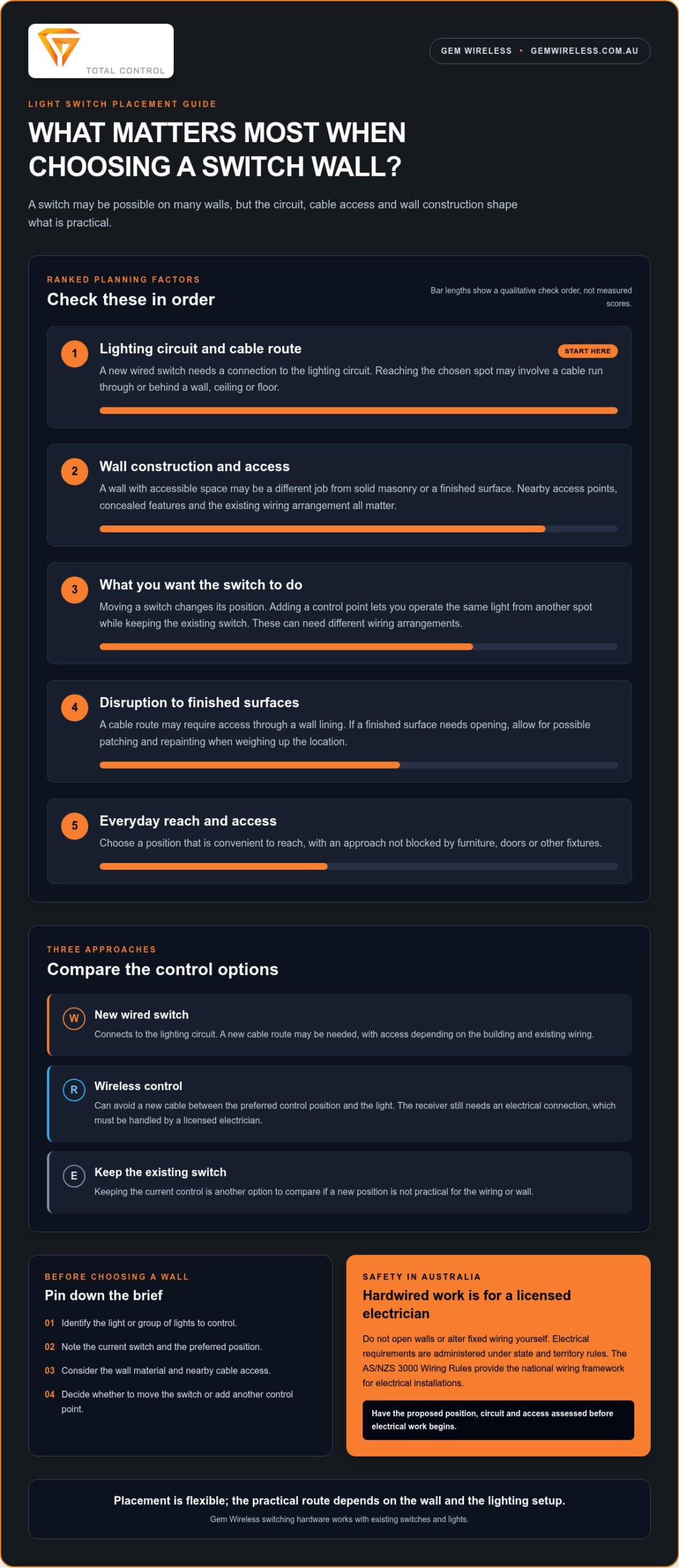
How to decide whether your chosen wall will work
A little planning makes it easier to compare switch options and explain your goal clearly. Before settling on a location, note which light you want to control, how it’s controlled now and what you want to change. The answer to “can you put a light switch on any wall” depends on the existing arrangement as well as the wall itself.
Questions to answer before choosing a switching method
Start with the light and its current controls. Does one switch operate it, or can you control it from more than one point? Mark the preferred wall and consider whether it’s finished, accessible from another area or likely to need surface access. Then decide whether avoiding a new cable run is a priority.
- Light: Which fitting or group of lights should the control operate?
- Current controls: Where are the switches, and how many control points are there?
- Goal: Do you want to relocate a switch or add another control point?
- Target wall: Is it easy to access, or would reaching it disturb a finished surface?
- Daily use: Will the switch be convenient to reach, with a clear approach?
- Preference: Would you consider wireless control to avoid a new cable run?
Be precise about the outcome you want. “Move the switch beside the doorway” describes a relocation. “Keep the current switch and add one near the other entrance” describes an additional control point. That distinction helps an electrician assess the existing controls and identify options that may suit the circuit.
Safety and Australian electrical requirements
Don’t undertake fixed-wiring work yourself, including moving, adding or connecting a wired switch. Electrical licensing rules apply under state and territory requirements, so the applicable rules depend on where the work takes place and what it involves.
In Australia, electrical installations are subject to AS/NZS 3000, the Wiring Rules, alongside relevant state or territory safety requirements. A suitably licensed electrician can assess the circuit, proposed location and work required, then carry out fixed electrical work in line with the applicable rules.
Prepare a simple description before the assessment: identify the light, show the current switch positions, mark your preferred location and say whether you want to move or add a control. Mention if the wall is tiled, solid, newly painted or otherwise difficult to access. These details help focus the discussion on both the switching behaviour you want and the practical route to achieve it.
If avoiding a new cable between the control point and light is a priority, wireless switching modules may be worth considering. The wireless switching modules guide explains this retrofit approach. The hardware works with existing switches and lights, though suitability depends on the particular setup, and some electrical work may still be needed.
Explore wireless switching options as you compare possible locations and control arrangements.
A more flexible light-switch location with Gem Wireless
If your preferred switch position would otherwise need a new cable run, wireless switching may offer another way to add control. It separates the control link from the cable connection to the light, giving you more flexibility about where a control point sits. That can be useful when the cable route is awkward or you want to avoid opening a finished wall solely to run a new control cable.
What Gem Wireless brings to a switch-placement project
Gem Wireless supplies wireless switching hardware and kits for residential and commercial lighting. Its systems work with existing switches and lights, avoiding rewiring for the wireless control link. This gives you another option when planning a new control point, rather than assuming the only path is to run a new cable from the switch location to the light.
The setup depends on the existing light, circuit and chosen switching hardware. Wireless control doesn’t remove the light’s need for an electrical supply, and different installations may need different hardware. A receiver or other mains connection may still need to be installed as part of the system. The control signal can be wireless while the lighting circuit remains electrical.
Choose a practical next step
Before comparing kits, write down the basics of your project. Note which light you want to control, where its current switch is, where you’d like the new control point, and whether you want to move the existing switch or add another point. Include any access concerns, such as a finished wall or a difficult route for a new cable. This gives you a useful starting point for comparing switching hardware.
Gem Wireless offers switch module kits, mains powered switches, long range switches and switching modules. Compare the hardware categories against your intended arrangement, then have the specific setup assessed before any electrical work begins.
- Identify the light and the control behaviour you want.
- Consider whether a new cable route would be difficult or disruptive.
- Compare wireless switching hardware with a wired approach.
- Leave fixed electrical work to a suitably licensed electrician.
Wireless switching can make a preferred location more achievable, but it isn’t a way to bypass electrical requirements. Explore Gem Wireless light switch options and compare the available hardware with your intended light and switch arrangement. Involve a suitably licensed electrician for any required fixed wiring or mains connection.
Plan your preferred switch location with confidence
Before changing anything, picture how you want the room to work: where you’ll enter, which light you need to control and whether you want to keep the current switch. That simple plan gives an electrician a clear starting point and helps you compare a conventional cable route with wireless control.
If you’re still asking, “can you put a light switch on any wall?”, consider the control link as well as the wall. Gem Wireless hardware works with existing switches and lights, and its wireless link offers another option when a new control cable would be difficult. The suitable hardware depends on your lighting setup, and any required fixed electrical work needs a suitably licensed electrician.
Gem Wireless supplies switching hardware and kits through direct sales and stockists across Australia. Explore Gem Wireless wireless switching options and compare them with your intended light and switch arrangement. With a clear plan and the right assessment, you can work towards a control point that feels natural in your space.
Frequently Asked Questions
Can you put a light switch on any wall?
Often, yes, but the specific wall and lighting arrangement determine what’s feasible. Moving a switch from one side of a doorway to the other, for example, may involve a different access route from adding a control point in a separate room. Before deciding, note the light’s current controls and mark your preferred position. This gives an electrician a clear starting point to assess the options.
Can I add a light switch without cutting into the wall?
Sometimes. Wireless control may avoid running a new cable between the control point and the light, which can help if you’ve recently painted or have tiled walls you’d rather not disturb. It won’t necessarily remove all electrical work: the light or receiver may still need a mains connection. Don’t open the wall or alter wiring yourself. Have a suitably licensed electrician assess the setup and complete any fixed-wiring work.
Do I need an electrician to install a light switch in Australia?
Have fixed electrical wiring work completed by a suitably licensed electrician. Licensing requirements are administered under state and territory rules, and the relevant requirements depend on the work involved. Even if you’re replacing a switch in the same spot or adding a control point, don’t assume it’s a DIY task. You can prepare by identifying the light, current controls and intended location, then leave the electrical assessment and work to a professional.
Can a wireless light switch go anywhere in the house?
Wireless control can offer greater flexibility, but “anywhere” isn’t guaranteed. The chosen control needs to work with the selected hardware and intended lighting setup. A location may be convenient to reach but unsuitable for a particular system. Wireless switching also doesn’t remove the light’s need for an electrical supply, and a receiver connection may need professional installation. Follow the specific hardware guidance rather than assuming universal range or compatibility.
Can I add a second switch to control the same light?
Often, a second control point can be added, but the right method depends on how the light is currently switched. For example, you may want to operate a hallway light from both ends. The existing switch arrangement and chosen hardware affect the options. Wireless switching may provide another control point without a new switch cable, but the hardware must suit the setup. Have an electrician assess the arrangement before making changes to the circuit.
Is it safe to install a light switch myself?
Don’t attempt fixed-wiring work unless you’re appropriately licensed for it. A switch forms part of an electrical circuit, and an incorrect change can create a risk of electric shock or fire. You can plan the preferred position, note which light it should control and compare switching approaches without touching wiring. Leave the electrical assessment and installation to a suitably licensed electrician, and follow the requirements that apply in your state or territory.
electrical safetyelectrical wiringhome renovationlicensed electricianlight switcheslighting installationwireless switches