- Empty cart.
- Continue Shopping
Where a Light Switch Can Be Added and What Wiring It Needs
- Posted on
 Strong Digital
- 0
- Categories: Uncategorized
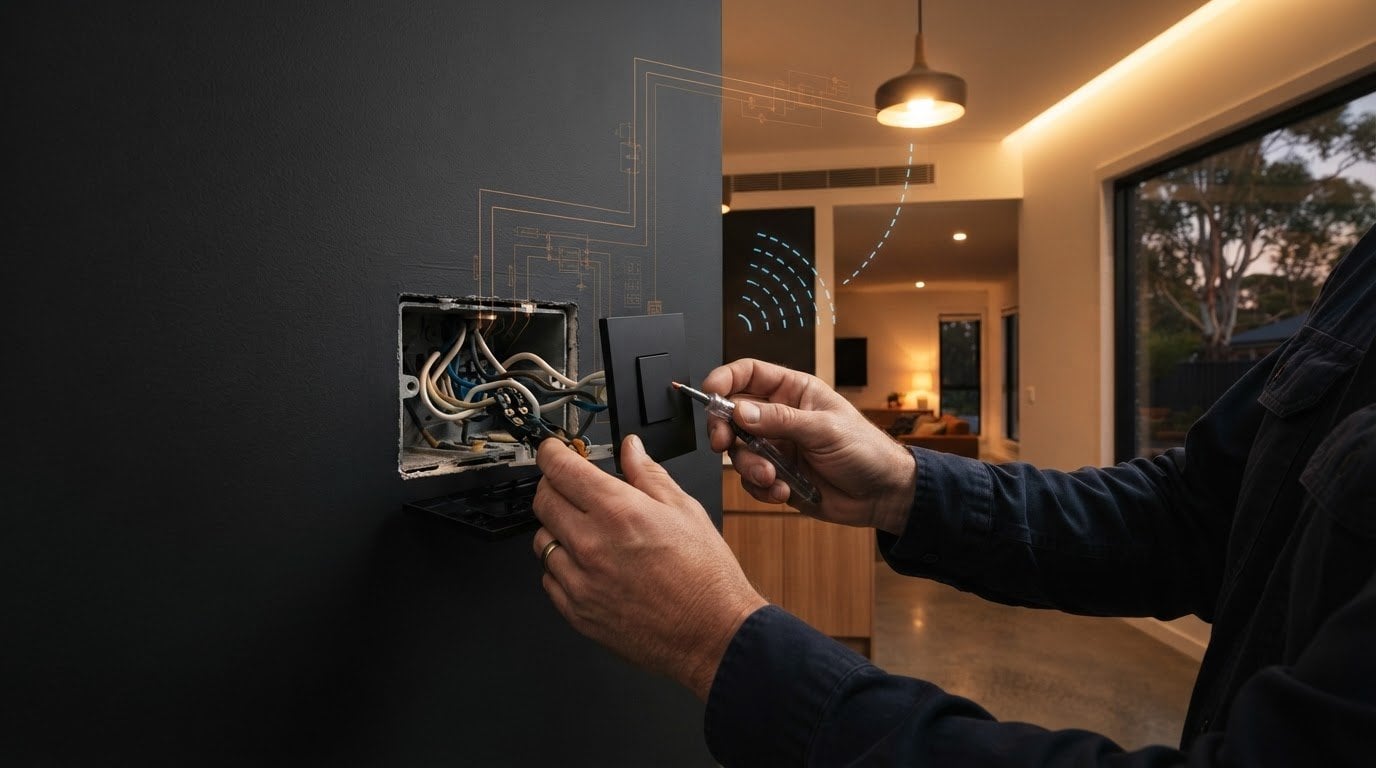
You can add a light switch in many places, but whether you can add one anywhere depends on the lighting circuit and whether there’s a safe route for the wiring. A new switch and light can use an existing circuit feed if a neutral wire is present and the switch box has room for another gang. If not, the wiring plan may need to change.
It’s reasonable to want a switch exactly where it’s most convenient. But the wall position is only part of the decision: the circuit layout, the wires in the switch box and the space available all affect what’s practical.
This guide explains where a switch can be added, what the wiring needs to support the change and why a neutral wire matters for some setups. You’ll also learn about the safety requirements, when wireless switching may suit an existing light, and how to choose a practical next step for your home or business.
Key Takeaways
- A switch can go in many locations, but the circuit layout and a safe cable route determine what’s practical.
- Before planning a new switch, consider the wiring already in the switch box and whether there’s room for another gang.
- A neutral wire and spare space in the box can allow a new switch and light to use the existing circuit feed.
- Switch changes involve more than choosing a wall position; the article explains the safety steps and Australian rules to understand.
- Learn what affects the work involved, then compare a wired change with wireless switching options for your setup.
Electrical safety and installation steps
A suitable wall position isn’t enough on its own. The existing circuit, cable route, switch-box capacity and Australian electrical requirements all affect whether the installation is safe and practical.
Electrical safety considerations
Wiring can remain live if the wrong circuit is isolated, so switching off the wall switch isn’t enough. A qualified electrician isolates the relevant supply and tests the circuit before handling conductors. They also check for concealed cables, plumbing and framing before cutting into a wall.
Box space matters too. Adding a second switch may require a larger electrical box to meet box-fill requirements. In a multiway circuit, the wiring arrangement determines which conductors are available at each switch. Connecting a new light to a traveller can mean it operates only about half the time, depending on the switch positions.
- Identify the circuit and existing switch arrangement.
- Trace a practical cable route and check the wall cavity.
- Assess the switch box, cable capacity and required connections.
- Test the completed installation before restoring power.
Applicable Australian electrical rules
Australian electrical requirements apply to the circuit, wiring, enclosure and completed installation, not just the switch mechanism. State and territory rules govern electrical work, so the requirements depend on the property’s location. The work must suit the existing installation and use appropriate materials and methods.
For example, adding a switch beside an existing one can affect box-fill capacity. A larger box may be needed to accommodate the conductors and devices safely. The electrician also checks whether power reaches the circuit through the switches or first at the light, as this determines what wiring is available at the new control point.
Licensed electrician requirements
Installing or relocating a hard-wired light switch involves electrical wiring. In Australia, licensing requirements are set by state and territory rules, so the legal details vary by location. Treat work on fixed mains wiring as a job for an appropriately licensed electrician, not a DIY task.
That distinction matters even when a job looks simple. Moving a switch can involve extending cables, altering connections or changing a switch box. An electrician can assess the existing circuit, carry out the work and test the result. Don’t remove the switch plate or handle wiring to investigate the circuit yourself.
Multiway circuits need particular care. Power may run from the electrical panel through the switches to the lights, or from the panel to the lights before reaching the switches. If power enters at a light fixture, adding another switched light typically requires a new cable to the new switch. If power enters through the switches, Switch 1 has the always-hot supply, while other switch positions may have travellers or switched hot.
The circuit layout is a key part of planning the installation. A typical four-way arrangement works alongside two three-way switches, so adding a control point means understanding the whole switching sequence. An electrician can identify the arrangement before deciding how to route and connect the new switch.
Neutral wire requirements
A neutral wire can determine whether an existing lighting circuit can supply a new switch and light. What matters is whether the required conductors are present at the switch location, not simply whether a switch already controls the room’s lighting.
In a typical lighting circuit, the active conductor carries power towards the light, while the neutral completes the circuit back to the supply. A wall switch usually controls the active connection. As a result, a neutral may not be available inside every switch box, even though the light itself has one.
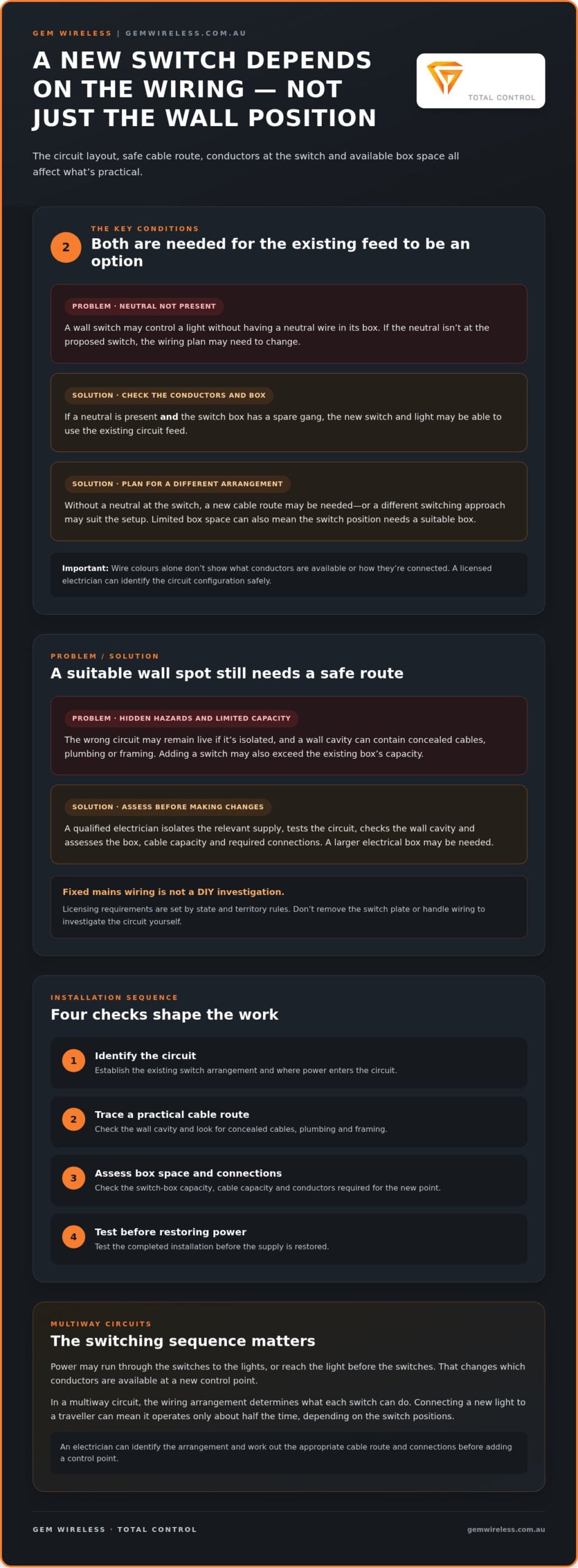
This matters when adding a switch-and-light point. The existing circuit feed can supply the additional fitting if a neutral is present and the switch box has an extra gang. Both conditions matter: the neutral provides the required connection, while the spare gang leaves room for another switch mechanism. An electrician assesses the wiring and box space before choosing this option.
Why a switch box may not have a neutral
Circuit wiring can be arranged in different ways. Power may reach the switches before the light, or arrive at the light first. In the second arrangement, the switch wiring may not include a neutral at the wall control. The switch can still operate the existing light, but that doesn’t mean the box has every conductor needed for another connection.
You can’t tell what’s available from the wire colours alone. Conductors may be joined or routed differently within the circuit, and their purpose depends on the connections. Don’t remove a switch plate or handle conductors to investigate. A licensed electrician can identify the circuit configuration safely.
What the neutral changes in the plan
If both the neutral and a spare gang are available, the new switch and light may be connected to the existing circuit feed. This can make that circuit a possible source for the added point. The electrician still needs to consider the circuit layout, cable route, box capacity and connections required by the new light.
If there’s no neutral at the proposed switch, the wiring plan changes. A new cable route may be needed to bring the required conductors to the switch, or the design may use a different switching approach. The right option depends on where power enters the circuit and how the existing switches control the lights.
- Neutral present and spare gang available: the existing feed may support a new switch and light.
- Neutral absent at the switch: the circuit may need a different wiring arrangement.
- Box space limited: the switch position may need a suitable box or another approach.
Before choosing a wall position, have the switch box and circuit assessed. The neutral, spare gang and route to the light together determine the practical options.
What Australian electrical rules apply to installing or relocating a light switch?
In Australia, requirements for changing a light switch depend on the state or territory and the work involved. Replacing a switch like for like differs from moving it, extending fixed wiring or adding a new light point. Start by identifying which parts of the electrical installation will change.
Work out what the job changes
Write down the intended change before work begins. Replacing a damaged switch in the same position affects a different part of the installation from moving it across a room. Adding another switch to control an existing light may also involve new cable, a different switch box or changes to a multiway circuit.
These details matter because electrical requirements apply to the work carried out, not just the finished switch plate. A new cable route may pass through a wall or ceiling. A changed box may need to accommodate additional conductors. A multiway circuit may need to retain its existing switching sequence.
How location affects requirements
State and territory electrical safety frameworks govern electrical work locally. The rules applying in Victoria, for example, may differ in some details from those in Queensland or Western Australia. The property’s location and the nature of the work are key factors.
For a planned installation, note the state or territory, whether the switch is moving, and whether the work adds a light or changes an existing circuit. These details help define the job. A new switch point in a bedroom, for instance, may need a different wiring plan from a replacement switch in the same hallway position.
What the installation needs to address
Safe electrical work must account for the existing wiring, enclosure, cable route and circuit operation. If you’re adding a second switch, box-fill capacity matters. If the switch controls a multiway circuit, its connections must preserve control from each position. A neutral wire may also determine whether the existing circuit feed can supply a new switch and light.
These checks matter because not every convenient wall location is suitable. A proposed position may be difficult to reach with a safe cable route, or the existing circuit may not have the conductors the new arrangement requires.
Plan compliance into the job
Before installation, define the switch location, the light it will control and whether the change affects fixed wiring. An appropriately licensed electrician can assess those details against the rules for the state or territory, then carry out and test the electrical work. Describe the job clearly: “move the hallway switch” is less useful than specifying its new position and whether it will control the existing light.
A clear scope helps align the wiring plan with the applicable Australian requirements. Switch placement isn’t a one-size-fits-all task.
Does a licensed electrician need to install a light switch in Australia?
Use an appropriately licensed electrician to install or relocate a hard-wired light switch. The work can involve fixed wiring, circuit connections and changes inside a switch box. It’s not simply a matter of attaching a new switch plate. Licensing requirements vary between Australian states and territories, so the rules for a property depend on its location and the work involved.
A like-for-like replacement and a new switch point are different jobs. Replacing a mechanism in the same position may leave the circuit unchanged. Moving a switch can require extending wiring or creating a new route through a wall. Adding a switch to control another light may also affect the existing circuit and the space available in the electrical box.
These distinctions matter because an electrician needs to assess the installation, not just the switch’s appearance. For example, a two-way or multiway circuit lets lights be controlled from different positions. Changing one control point without accounting for the whole arrangement can affect how the other switches operate.
What the electrician assesses
Before installation, the electrician identifies the circuit, checks the wiring at the proposed location and plans the cable route. They also consider box space, available conductors and whether the switch will control an existing light or a new one. For multiple control points, they map how the switches work together.
That assessment helps establish the job’s scope and the right installation method. A nearby wall may be straightforward to reach, while a position across the room may require more extensive cable routing. The wall cavity, access from above or below and existing circuit layout all influence the work.
What to do before the work
Describe the change clearly to the electrician. Note the current switch location, the proposed position and which light it should operate. If you’re adding a new light, include its intended location. These details help the electrician assess the circuit and plan the work.
Don’t remove the switch plate, expose conductors or try to test wiring yourself. Turning off the wall switch doesn’t prove the wiring is safe to handle. Leave circuit isolation, testing, connections and checks of the finished installation to the electrician.
After installation, describe any unusual operation, such as a light responding differently from its other control points. The electrician can test the completed arrangement and confirm the switches work as intended. For a hard-wired addition or relocation, professional electrical work brings the circuit assessment and installation together, rather than treating the switch as an isolated fitting.
How much does it cost to add or move a light switch in Australia?
The cost depends on the work required at the switch location, not just the price of the switch mechanism. Replacing a switch in the same spot differs from adding a new point across a room. Cable access, circuit layout, wall construction and extra fittings all affect the work involved.
A straightforward relocation may use an accessible route through a wall cavity or ceiling space. If the route is obstructed, the electrician may need to plan another path. Brick walls, limited ceiling access and concealed services can change the work required. The proposed position matters too: a switch near an existing circuit may need a different cable route from one on another wall.
Adding a switch and light can involve more than extending a cable. The existing circuit must suit the added load and connections, and the switch box needs enough room. Box-fill requirements may mean a larger box is necessary when adding another switch. If the circuit has multiple control points, the electrician must also preserve the intended operation of each switch.
What shapes the final scope?
These practical details explain why two jobs described as “move a light switch” can involve different work. A clear quote should reflect the installation, including the parts and labour required for the property. Useful details to provide include:
- The current and proposed switch positions.
- Whether the job moves an existing switch or adds another one.
- Which light or lights the switch will control.
- Whether the property has accessible ceiling space or difficult wall construction.
- Whether existing switches control the same light from multiple locations.
For example, moving a switch within the same room may require less cable routing than adding one on a distant wall. A new light point can involve additional work, especially if the circuit needs extra wiring or a different connection arrangement. Switch-box capacity and available conductors also affect the installation plan.
Compare the work, not just the description
When reviewing estimates, compare what each scope includes: switch relocation or addition, cable routing, any new light point and testing of the completed circuit. This helps you understand differences between proposed approaches without relying on a generic “per switch” figure. A licensed electrician can assess the wiring and access conditions at the property before outlining the work.
Describe the intended result clearly, such as “add a switch by the bedroom door to control the existing ceiling light”. That gives the electrician a practical starting point for assessing the circuit and route. If you’re considering alternatives to extending fixed wiring, review options for planning a switch change alongside the physical installation requirements.
Gem Wireless: Switch Module Kits
Gem Wireless offers Switch Module Kits for adding wireless control to existing switches and lights without rewiring. They can suit a room where a new cable route or switch-box change makes a hard-wired alteration less practical. Each kit includes a battery-operated wireless device. Mains Powered Switches, Long Range Switches and Switching Modules offer other switching options.
These products provide an alternative to changing fixed wiring, not a substitute for electrical work needed to install or relocate a hard-wired switch. The right option depends on the lighting setup and the control you want. Consider wireless switching if you want to change how an existing light is controlled while keeping the current wiring in place.
Contact Gem Wireless to discuss its switching options.
Choose the switching approach that fits your space
If you’re still weighing up whether you can add a light switch anywhere, start with the outcome you want: a new control point, a relocated switch or easier control of an existing light. That decision helps you compare a fixed-wiring change with a wireless option, without settling on a switch position before you know what the setup requires.
For wireless control, Gem Wireless offers Switch Module Kits, Mains Powered Switches and Long Range Switches. These options let you adapt how existing switches and lights are controlled. They don’t replace licensed electrical work when fixed wiring needs to be installed or changed.
Note which light you want to control and where you’d like to use the switch. With that goal clear, you can explore an option suited to how you use the space.
Contact Gem Wireless about your switch and take the next step towards a more convenient lighting setup.
Frequently Asked Questions
Can you install a light switch anywhere in a house in Australia?
If you’re wondering, can you add a light switch anywhere? Not necessarily. The proposed position must suit the existing circuit and allow a practical cable route. A spot beside a doorway may be convenient, while one across the room could involve more extensive wiring. Consider access, the light being controlled and how the switch fits the room. An electrician can assess the proposed position.
Can a light switch be added without cutting into walls?
Yes. A wireless switching option can add a control point without opening walls to run new switch wiring. Gem Wireless Switch Module Kits work with existing switches and lights without rewiring, and each kit’s wireless device is battery-operated. This can suit a finished room where you want to avoid wall repairs. Installing a new hard-wired switch is different and may require changes to fixed wiring.
What wiring is needed to install a new light switch?
The wiring depends on whether the switch controls an existing light or a new one, and on how the circuit is arranged. A new hard-wired point may need cable between the switch and light, with conductors suited to the circuit connections. A neutral at the switch can matter if the existing feed is used for a new switch and light. Have the circuit assessed before work begins.
Can a wireless or smart light switch be installed without new wiring?
A wireless switch can add control without new wiring when used with compatible existing switches and lights. Gem Wireless offers wireless switching products, including Switch Module Kits and Mains Powered Switches. These are hardware options, not smart-home software subscriptions. Check that the selected arrangement suits the control you want, such as adding a convenient point without running a new cable through a finished wall.
What are the safety risks of DIY light switch installation in Australia?
DIY work on a hard-wired switch can expose you to electric shock, burns or wiring faults that create fire risks. A wall switch being off doesn’t prove the conductors are safe to touch. Incorrect connections can also stop a light or other switch points from working properly. Leave fixed-wiring changes to an appropriately licensed electrician, and don’t remove the switch plate to inspect the wiring yourself.
How long does it take to add a light switch?
The time required depends on the installation, not just the switch fitting. Replacing a mechanism in its existing position differs from adding a control point across a room. Access to the ceiling or wall cavity, the cable route, circuit arrangement and any extra light fitting all affect the work. Clearly describing the location and intended control helps the electrician assess the job.
What factors affect where a light switch can be placed?
Whether you can add a light switch anywhere depends on more than the wall location. Placement also depends on how people enter and use the room, the wall structure and the available wiring route. For example, a switch near a doorway may be easier to reach than one behind furniture or a door. Share the proposed position and intended light control to help plan for access and wiring.
australian standardselectrical safetyelectrical wiringhome electricalhome renovationlight switch installationlighting circuitsneutral wire