- Empty cart.
- Continue Shopping
DIY Lighting Control Projects: 5 Simple Ideas for 2026
- Posted on
 Strong Digital
- 0
- Categories: Uncategorized
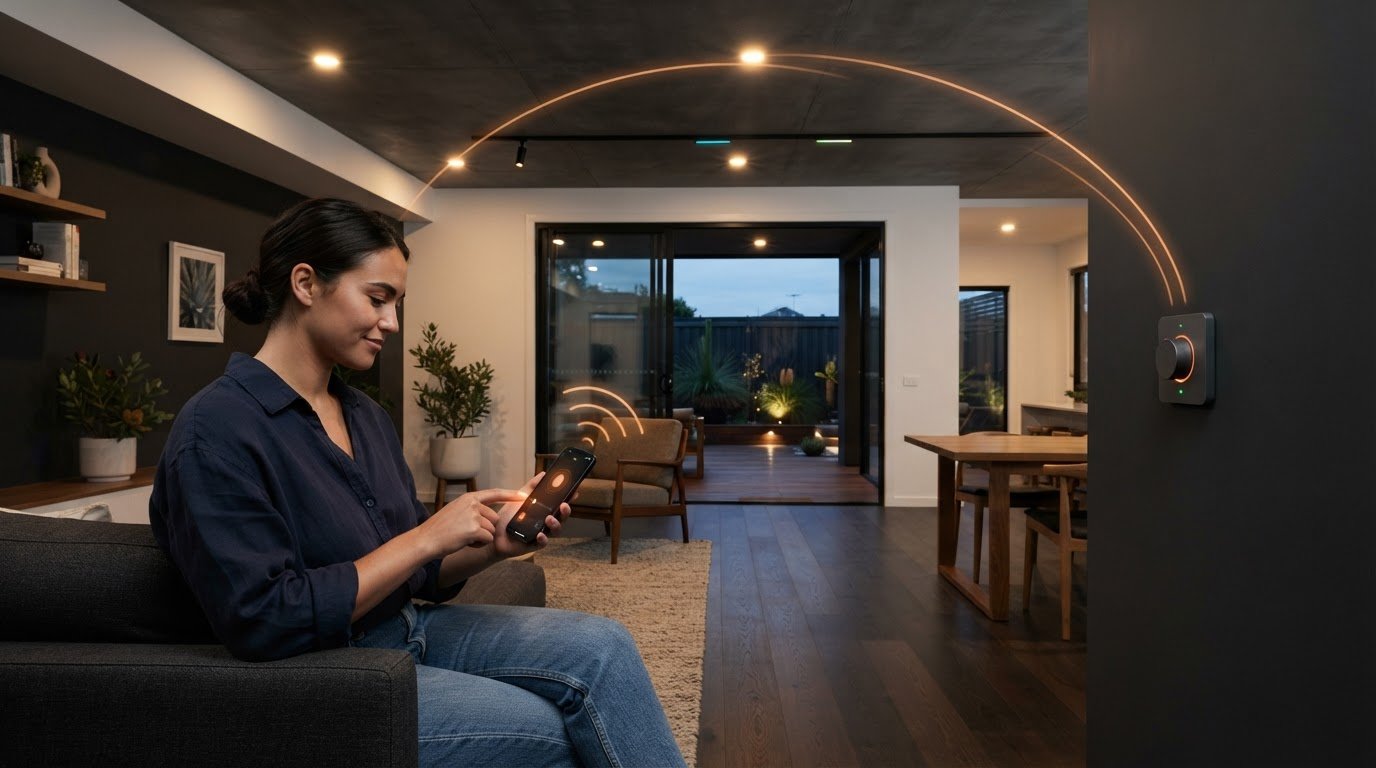
What if your best lighting upgrade isn’t a full renovation, but a better way to switch on one awkward light? DIY lighting control projects can solve everyday annoyances, like reaching across a room or having no switch where you need one. You may be able to explore a wireless control option without opening walls.
If the choices feel technical or the work seems disruptive, start small. A good first project addresses a real frustration, suits your existing lights and switches, and is straightforward to plan. This guide compares five practical ideas, explains what to check before choosing hardware, and outlines when to ask a licensed electrician.
From adding a more convenient control point to changing how you manage a room’s lighting, each project starts with the same steps: identify the problem, document the visible setup and check compatibility. Wireless switching may suit some retrofits, but electrical work is not a guesswork job.
Key Takeaways
- Choose a first lighting upgrade based on an everyday frustration, rather than starting with a whole-home plan.
- Wireless switching may add a control point without running new control wires when the setup is suitable.
- Explore five DIY lighting control projects and the basic checks to make before choosing one.
- Document your existing setup and confirm compatibility with the light circuit and installation before selecting hardware.
- Have fixed wiring assessed against current Australian requirements, and ask a licensed electrician when the work or setup is unclear.
DIY lighting control projects: start with a daily lighting annoyance
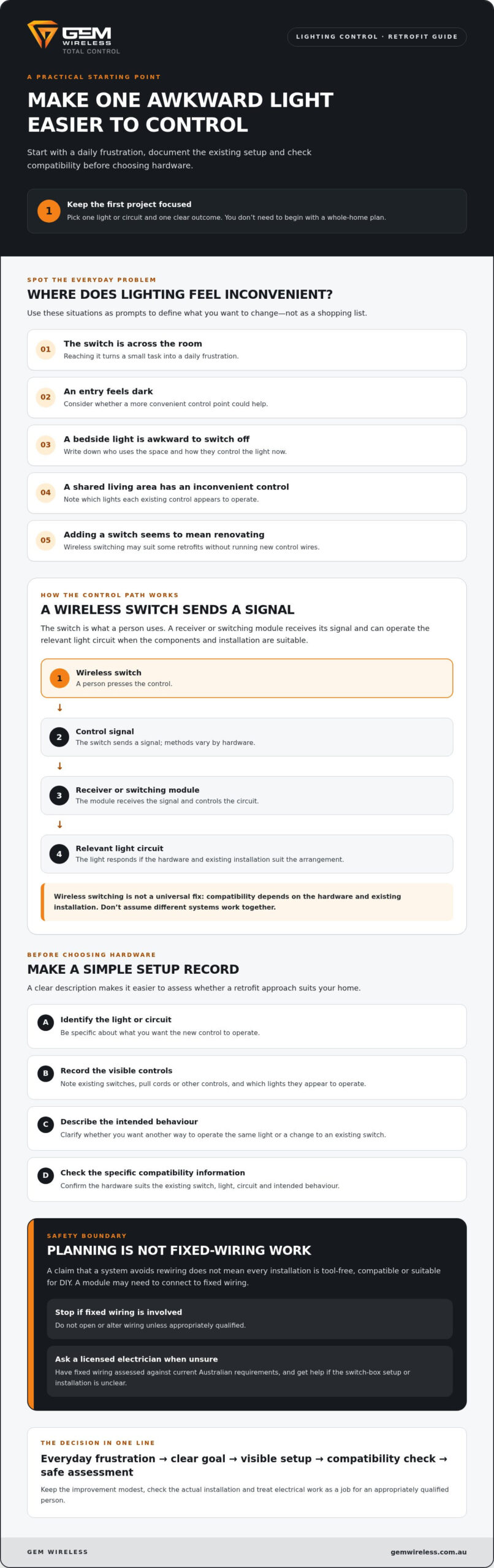
A light switch on the wrong side of the room can turn a small task into a daily frustration. The same is true of approaching a dark entry, getting out of bed to switch off a lamp, or considering a renovation just to add a more convenient control point. Start with the annoyance, not a shopping list.
A lighting control system describes how lights are switched or managed, from a simple switch to more involved arrangements such as intelligent network-based lighting control. For a first upgrade, keep the goal modest: change how you control an existing light rather than redesigning the lighting throughout your home. Wireless switching may suit some retrofits and can avoid running new control wires, but compatibility depends on the hardware and existing installation.
Which everyday lighting problem should you solve first?
Notice when and where reaching a switch feels inconvenient. Is it beside the bed, near an entry or across a shared living area? Choose one room or light circuit to investigate instead of planning a whole-home conversion. A focused project is easier to describe and assess.
Write down who uses the space and how they control the lights now. Note whether they use a wall switch, a pull cord or another existing control, and which lights each control appears to operate. This helps clarify what needs to change while keeping everyone’s routine in view.
What makes a first project manageable?
A small lighting control project is a limited change to how an existing light is switched or managed, with one clear outcome you can check before choosing hardware. For example, you might want to operate a particular light from a more convenient position. Define the result first, because the right hardware depends on the setup.
Make the goal specific enough to assess: which light or circuit is involved, who needs to control it, and what should become easier? Then record the current switch and light arrangement. Don’t assume a wireless kit will suit every circuit or light. Check the specific hardware’s compatibility with the installation before making a selection.
Planning is different from working on fixed wiring. Keep your project notes and hardware research separate from electrical work, and have the installation assessed by an appropriately qualified person. If the task involves fixed wiring, or you’re unsure what’s in the switch box, stop and ask a licensed electrician. A clear goal makes it easier to judge whether wireless switching is suitable without turning a small improvement into an unnecessary renovation.
How wireless lighting control can fit into a retrofit project
A wireless retrofit can add a way to control a compatible light without running a new control wire between the switch and the light. A person presses a wireless switch, which sends a signal to a receiver or switching module. If the components and existing installation suit the arrangement, the receiver can operate the relevant light circuit.
The switch is the part people use; the module communicates with and controls the circuit. Depending on the setup, a wireless switch may be placed somewhere more convenient while a module works with existing switching hardware. This can make wireless switching worth considering for DIY lighting control projects, but it isn’t a universal fix.
What does a wireless switch module do?
Think of the switch as a sender and the module as a receiver. Pressing the switch sends a control signal; the module receives it and changes the light’s state. Signal methods vary by hardware, so don’t assume components from different systems will work together.
The practical idea is to add or relocate a control point where the setup allows it. Before choosing a module, confirm it suits the existing switch, light, circuit and intended behaviour. For a broader look at retrofit approaches, see No Rewire Lighting Control: Modernising Your Australian Home Without the Mess.
What should you check before choosing a retrofit approach?
Describe the setup in plain terms. Note which light or circuit you want to control, what switches already operate it, and what you want to happen when someone uses the new control. For example, are you adding another way to operate the same light, or changing how an existing switch behaves?
Compare those details with the hardware maker’s compatibility information. A claim that a system avoids rewiring doesn’t mean every installation is tool-free, compatible or suitable for DIY. A module may need to connect to fixed wiring, so don’t open or alter wiring unless you’re appropriately qualified. Ask a licensed electrician to assess work involving fixed electrical wiring or any uncertain installation details.
For component-level background, look for the guide titled Wireless Switching Modules. If your wider setup includes connected smart-home devices, NIST also offers general cybersecurity and privacy tips. These are separate from electrical safety checks and Australian requirements.
Once you’ve documented the circuit and checked suitability, you can compare hardware options with a clearer brief. Review wireless switching hardware and kits as one place to consider possible options. Installation isn’t included, so arrange any required electrical work separately.
Five DIY lighting control project ideas for everyday spaces
The most useful project is often the one that removes a small, repeated inconvenience. These five DIY lighting control projects are starting points, not installation instructions. Each depends on the existing light, switch and circuit, so treat the suitability checks as questions to resolve before choosing hardware.
Which indoor lighting projects are useful starting points?
Consider who uses each space, where they need to control the lights from, and what change would make the routine easier. Keep the first project indoors and focused on one clear outcome.
| Project and inconvenience | Intended improvement and planning question | When to seek professional help |
|---|---|---|
| Bedside: the light switch is hard to reach from bed. | Consider a more convenient control point. Can the existing light and switch arrangement support another way to operate it? | Ask a licensed electrician if the plan involves fixed wiring or the circuit is unclear. |
| Kitchen task lighting: the current control doesn’t suit how the kitchen is used. | Explore whether a separate control arrangement would help. Check which lights are already controlled together. | Get the installation assessed if changing control involves wiring or the light circuit is uncertain. |
| Entry: the switch is awkward to reach as people come in. | Map where household members enter and where they need control. Can the proposed control work with the existing lights? | Seek help if reaching the intended outcome requires changes to fixed wiring. |
| Study: switching the room light doesn’t match how the space is used. | Consider whether a different control arrangement would be more practical. Confirm which light or circuit it would affect. | Ask for an assessment if the setup or proposed connection isn’t clear. |
| Shared living area: people need to operate the lights from different spots. | List who uses the room and where they’d like control. Check that the existing installation supports the intended behaviour. | Consult a licensed electrician before work involving fixed wiring. |
How can you keep an example project within scope?
Before shopping, write one sentence describing the outcome: which existing light you want to control and what should become easier. Then compare that goal with the actual switch and light arrangement. Check the hardware maker’s compatibility information and confirm that the specific hardware suits the light circuit and installation.
Keep the examples conceptual. They don’t assume every room supports the same control method or that one switch kit suits every light. Leave outdoor, commercial and long-range projects for separate assessment, as their requirements may differ. If the work involves fixed electrical wiring, or you’re unsure what the installation can support, pause and ask a licensed electrician. This keeps a small convenience upgrade focused and identifies what needs checking before you proceed.
Plan a DIY lighting control project safely before starting
Preparation makes a lighting upgrade easier to assess and can help you avoid buying hardware that doesn’t suit the setup. Keep planning simple and leave fixed wiring alone. Your role is to describe the problem and gather visible information, not to inspect or alter electrical connections.
What can you safely assess before calling an electrician?
Start with details you can observe without removing covers or opening electrical fittings. Record where the switches are, which lights they appear to control, and how those controls behave. A photo of visible switches can help you explain the setup, but don’t take photos of internal wiring.
Then write down the outcome you want. For example, note whether you hope to add a more convenient control point or change how an existing light is operated. This gives an electrician a clear brief and keeps your DIY lighting control project focused.
How do you avoid compatibility and scope surprises?
Use this sequence before selecting hardware:
- Define the goal: Identify the light or lights involved and the control change you want.
- Document the visible setup: Note switch locations, light types and current control behaviour without removing covers.
- Check compatibility: Compare your notes with the hardware maker’s documented compatibility information. Confirm the specific hardware suits the existing lighting setup.
- Confirm who can do the work: Ask a licensed electrician to assess fixed-wiring work or anything about the installation that’s unclear.
Be clear about scope, too. Are you adding a control point for one light, or changing how a wider circuit is operated? That distinction can affect which hardware may be suitable and what work is involved. Don’t assume a wireless approach means installation is tool-free or appropriate to do yourself.
Electrical work and fixed wiring must be assessed against current Australian requirements. Requirements and work boundaries can depend on the job and location, so a general online guide can’t confirm that a particular installation is compliant. If you’re unsure, stop and ask a licensed electrician. Avoid making compliance or suitability claims until the relevant current requirements have been checked.
Once you’ve documented the setup and identified the compatibility questions, you’ll have a more useful brief for comparing options. You can review wireless switching hardware and kits as part of that research. Gem Wireless sells hardware and kits, not electrical installation services, so arrange any required electrical work separately.
Choose a first project and explore wireless switching options
You’ve identified the lighting problem and gathered details about the existing setup. Now match the project to a hardware category, but only after confirming compatibility. A bedside control point, for example, may need different hardware from a change to how an existing light circuit is operated. The project goal guides your search; it doesn’t confirm that a particular device will suit.
Which hardware category might suit the project?
Gem Wireless sells several categories of wireless switching hardware, including switch module kits, mains-powered switches and switching modules. Long-range switches are another category, but check the relevant product details rather than assuming a particular range or performance.
Use the category as a starting point, not a product recommendation. Read the compatibility information for the specific hardware and compare it with your light, switch and installation details. If anything is unclear, confirm suitability with a suitable stockist or a licensed electrician before ordering. A product description alone can’t establish that a device suits every circuit or installation.
What are the next steps after choosing an idea?
Write a short project specification before deciding. Keep it practical and specific:
- The problem: Which lighting control is inconvenient?
- The desired change: What should be easier, and who needs to use the control?
- The existing setup: Which light and switch are involved, and how are they controlled now?
- The checks: What does the hardware maker say about compatibility, and does the work need a licensed electrician?
Confirm the product’s suitability and who can complete any electrical work before purchasing or arranging installation. Gem Wireless sells wireless switching hardware and kits. It doesn’t provide electrical installation services or smart-home software subscriptions, so plan those needs separately.
Start with one suitable project. Once it’s in place, consider whether it solves the original annoyance before expanding to another room. If you introduce extra wireless buttons or unfamiliar switch layouts, neat labelling from DymoOnline can prevent household confusion over which control operates which light. This keeps your DIY lighting control projects grounded in what your home can support instead of turning a small fix into a larger, uncertain upgrade.
For a final comparison, view Gem Wireless switching options and check the relevant compatibility details before deciding.
Make your first lighting upgrade a practical one
The best DIY lighting control projects begin with one everyday frustration, not a whole-home overhaul. Choose a clear goal, note how the existing light and switch work, then check hardware compatibility before making a decision. Wireless switching may offer a retrofit option for suitable setups, but it won’t suit every installation.
Keep planning separate from electrical work. If a project involves fixed wiring or you’re unsure about the setup, ask a licensed electrician to assess it against current Australian requirements. Once your first project is complete, check whether it solves the problem before planning another.
Gem Wireless sells wireless switching hardware and kits for residential and commercial lighting, with direct sales and a stockist network serving customers across Australia and New Zealand. Compare the available options and confirm suitability before choosing hardware.
Explore Gem Wireless switching options and take the first step towards lighting controls that work better for your day-to-day routine.
Frequently Asked Questions
Can I add lighting control without rewiring?
Yes, wireless switching can add a control option without running new control wires in suitable installations. A wireless switch sends a signal to compatible switching hardware, which operates the light circuit. That doesn’t mean every setup avoids all electrical work or suits the same hardware. Check compatibility with your existing switch, light and installation, and ask a licensed electrician to assess any work involving fixed wiring.
What are some easy DIY lighting control projects for beginners?
Start with one everyday inconvenience, such as a bedside switch that’s difficult to reach, an awkward entry light or a study light that would benefit from a different control arrangement. These DIY lighting control projects are ideas to plan, not instructions to alter wiring. Note who uses the space, how the light is controlled now and what you want to improve, then confirm hardware suitability before choosing an option.
Can I install a wireless light switch myself in Australia?
It depends on the equipment and work involved. Setting a goal, recording visible switch locations and checking product information are useful planning steps. Don’t open fittings or work on mains wiring. If installation involves fixed wiring, or you’re unsure about the setup, ask a licensed electrician to assess the work and check the requirements that apply in your state or territory. A wireless label doesn’t automatically make installation suitable for DIY.
How do wireless lighting control projects work?
A wireless control project typically pairs a user-facing switch with compatible receiving or switching hardware. Pressing the switch sends a signal, and the receiving hardware operates the relevant light circuit. The components and signal method vary, so don’t assume products work together across different systems. First identify which light and existing controls are involved, then check the maker’s compatibility information and have any fixed-wiring work assessed appropriately.
Can wireless switching work with my existing lights and switches?
It may, if the specific wireless switching hardware is compatible with your existing lights, switches and installation. Compatibility can’t be assumed from the product category alone. Before deciding, record which lights the switch controls and how they currently operate, then compare those details with the maker’s guidance. If the circuit or installation is unclear, ask a licensed electrician to check suitability before you order or arrange installation.
What should I check before buying a wireless light switch kit?
Write down the light or circuit you want to control, the existing switch arrangement and the control change you’re aiming for. Then check the kit’s documented compatibility with that setup, including whether the relevant switching hardware suits the installation. Confirm who can carry out any electrical work before ordering. Gem Wireless sells switch module kits and other wireless switching hardware, but not electrical installation services or software subscriptions.
When should I call a licensed electrician for a lighting control project?
Ask a licensed electrician to assess the project if it involves fixed wiring, requires changes to an electrical installation, or you’re unsure what the existing setup can support. Don’t remove covers, inspect internal wiring or attempt mains electrical work as part of your planning. Describe the lighting problem, note the visible controls and explain the result you want. The electrician can assess the work against current Australian requirements.
DIY lightingelectrical tipshome improvementlighting controllighting retrofitsmart homewireless switches