- Empty cart.
- Continue Shopping
Lighting control for aged care facilities and daily routines
- Posted on
 Strong Digital
- 0
- Categories: Uncategorized
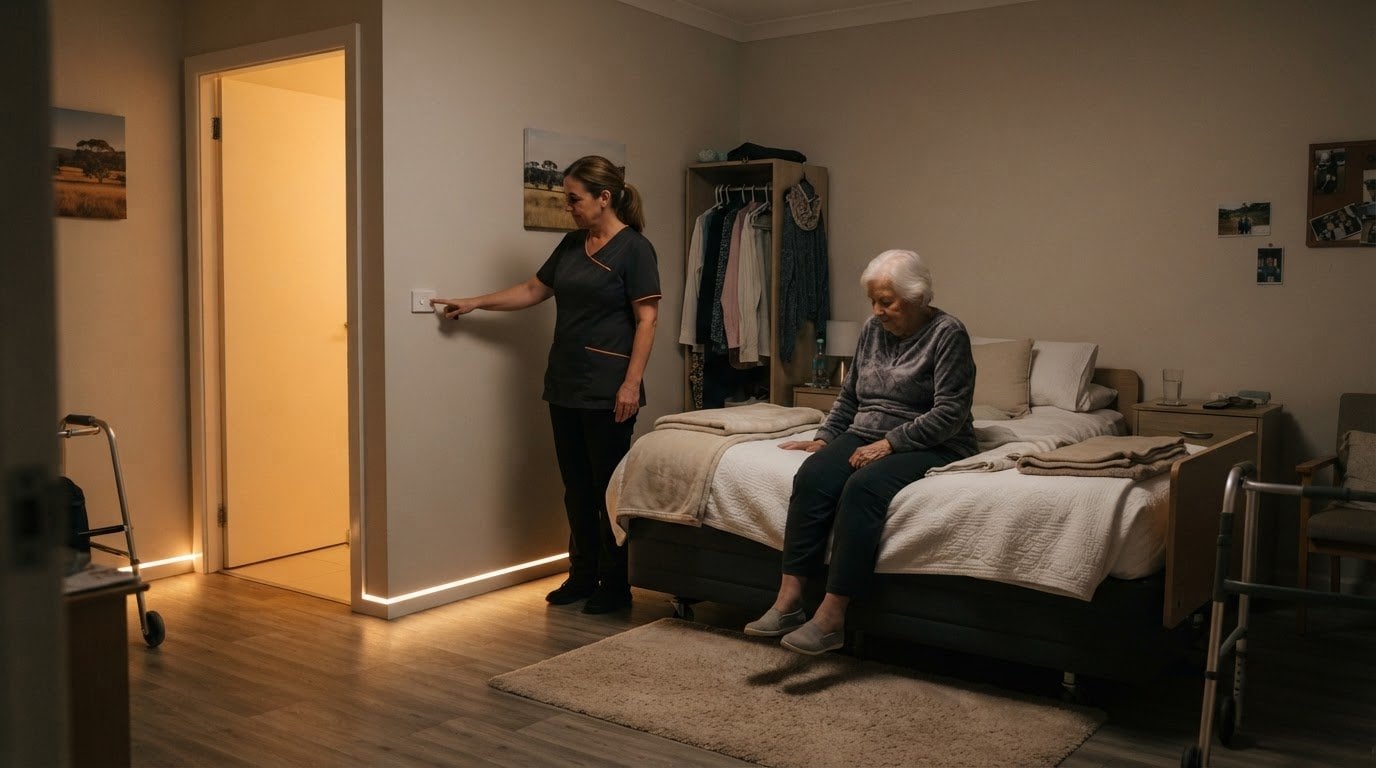
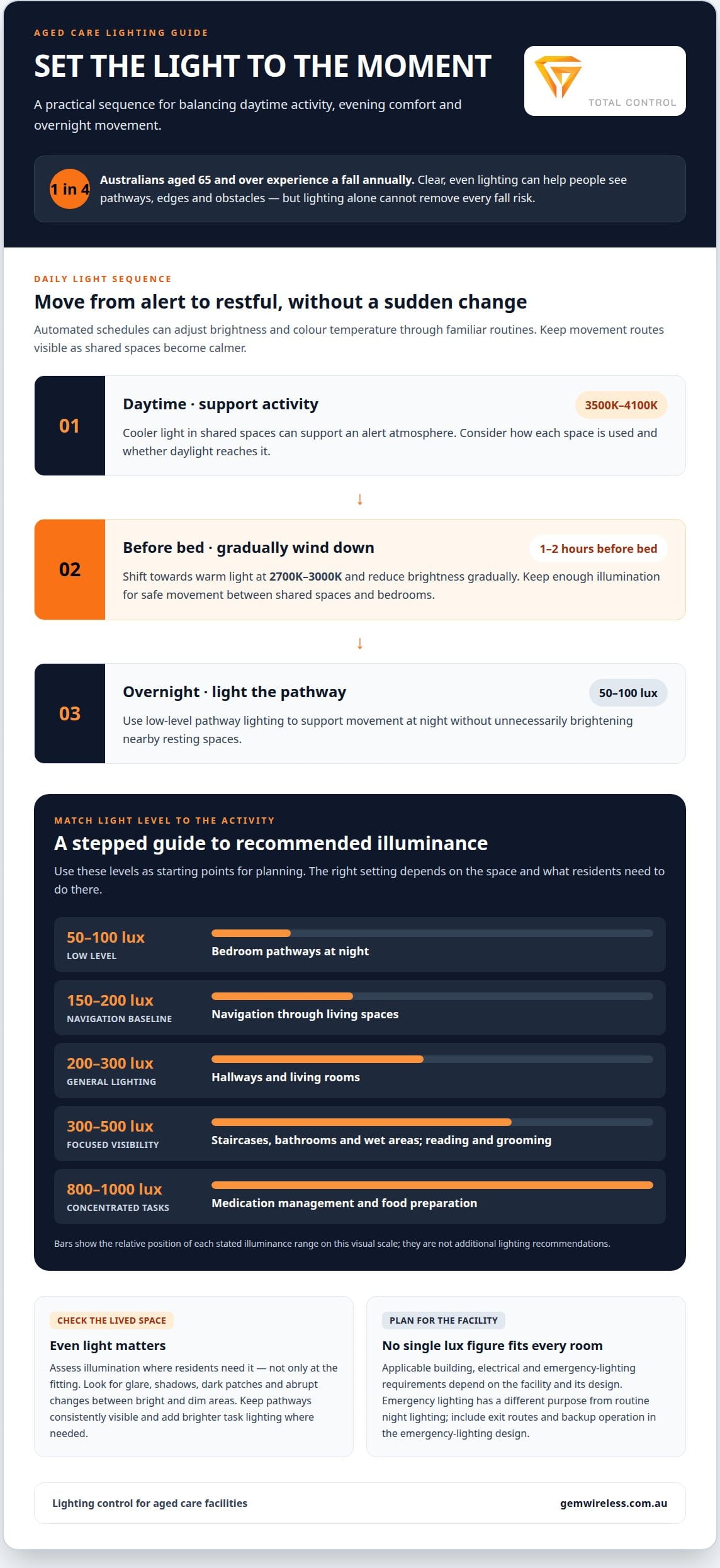
Lighting control for aged care facilities can do more than switch lights on and off: it can match brightness, colour temperature and timing to residents’ daily routines. Daytime settings may use cooler 3500K-4100K light, while evening schedules can shift to warm 2700K-3000K light in the 1-2 hours before bed. At night, 50-100 lux pathway lighting can provide a low level of illumination for movement.
Good lighting balances practical visibility with comfort. Brighter light can support focused activities such as reading and grooming, while softer light may suit rest and evening routines. Automated schedules and adjustable brightness make it easier to adapt lighting throughout the day instead of relying on one fixed setting.
This guide explains how light levels, colour temperature, dimming and schedules can support comfort and everyday activities in Australian aged care settings. You’ll learn how lighting needs differ by area, how day and night settings can work together, and what to consider when planning a control system. It also explains how wireless switching can simplify everyday lighting control.
Key Takeaways
- Match light levels to each space and activity to support clearer visibility for residents, from moving around to focused tasks.
- Use changing light colour and brightness to create a more natural transition between daytime activity and evening rest.
- Plan automated schedules around residents’ routines, with dimming options that let spaces shift comfortably through the day.
- Wireless switching modules can help make lighting easier to control while working with existing switches and lights.
What Are the Recommended Lighting Levels for Different Areas?
Lighting supports safer movement, but levels should suit each space and activity. About one in four Australians aged 65 and over experience a fall annually. Clear, even illumination can help residents see pathways, edges and obstacles. It can’t remove every fall risk, so avoid treating one brightness setting as a complete safety measure.
Use these recommended levels as starting points for planning. Bedroom pathways can use 50-100 lux at night, while 150-200 lux provides a baseline for navigation through living spaces. Hallways and living rooms can use 200-300 lux. Staircases, bathrooms and wet areas, plus focused activities such as reading and grooming, call for 300-500 lux. Concentrated tasks, including medication management and food preparation, may need 800-1000 lux. A considered approach to lighting control for aged care facilities matches these levels to room use.
Assess light where residents need it, not just at the fitting. Shadows, glare and abrupt changes between bright and dim areas can make walking harder. A hallway, for example, may be well lit but still have a dark patch at a doorway. Keep pathways consistently visible, and provide brighter task lighting where residents read, prepare food or manage medication.
Plan lighting for Australian aged care settings around applicable building, electrical and emergency-lighting requirements. The relevant provisions depend on the facility and its design, so there is no single lux figure for every room. Emergency lighting has a different purpose from routine night lighting. Include exit routes and backup operation in the facility’s emergency-lighting design.
Installation and lifecycle costs depend on the fittings, controls, wiring, facility size, access and maintenance needs. A practical budget separates equipment and installation costs from energy use, repairs and replacements. To limit disruption during a retrofit, stage work by area, keep resident routes illuminated, and coordinate noisy or access-restricting tasks with facility routines.
Commissioning should test each setting, sensor, dimmer and override in its intended space. Train staff to use controls, adjust settings and report faults, then review maintenance as fittings or residents’ needs change. Poorly planned lighting control for aged care facilities can cause glare, dark patches, confusing settings or abrupt changes in brightness, making movement less comfortable and potentially increasing trip hazards.
Lighting colour temperature and circadian rhythms
Light timing and colour influence how a resident experiences the day. A planned approach combines daytime illumination with calmer evening settings.
Circadian lighting and sleep-wake rhythms
According to the National Institute of General Medical Sciences, the human circadian rhythm has a period of approximately 24 hours. Morning daylight and a clear day-night pattern help provide environmental cues for this daily cycle. In shared spaces, cooler 3500K-4100K lighting during daytime can support an alert atmosphere. Consider how residents use each space, and whether daylight reaches it.
Lighting can follow familiar routines instead of changing abruptly. A dining area, for example, can be brighter at breakfast and calmer later in the evening. Tunable white lighting adjusts both intensity and colour temperature throughout the day. These settings help create a consistent environment, while leaving room for residents’ individual preferences.
Circadian rhythms and light-dark balance
A balanced light-dark routine provides daytime light, then reduces brightness as evening approaches. Natural daylight is an important cue, so consider room orientation, window access and how residents spend their mornings. Where daylight is limited, adjustable electric lighting offers a practical way to shape the indoor environment.
Evening settings can use warmer colour temperatures and less intense illumination in areas for winding down. Keep pathways visible without unnecessarily brightening nearby resting spaces. This helps facilities support movement and comfort without keeping every room equally bright all day.
Balancing resident and staff needs
Controls should give residents practical choices while keeping routine lighting easy for staff to manage. A simple control in a convenient location lets a resident adjust their immediate space. Staff can use consistent settings for shared tasks, then return the area to its usual evening environment.
Plan controls around everyday routines such as reading, personal care and overnight movement. Clear labels and predictable settings can help residents use controls independently. Staff also need a straightforward way to adjust lighting for care tasks. The goal is to support individual comfort without adding steps to daily care.
Adjustable brightness and warm colour temperatures
Brightness and colour temperature are separate settings. A dimmer changes the amount of light a fitting produces; colour temperature changes whether the light looks warmer or cooler. Adjusting both can suit a room to its current use. Residents may need clear, comfortable lighting for an evening activity, for instance, then a softer setting as the room shifts towards rest.
Warm evening lighting is typically set between 2700K and 3000K. Automated schedules can begin this shift in the 1-2 hours before bed, creating a gradual change rather than an abrupt switch. A lounge might move from a brighter shared setting to lower, warmer light as residents finish dinner and settle in. Keep enough illumination for safe movement between the lounge and bedrooms.
Set brightness for the task, not just the room. Reading, grooming and conversation have different lighting needs. A resident reading in a chair may need a nearby focused light, while others prefer a gentler level across the room. Adjustable controls can accommodate these preferences without making every fitting equally bright.
Practical control design matters. Put switches within residents’ reach, label settings clearly and keep the choices easy to understand. Clear brighter and dimmer options, for example, may be simpler to use than a long sequence of unfamiliar settings. Staff should also be able to adjust the light for care tasks, then restore the resident’s preferred setting.
Check transitions between neighbouring spaces. A brightly lit bathroom beside a dim bedroom can create a sharp contrast during night-time movement. Use gradual changes in brightness between rooms, and angle fittings away from direct eye level to limit glare. In a resident’s room, test the reading position, bedside area and route to the door separately. These checks help balance comfort, visibility and individual choice in the evening routine.
Automated schedules and dimming
Automated controls can follow facility routines, while dimmers adjust brightness for different activities. Effective lighting control for aged care facilities combines schedules with occupancy sensors and daylight controls, rather than relying on one control type throughout the building.
Set schedules around familiar transitions such as waking, shared meals and evening rest. A dining room, for example, can brighten before breakfast and return to a lower setting afterwards. Staff should have a straightforward manual override for care tasks or changes to the usual routine. This keeps programmed settings useful without making them rigid.
Occupancy sensors can activate pathway lighting when movement is detected. Nightlighting systems typically keep pathway lights on for 20-30 seconds, with a typical detection range of 3-5 metres. These settings can support night-time navigation while limiting unnecessary light and sleep disturbance. Positioning matters: a sensor should detect movement where residents need light, not only at a doorway. Allow a suitable hold time and provide a manual control where residents or staff need continued illumination.
Daylight controls respond to natural light entering a room. In a lounge beside windows, they can reduce electric lighting when daylight is sufficient, then increase it as daylight changes. This avoids keeping brightness fixed throughout the day. Check the result in occupied areas, since window position, furnishings and shadows affect how much light reaches residents.
When planning lighting control for aged care facilities, choose controls to suit each space and its users. A corridor may suit sensor activation, while a resident’s room may benefit from a dimmer and an accessible manual switch. Use clear labels, avoid sudden changes between adjoining spaces, and test schedules during daytime and night-time routines. Review settings with staff to keep overrides simple and give residents useful control.
For a practical way to add switching control, explore wireless lighting control options for existing switches and lights.
Gem Wireless
Gem Wireless provides wireless control for lighting and switching systems in aged care facilities. Its products work with existing switches and lights without rewiring, making them a practical option when a facility wants to simplify switching. This can complement a lighting plan built around residents’ routines. Brightness, colour temperature and schedules depend on the lighting equipment and controls selected.
Gem Wireless offers Switch Module Kits, Mains Powered Switches, Long Range Switches and Switching Modules. The right option depends on the switching arrangement and where staff or residents need convenient control. A facility could consider wireless switching, for example, if operating a light switch is part of a daily routine.
Contact Gem Wireless to discuss wireless switching for your aged care lighting needs.
Make the next lighting decision practical
Start with one priority for your facility, such as easier switching in a resident’s room or more convenient control in a shared space. Then consider how the control should fit existing lights, switches and daily routines. This gives your team a practical starting point for planning lighting control for aged care facilities, without trying to change every space at once.
Gem Wireless offers Switch Module Kits, Mains Powered Switches and Long Range Switches for lighting and switching systems. These products support wireless control while working with existing switches and lights. The right arrangement depends on the space and how residents and staff use it.
For a practical discussion about switching options for your facility, contact Gem Wireless about lighting. A considered next step can make everyday lighting easier to manage.
Frequently Asked Questions
Does Smart Lighting Provide Benefits Beyond Lighting?
Yes. Automated lighting can support daily routines, resident comfort and staff visibility in key areas. For example, pathway lights triggered by movement can help someone navigate at night without keeping an entire corridor brightly lit. Personal controls also give residents more choice over their immediate surroundings. These functions complement care routines, but lighting controls do not replace staff support or other safety measures.
What lighting levels are recommended for aged care bedrooms, bathrooms, corridors and common areas?
Suggested levels vary by location and activity. Bedroom pathways can use 50-100 lux at night; bathrooms and wet areas can use 300-500 lux. For navigation, 150-200 lux is a baseline, while hallways and living rooms can use 200-300 lux. These are planning recommendations, not a single setting for every room. Consider shadows, glare and the tasks residents perform in each space.
How can lighting control support residents with dementia and reduce falls?
Consistent lighting routines can provide clearer day and night cues for residents with dementia, while pathway lighting can support movement after dark. For example, a low-level light can activate along a bedroom route when someone gets up, then switch off after they pass. This may limit sleep disruption and reduce fall risks, but lighting alone cannot prevent every fall. Clear routes and appropriate care remain important.
How should circadian lighting and colour temperature be used in aged care facilities?
Use cooler 3500K-4100K lighting during daytime, then shift towards warmer 2700K-3000K light in the evening. A gradual change in the 1-2 hours before bed can help distinguish daytime activity from the wind-down period. For instance, a shared lounge can transition to a calmer setting after evening activities. Combine electric lighting with access to morning daylight where possible.
Which Australian suppliers provide aged care lighting control systems and what features do they offer?
Gem Wireless provides wireless control solutions for lighting and switching systems in Australia. Its Switch Module Kits, Mains Powered Switches, Long Range Switches and Switching Modules work with existing switches and lights without rewiring. These products provide wireless switching, rather than a complete circadian lighting or care-management system. Facilities can consider them when adding convenient control to an existing lighting setup is the priority.
adjustable lightingaged careaged care lightingcolour temperaturelighting controllighting schedulesresident comfortwireless switching