- Empty cart.
- Continue Shopping

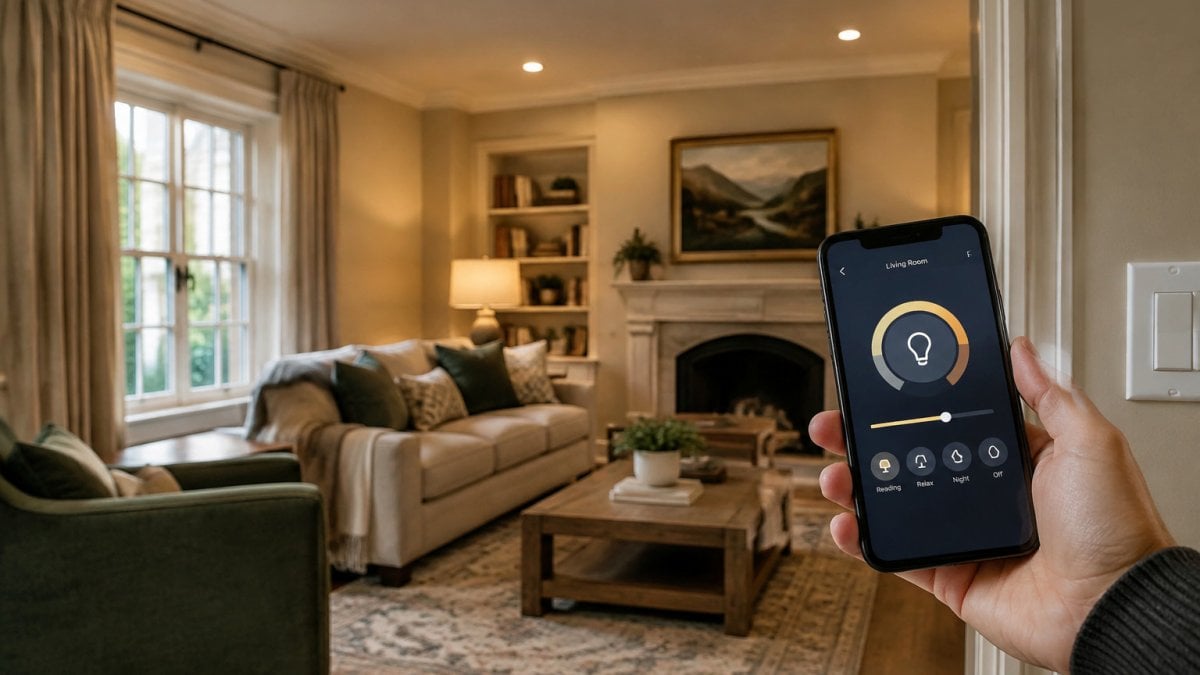
Last Updated: November 4, 2026
Quick Summary
Yes, smart lighting can usually be added to an older heritage home without damaging original features, provided you choose the least invasive method. Start by checking each switch for a neutral wire, whether the circuit is two-way, the box depth and the cable condition. Smart bulbs and wireless receiver kits avoid chasing walls, while in-wall switches need a neutral and a deep enough box.
- Check each switch for a neutral, two-way wiring, box depth and cable condition before buying.
- Smart bulbs keep the existing switch and fitting, so they avoid any wiring work.
- Choose warm white tones and adjustable colour temperature to suit period interiors.
- Start the installation with hallways, stairs and kitchen routes, where safety benefits most.
- Electrical work must be done by a licensed electrician, and heritage properties may need approval.
Table of Contents
- Smart Lighting for Older Heritage Homes: What Is Possible Without Damage
- Checking Your Existing Wiring Before You Buy: Neutrals, Two-Way Circuits and Switch Boxes
- Smart Bulbs for Old Light Fittings: Shape, Colour Temperature and Heritage Appearance
- Wireless Lighting Control Without Rewiring: Switch Kits, Dimming and Remote Access
- Room-by-Room Installation Plan for a Heritage Home
- Smart Lighting for Accessibility: Ageing Eyes, Mobility and Fall Prevention
- Wireless Switch Kits for Disability Support and When to Call a Licensed Electrician
- Frequently Asked Questions
Smart Lighting for Older Heritage Homes: What Is Possible Without Damage
Many owners of period homes want modern control over their lights without tearing into walls that date back a century. The same question comes up again and again.
Smart lighting is a broad term. It can mean smart bulbs that swap into existing fittings, wireless switches that replace or sit beside a standard wall plate, or a full automation system wired into the building.
Smart lighting is any lighting system where you can switch, dim or schedule lights remotely, by app, voice or timer, without relying only on the wall switch.
Most owners in this position face the same few concerns:
- Original plaster ceilings and mouldings that crack when chased for cable
- Limited or no neutral wire at the switch
- Listed-building restrictions on altering fixtures or wiring
- Old switch boxes too shallow for modern electronics
Start by deciding what you actually need. Do you want remote on and off, dimming, or simply the ability to control a whole room from one place?
Checking Your Existing Wiring Before You Buy: Neutrals, Two-Way Circuits and Switch Boxes
Before you choose any product, check how your lights are wired now.
Work through each switch in the rooms you want to control and record four things: whether a neutral is present, whether the circuit is two-way, the depth of the box, and the cable type. A simple table or phone note per room is enough.
Neutral wire. Many older switch boxes carry only the live and switched live. Some smart switches need a neutral to power their electronics.
Two-way circuits. A light controlled from two places, such as a hallway and landing, uses a different wiring arrangement. A single smart switch module often cannot replace one end of a two-way circuit without losing the other switch. Options include a smart module designed for two-way use, a wireless kit with a receiver at the light fitting, or smart bulbs that leave the existing switches untouched.
Box depth. Shallow boxes may not fit a modern module behind the plate.
Cable condition. Old rubber-insulated cable, fabric-covered flex and aluminium conductors all behave differently from modern PVC cable.
Once you have those four facts per switch, the decision path is straightforward:
- No neutral, single switch: choose smart bulbs or a wireless receiver kit at the light fitting. Avoid in-wall smart switches that require a neutral.
- Neutral present, single switch: an in-wall smart switch is viable, provided the box is deep enough and the cable is sound.
- Two-way circuit: use a two-way-compatible module, a wireless kit, or smart bulbs. Do not assume a standard smart switch will work at both ends.
- Shallow box or fragile cable: keep the original switch and use smart bulbs or a receiver module elsewhere on the circuit.
Watch out: switching the wrong conductor can damage a device or create a shock risk.
Taking photos of each switch and its wiring before you buy helps you compare options accurately.
The article’s checklist breaks down the wiring checks to make before buying, with the likely route for each situation.
| Situation | Suitable option | Key caution |
|---|---|---|
| No neutral, single switch | Smart bulbs or wireless receiver kit | Avoid in-wall smart switches needing a neutral |
| Neutral present, single switch | In-wall smart switch | Box must be deep enough and cable sound |
| Two-way circuit | Two-way module, wireless kit or smart bulbs | Standard smart switch may not work at both ends |
| Shallow box or fragile cable | Keep original switch; use bulbs or receiver elsewhere | Brittle insulation can crumble when disturbed |
Smart Bulbs for Old Light Fittings: Shape, Colour Temperature and Heritage Appearance
Smart bulbs are often the simplest route in a heritage home. You keep the existing switch and fitting, and you replace only the bulb. That protects original features and avoids any wiring work.

Pay attention to three things when choosing:
- Bulb shape and size. Check the fitting type (such as bayonet or screw) and whether the bulb physically fits the shade or open fitting. Some decorative fittings take only small or candle-style bulbs.
- Colour temperature. Warm white tones suit period interiors better than cool blue-white light. Look for a warm setting that you can adjust.
- Appearance when off. A bulb sitting visibly in a glass or open fitting may look modern in a way that clashes with original decor.
If someone turns the wall switch off, the bulb loses power and cannot respond to your app or voice command. Label the switch or tape it so household members leave it on.
Many owners find that a mix works best: smart bulbs in decorative fittings and a wireless switch for main living spaces. This keeps the look consistent while still giving full control where it matters most. Integrating smart plugs for lamps allows you to automate vintage fixtures without replacing their original wiring or compromising the period aesthetic.
Wireless Lighting Control Without Rewiring: Switch Kits, Dimming and Remote Access
Wireless switch kits are one option for controlling existing lights without running new cable through plaster, ceilings or timber.
A wireless approach generally involves a receiver module at the light and a wireless switch or remote. Dimming and app-based control depend on the specific module and bulbs chosen, so check the product details for what is supported.
For heritage homes, the key benefit is minimal disturbance. You avoid chasing walls, lifting floorboards or cutting into cornices.
Check these points before buying a kit:
- Whether the module needs a neutral or works without one
- Which bulb types dim reliably with the module
- Whether control still works if the internet or Wi-Fi drops
Confirm with the product documentation whether local switching keeps working when the internet is down, because it affects daily reliability in a family home.
Pricing depends on quantity, dates and delivery, so request a quote from Gem Wireless for current figures.
Room-by-Room Installation Plan for a Heritage Home
A staged plan keeps a project manageable and protects the house.
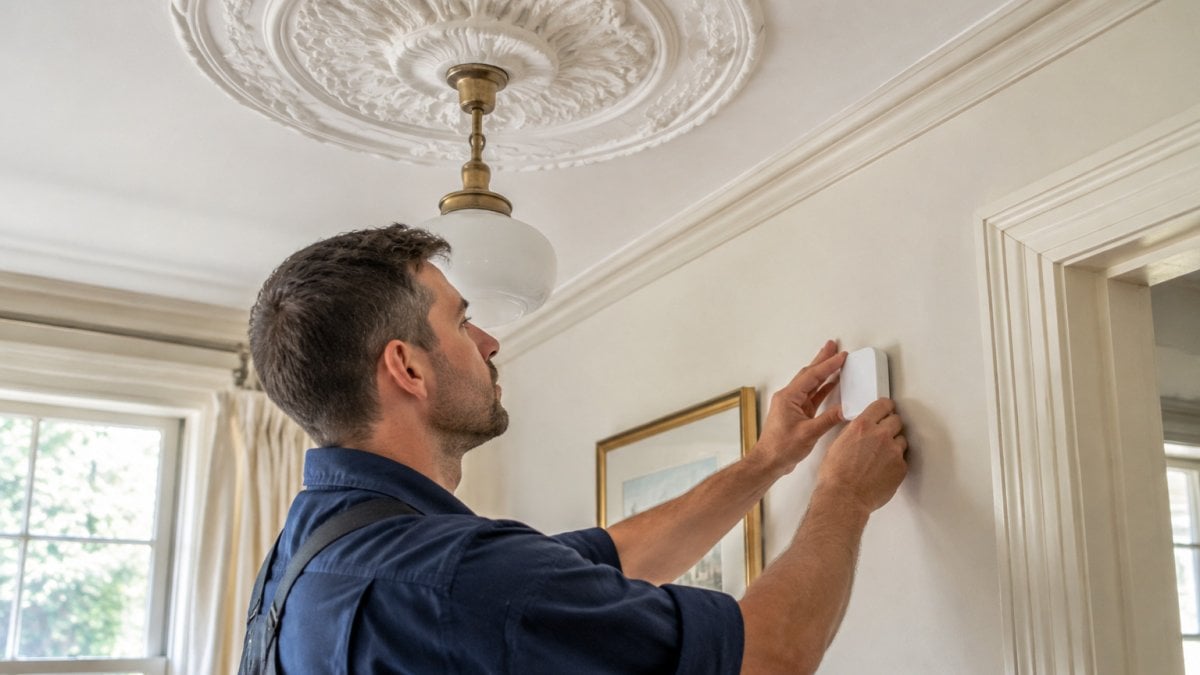
Step 1: Survey each room. Note each light, switch and circuit.
Step 3: Choose a method per room.
- Hallway and stairs: smart bulbs or a wireless receiver kit, with a motion or schedule trigger for night-time. Keep the original switch working as a manual override.
- Kitchen: smart bulbs in existing pendants or downlights, plus a wireless switch at the main entrance to the room. Avoid in-wall modules where the box is shallow or the cable is old.
- Living room: smart bulbs in decorative fittings, with a wireless remote or a smart plug for lamps. This is the room where dimming and scenes are most used.
- Bedroom: a bedside remote or voice control, plus a low-level night light on a schedule. Confirm the fallback switch is reachable from the bed.
- Bathroom: only use fittings rated for the zone, and have any alteration checked by an electrician. Smart bulbs are usually the least invasive option here.
Step 4: Protect original features. Use removable fixings where possible. Avoid chasing plaster or drilling through mouldings. Keep original fittings you remove, labelled and stored, so you can restore them later.
Step 5: Test before finishing. Check each light on, off, dim and scene settings.
Step 6: Stage the work. Doing one floor or one zone at a time gives you time to learn which features your household actually uses.
Smart Lighting for Accessibility: Ageing Eyes, Mobility and Fall Prevention
Smart lighting can make a heritage home safer and easier to use as residents age.
Consider these practical measures:
- Brighter, even lighting on stairs and landings to reduce trip risks
- Night-time path lighting that turns on at low level when you get out of bed
- Voice or remote control so no one has to cross a dark room to find a switch
- Scheduled lights that come on automatically at dusk or at set times
Ageing eyes need more light and better contrast to see clearly. Warm, adjustable light at a level you can raise helps a great deal. Dimming lets you lower light for rest without losing the ability to see at night.
Mobility is also a factor. Placing a switch at a convenient height, or adding a remote or voice option, reduces the need to reach or move through unlit areas.
Reliability matters here. If a light depends on an app and the app fails, a person may be left in the dark. Choose systems that keep a working manual switch, and test the fallback before relying on it.
Wireless Switch Kits for Disability Support and When to Call a Licensed Electrician
Wireless switch kits can be considered for people with disability, particularly where remote or wall-mounted control is easier than a standard switch.
Think about who will use the system. A switch that works well for a fit adult may be hard for someone with limited grip or reach. Consider larger switches, remote fobs or voice control.
Some work should always go to a qualified professional. Call a qualified electrician when:
- You are unsure whether a switch has a neutral or which conductor is live
- The home is a listed building and changes may need approval
- The circuit needs new wiring or a new consumer unit
- Any work involves mains supply you cannot safely isolate and test
In Australia, electrical work must be done by a licensed electrician, and heritage properties can have additional approval requirements. Check with your local council or heritage body before altering original features.
When you are ready to act, you can request a quote for wireless installation from Gem Wireless. For most homes, a simple first step is to add light switches without rewiring, starting with the rooms that matter most. If you are still weighing costs, a side-by-side look at wireless switch kits and traditional wiring can help you decide.
Frequently Asked Questions
How can you add smart lighting to an older home without rewiring?
Most older homes can gain smart lighting without new cabling by using smart bulbs in existing light fittings or wireless switch modules that sit behind or beside existing switches. Some wireless options avoid new cabling, so the original wiring can stay in place. Start by confirming the circuit has a working switch and that the fittings are sound. Pricing depends on how many rooms you upgrade, so request a quote from Gem Wireless for current figures.
Are smart switches compatible with old wiring?
Compatibility depends on the switch box and whether a neutral wire is present. Many older Australian homes have no neutral at the switch, which can limit some smart switches. Wireless modules that do not need a neutral, or that work with two-way circuits, are often a better fit for these homes. Check your wiring with a qualified electrician before buying, especially where the building is heritage listed and changes need approval.
Are smart bulbs suitable for heritage light fittings?
Smart bulbs can suit heritage fittings if the bulb shape, size and base match the fitting. Choose a warm colour temperature for a period look and check that the bulb fits any glass shade or cover. Avoid bulbs that are too heavy for delicate pendants or sconces. Test one fitting first, and keep the original bulbs so the fittings can be restored if needed.
Can smart lighting make an older home easier to use for people with mobility or sight difficulties?
Yes. Remote and voice control can reduce the need to walk to a switch in the dark, and dimming helps with glare. Motion-activated night lighting in hallways and bathrooms can reduce fall risk. Use brighter, evenly spread light at switch positions and stairs. Wireless switch kits can be placed at a comfortable height without new cabling, which suits family members managing care at home.
Get in touch with Gem Wireless to talk through your heritage home and find a control setup that protects the features you value.

smart bulbs for old light fittingssmart lightingsmart lighting for accessibilitysmart lighting for older heritage homeswireless lighting control without rewiring