- Empty cart.
- Continue Shopping
What are the best alternatives to RevBC for commercial projects?
- Posted on
 Strong Digital
- 0
- Categories: Blog

Last Updated: October 25, 2026
Quick Summary
Alternatives to RevBC commercial include wireless lighting controls like Gem Wireless switch modules, which require no in-wall wiring and deploy in 3-7 days, and traditional wired systems that offer interference-free performance but take 2-4 weeks to install. The best choice depends on your building’s infrastructure, timeline, and need for future reconfiguration.
- Wireless systems install in 3-7 days compared to 2-4 weeks for wired alternatives
- Wireless controls work in older buildings lacking neutral wires, where RevBC may face constraints
- Gem Wireless modules integrate with existing switches and lights through a mobile app with no specialised training required
- Wireless systems cost more per control point but reduce labour intensity and allow easy reconfiguration
- Wired systems suit new construction, whilst wireless systems typically win for retrofits and flexible spaces
Table of Contents
- Why businesses look for alternatives to RevBC
- Commercial lighting control systems: what you need to know
- Wireless lighting controls for commercial buildings
- Wired vs wireless lighting controls: which suits your project?
- Lighting control installation costs: what affects your budget
- Gem Wireless: a practical alternative for commercial projects
- Getting started with your commercial lighting solution
- Frequently Asked Questions
Why businesses look for alternatives to RevBC
RevBC has established itself in the commercial lighting automation space, but it isn’t the right fit for every project. Some businesses outgrow its capabilities. Others find the integration process more complex than expected. A few discover that the upfront investment doesn’t align with their timeline or budget constraints.
The real reason most teams explore alternatives, though, is simpler: they need a solution that matches their specific workflow. One contractor might prioritise installation speed. Smart Lighting Retrofit for Commercial Properties explores modern commercial lighting solutions that address these specific needs. Another needs wireless controls that work in older buildings with unconventional wiring. A third wants technology that doesn’t require extensive retraining.
At Gem Wireless, we’ve worked with electricians, builders, and property managers across the region who’ve faced these exact challenges. What they share is a need for straightforward, cost-effective lighting control that actually integrates with how they work, not against it. This guide breaks down the alternatives to RevBC commercial, helping you identify which system aligns with your operational priorities.
Commercial lighting control systems: what you need to know
Commercial lighting control systems are the backbone of modern building automation. They allow facility managers and business owners to manage lighting across multiple zones, adjust brightness remotely, and automate schedules, all without rewiring entire buildings.
The core function is straightforward: centralised control over distributed lighting. But the implementation varies dramatically depending on whether you choose wired infrastructure, wireless modules, or a hybrid approach.
Most commercial lighting control systems share common features: remote access via mobile or desktop interfaces, scheduling capabilities, energy monitoring, and integration with building management systems. The differences emerge in installation complexity, scalability, and total cost of ownership.
The choice between systems often hinges on three factors. First, your building’s existing infrastructure, does it have neutral wires in the walls, or are you working with older electrical layouts? Second, your timeline. Wireless solutions typically deploy faster than traditional wiring. Third, your budget for labour versus equipment. Wired systems require more skilled installation time; wireless systems shift cost toward the modules themselves.
Energy efficiency standards for commercial buildings recommend automated lighting controls as a foundational element of operational efficiency. Understanding your options means matching the right technology to your building’s actual constraints.
Wireless lighting controls for commercial buildings
Wireless lighting controls eliminate the need for running new cables through walls and ceilings. Instead of traditional in-wall wiring, wireless modules communicate with a central hub or directly with a mobile application.
The advantage is installation speed. A commercial retrofit that might take weeks with traditional wiring can often be completed in days. Labour costs drop significantly because electricians aren’t spending hours fishing cables through existing structures or cutting into plasterboard.
Wireless systems work best in environments where you need flexibility. If your business layout changes, retail spaces reconfigured, office zones reorganised, wireless controls adapt without expensive rewiring. You can relocate a switch module by simply moving it to a new location and updating the app.
The limitation is range. Most wireless systems operate effectively within 30-50 metres of the central hub, depending on building materials and interference. Dense concrete or metal structures can reduce range. For very large commercial spaces, you may need multiple hubs or a mesh network topology.
Gem Wireless wireless switch modules offer alternatives to RevBC commercial, designed specifically for this challenge. They integrate with existing switches and lights, require no in-wall wiring, and work through a mobile application. The plug-and-play design means installation happens quickly, and your team can modify zones without calling in additional electricians.
Wired vs wireless lighting controls: which suits your project?
Wired lighting controls use physical cables running through walls to connect switches, dimmers, and lighting fixtures to a central control unit. This is the traditional approach and remains the standard in many new builds.
Wireless lighting controls use radio frequency communication instead of physical wires. Modules communicate with a hub or directly with your phone.
The trade-off is direct: wired systems cost more upfront in labour but offer reliable, interference-free performance and work in any building. Wireless systems cost less to install but depend on radio signal strength and may require additional infrastructure in large spaces.
| Factor | Wired | Wireless |
|---|---|---|
| Installation time | 2-4 weeks | 3-7 days |
| Labour intensity | High (cable routing, termination) | Low (module placement) |
| Range limitations | None | 30-50m per hub |
| Retrofit difficulty | Difficult (requires wall access) | Easy (surface-mounted modules) |
| Flexibility to reconfigure | Low (rewiring needed) | High (move modules, update app) |
| Initial equipment cost | Lower | Higher per control point |
| Long-term scalability | Good (add circuits) | Good (add modules and hubs) |
For new construction, wired systems make sense if the building is designed around them from the start. The labour is planned, budgeted, and built into the project timeline.
For retrofits and renovations, wireless systems typically win. You avoid the cost and disruption of cutting into existing structures. Wireless switch kits vs traditional wiring: cost breakdown provides a detailed comparison of total project costs under different scenarios.
For businesses that need to change their layout frequently, retail stores, flexible office spaces, hospitality venues, wireless is almost always the better choice. The ability to reconfigure without calling an electrician saves money and time repeatedly over the system’s life.
Lighting control installation costs: what affects your budget
Installation cost depends on five primary variables: building size, existing electrical infrastructure, control complexity, labour rates in your region, and whether you’re retrofitting or building new.
Labour is typically the largest component. Skilled electricians command premium rates, and wired installations require more hours per control point. Wireless installations reduce labour time, but the modules themselves carry a higher per-unit cost than traditional switches.
Building age and condition matter significantly. Older buildings often lack neutral wires in switch boxes, a requirement for many wired control systems. Working around this constraint adds cost. Wireless systems bypass this problem entirely because they don’t depend on neutral wires.
Complexity scales cost quickly. Simple on-off control in a single zone costs far less than zone-based dimming across multiple areas with scene recall and scheduling. Integration with existing building management systems adds engineering time.
Wireless light switch kits: installation & cost guide breaks down the typical cost drivers and shows how to estimate your project. The key insight is that faster deployment means your building generates revenue sooner, which can offset higher equipment prices.
Gem Wireless: a practical alternative for commercial projects
Gem Wireless wireless switch modules are purpose-built for commercial environments where installation speed and cost control matter. The system requires no in-wall wiring, works with any existing switch or light, and integrates through a straightforward mobile application.
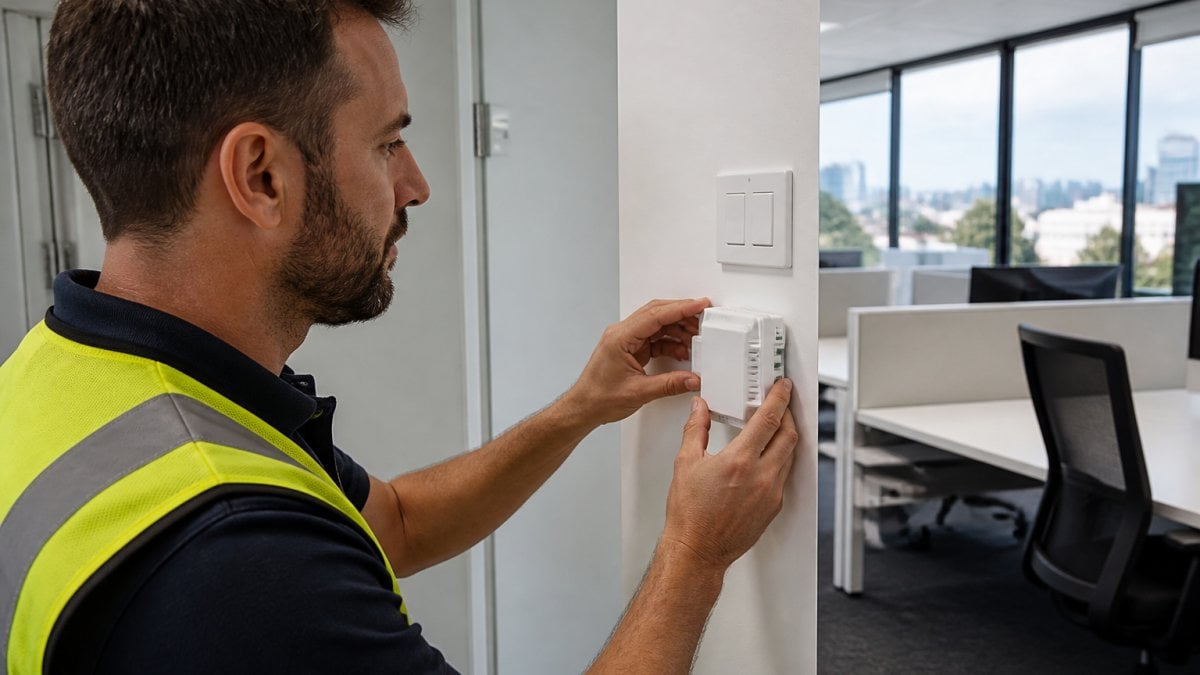
The core advantage is simplicity. Your electricians don’t need specialised training in proprietary control systems. They install the modules, connect them to power, and hand over a mobile app to your facilities team. Configuration happens through the app, no programming required.
For commercial projects, Gem Wireless delivers three concrete benefits. First, installation timelines compress dramatically. A retrofit that traditionally takes weeks completes in days. Second, labour costs drop because electricians spend less time on-site. Third, you retain complete flexibility to adjust zones, add controls, or reconfigure layouts without additional wiring work.
The system works in older buildings where neutral wires are missing or inaccessible. It works in new construction where you want to avoid the expense of running control cables. It works in retail spaces that need to change their layout seasonally or in hospitality venues where lighting scenes need to adapt to different service periods.
Gem Wireless is family-owned and operates with a clear commitment to accessibility and efficiency. The technology is strong enough for commercial environments but simple enough that your team can manage it without ongoing vendor support.
Getting started with your commercial lighting solution
Choosing the right lighting control system starts with understanding your building’s constraints and your project’s priorities. Ask yourself these questions: What’s your timeline? How critical is installation speed? Do you need flexibility to reconfigure later? What’s your total budget, including labour?
If you’re working with older infrastructure, wireless solutions typically offer faster deployment and lower labour costs. If you’re building new and can plan wiring during construction, a wired system may offer long-term advantages in reliability and range.
The next step is to evaluate systems that match your answers. Request demonstrations. Ask vendors about their experience with buildings similar to yours. Understand the total cost of ownership, not just equipment prices.
Frequently Asked Questions
What are the main alternatives to RevBC for commercial lighting control?
Alternatives to RevBC include both wired and wireless solutions. Wireless options like Gem Wireless offer plug-and-play installation without wall rewiring, making them ideal for retrofits and new builds where labour costs matter. Wired systems provide traditional hardwired control but require extensive in-wall installation. Your choice depends on your project scope, timeline, budget, and whether you’re retrofitting existing spaces or building new.
How do wireless lighting controls for commercial buildings compare with wired systems?
Wireless lighting controls eliminate the need for running cables through walls, reducing installation time and labour costs significantly. They’re easier to reconfigure if you need to change switch locations. Wired systems offer traditional reliability but require more upfront installation work and cost. For commercial projects, wireless solutions work particularly well in retail, hospitality, and office environments where flexibility and quick installation matter. Wired systems may suit projects where you’re already doing major rewiring.
Can I add wireless lighting controls to an existing commercial property without rewiring?
Yes. Wireless lighting control systems like Gem Wireless are designed specifically for this. They integrate with your existing switches and lights without requiring new wall wiring. This makes them ideal for commercial retrofits, renovations, and properties where running new cables would be disruptive or costly. Installation typically involves mounting wireless modules and setting up mobile app control, which electricians can complete quickly without major structural work.
What factors affect lighting control installation costs for commercial projects?
Installation costs depend on several factors: whether you’re retrofitting or building new, the number of zones you need to control, distances between switches and lights, and whether you choose wired or wireless systems. Wireless systems generally reduce labour costs because they eliminate wall rewiring. Building size, complexity of automation requirements, and local electrician rates also play a role. Get quotes from installers who understand both wired and wireless options to compare true project costs.
Gem Wireless offers a proven alternative for commercial projects where installation speed and cost control are priorities. The wireless switch modules integrate with existing infrastructure, require no in-wall wiring, and deploy through a straightforward mobile application. Get in touch today to discuss your commercial lighting control project and discover how wireless automation can simplify your next installation.

alternatives to revbc commercialcommercial lighting control systemsrevbc alternative for commercial projectswireless lighting controls for commercial buildings