- Empty cart.
- Continue Shopping

Table of Contents
- What Are Wireless Lighting Control Modules and Why They Matter
- Wireless Light Switch Modules: Installation and Compatibility
- Wireless Switch Kits for Disability Support and Accessibility
- Wireless Lighting Controls for Heritage Properties
- Wireless LED Lighting Controller Features and Benefits
- Cost Comparison: Wireless Modules vs Traditional Rewiring
- Choosing the Right Wireless Lighting Control Module for Your Project
- Frequently Asked Questions
Last Updated: 21 October 2026
What Are Wireless Lighting Control Modules and Why They Matter
Wireless lighting control modules are standalone devices that enable remote operation of lights and switches without requiring new wiring in walls. At Gem Wireless, we’ve designed these systems to solve a fundamental problem: traditional electrical upgrades demand expensive rewiring, extended labour costs, and disruption to properties. Our wireless switch module kits offer plug-and-play installation that works alongside existing infrastructure.
The appeal is straightforward. Whether you’re retrofitting a heritage property, managing aged care facilities, or building new commercial spaces, wireless lighting control modules eliminate the need to cut into walls, thread cables, and install new switch boxes. You control lighting from your mobile application, change switch locations without physical rewiring, and integrate seamlessly with existing electrical systems.
For electricians and contractors, this translates to faster job completion and reduced material waste. For property managers and homeowners, it means cost-effective automation without the mess and expense of traditional upgrades. The technology works with any switch or light, making it genuinely flexible across different property types and ages.
Wireless Light Switch Modules: Installation and Compatibility
Wireless light switch modules install directly into existing switch plates or operate as standalone devices paired with your current electrical setup. Installation typically requires no wall modifications and no specialist training beyond standard electrical safety practices.
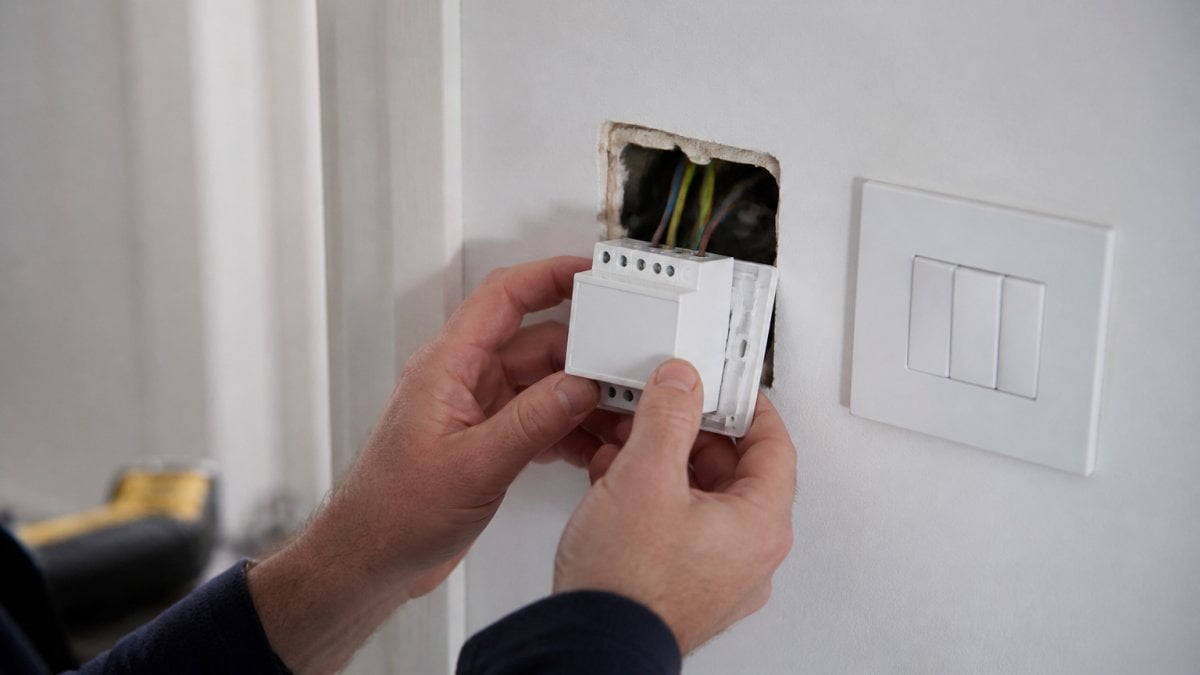
Compatibility is where these modules shine. Unlike smart home systems that demand specific wiring configurations or proprietary switches, wireless modules work with almost any existing light fitting or switch. This matters enormously for older properties where neutral wires are absent, for heritage buildings where rewiring is restricted, and for rental properties where permanent modifications aren’t permitted.
The installation process involves mounting the receiver module near the light circuit, pairing it with wireless transmitters, and testing the connection. Most jobs take a fraction of the time required for traditional rewiring.
Pro Tip
Before specifying wireless modules, confirm the light circuit can handle the module’s power rating. Most modern circuits will, but older installations with undersized wiring may need assessment. This takes minutes but prevents costly callbacks.
Before specifying wireless modules, confirm the light circuit can handle the module’s power rating. Most modern circuits will, but older installations with undersized wiring may need assessment. This takes minutes but prevents costly callbacks.
Wireless Switch Kits for Disability Support and Accessibility
Wireless switch kits transform accessibility for people with mobility limitations, elderly residents, and those managing chronic conditions. Remote control eliminates the need to reach physical switches, climb stairs to access different rooms, or struggle with traditional switch mechanisms that require fine motor control.
For aged care facilities and disability support environments, wireless systems enable residents to control their environment independently. A person with limited mobility can adjust lighting from bed, from a wheelchair, or from anywhere in the room using a mobile app or wireless remote. This independence improves quality of life and reduces carer workload.
Facilities report that wireless lighting control modules simplify evening routines, reduce fall risks by eliminating the need to navigate dark spaces to find switches, and allow staff to respond faster to requests. The systems integrate with existing care protocols without requiring staff retraining or expensive infrastructure overhauls.
Installation in care settings is straightforward because no rewiring is needed. You can upgrade a single room, a ward, or an entire facility without disrupting operations. The modular approach means costs scale with your needs rather than requiring full-property commitments.
Wireless Lighting Controls for Heritage Properties
Heritage properties present unique challenges. Rewiring often violates conservation requirements, damages historic fabric, and requires approvals that delay projects. Wireless lighting control modules bypass these obstacles entirely because they require no wall modifications, no new conduits, and no alteration to original electrical infrastructure.
A common mistake is assuming heritage properties must accept outdated lighting control. Wireless systems deliver modern functionality, mobile app control, scheduling, dimming, scene creation, without touching the original wiring or aesthetic. You preserve the property’s integrity while adding contemporary convenience.
Many heritage property owners and managers find that wireless modules satisfy both conservation requirements and resident expectations. The technology sits outside the historic fabric, making it removable if needed and compliant with heritage standards that prohibit permanent alterations.
Installation in these properties requires the same care as any upgrade: proper electrical safety, testing, and documentation. But because no rewiring is involved, the process is faster, cleaner, and less likely to uncover hidden complications that plague traditional upgrades.
Watch Out
Heritage properties often have unusual electrical configurations. Always test wireless module compatibility with existing circuits before committing to a full installation. A simple test takes minutes and prevents specification errors.
Heritage properties often have unusual electrical configurations. Always test wireless module compatibility with existing circuits before committing to a full installation. A simple test takes minutes and prevents specification errors.
Wireless LED Lighting Controller Features and Benefits
Wireless LED lighting controllers offer granular control over brightness, colour temperature, and timetabling. These aren’t simple on-off switches; they’re automation systems that adjust lighting based on time of day, occupancy, or manual input.
Key features include mobile app control, which lets you manage lighting from anywhere; scheduling, which automates lighting changes across the day; scene creation, which sets multiple lights to specific levels with one command; and integration with existing systems, which means you don’t need to replace working infrastructure.
The benefits compound across different property types. In retail environments, automated lighting reduces energy consumption and improves customer experience. In offices, circadian lighting adjusts colour temperature throughout the day to support alertness. In hospitality, scene creation simplifies room turnover and guest control.
For residential applications, wireless LED controllers eliminate the need for separate dimmer switches, complicated wall-mounted panels, or multiple remotes. Everything operates from one mobile app, and family members can adjust settings without technical knowledge.
Key Takeaway
Wireless LED controllers offer significant benefits through energy savings and reduced labour costs.
Wireless LED controllers offer significant benefits through energy savings and reduced labour costs.
Cost Comparison: Wireless Modules vs Traditional Rewiring
The financial case for wireless lighting control modules centres on labour and material savings. Traditional rewiring demands wall chasing, conduit installation, new switch boxes, cable runs, and extensive labour. Wireless modules eliminate most of these costs. Streamlining the deployment process through these devices significantly reduces the complexity inherent in smart lighting installation for residential properties.
Typical labour savings range from 40 to 70 percent compared to full rewiring projects, depending on property complexity. Material costs drop because you’re not buying new wiring, conduit, switch boxes, or associated fittings. For large properties or commercial spaces, these savings accumulate quickly.
Beyond direct installation costs, wireless modules reduce project timescales. Faster completion means lower overhead for contractors, earlier occupancy for property owners, and reduced disruption for existing residents or businesses. This speed advantage often justifies the wireless approach even when material costs alone are similar.
The financial analysis becomes clearer when you factor in complexity. Older properties with unusual wiring, heritage properties with conservation restrictions, and rental properties where permanent modifications aren’t permitted often see wireless modules as the only cost-effective option. In these scenarios, the comparison isn’t wireless versus rewiring, it’s wireless versus doing nothing.
Choosing the Right Wireless Lighting Control Module for Your Project
Selecting the right system depends on your property type, electrical configuration, and control requirements. Start by assessing your current infrastructure: identify the circuits you want to control, check for neutral wires if your property is older, and confirm power ratings of existing lights.
Next, define your control needs. Do you need simple on-off switching, dimming, colour temperature adjustment, or full automation? Will you control one room or multiple zones? Do you need mobile app access, voice control, or physical remotes? These requirements narrow your options considerably.
Compatibility with existing systems matters. If you’re integrating with other smart home devices or building management systems, confirm the wireless modules support those integrations. Gem Wireless systems integrate seamlessly with existing infrastructure, which simplifies planning and reduces unexpected complications.
Finally, consider installation support and ongoing service. You want a supplier who understands your property type and can advise on optimal placement, configuration, and troubleshooting.
| Consideration | What to Assess | Why It Matters |
|---|---|---|
| Property type | Heritage, rental, new build, commercial | Determines installation options and regulatory requirements |
| Electrical configuration | Circuit capacity, neutral wire presence | Affects module compatibility and performance |
| Control scope | Single room, multiple zones, whole property | Influences cost and complexity |
| Integration needs | Existing smart home systems, building management | Determines system compatibility and setup effort |
| Support requirements | Installation guidance, troubleshooting, maintenance | Affects long-term satisfaction and reliability |
Wireless lighting control modules represent a genuine shift in how properties approach lighting automation. They eliminate the expense and disruption of traditional rewiring whilst delivering modern control functionality across residential, commercial, and specialist environments. Whether you’re managing heritage properties, supporting disability accessibility, or building new spaces, wireless systems offer cost-effective, flexible solutions that work with existing infrastructure rather than demanding expensive replacements.
The decision to upgrade lighting control no longer requires choosing between cost and capability. With wireless modules, you achieve both. Get in touch with Gem Wireless today to discuss how wireless lighting control modules can simplify your next project and deliver genuine savings in labour, materials, and installation time.
Frequently Asked Questions
Can wireless lighting control modules work with existing light switches?
Yes. Wireless lighting control modules are designed to integrate with existing switches and light fittings without requiring in-wall rewiring. They work by replacing or supplementing your current setup, allowing you to control lights remotely via mobile app or wireless switch. This compatibility makes them ideal for retrofits and renovations where disrupting walls isn’t practical.
Are wireless lighting control modules compatible with LED lights?
Wireless LED lighting controllers are fully compatible with modern LED fittings. LED technology’s lower power draw actually makes wireless control more efficient and reliable. When selecting a wireless lighting control module, verify the specifications match your LED wattage and voltage to ensure optimal performance and longevity.
What happens if wireless lighting controls fail or lose connection?
If the wireless connection drops, you can still operate lights using physical switches. Get in touch with Gem Wireless today to discuss support options.
Do wireless switch kits for disability support require professional installation?
The complexity of installation depends on your existing electrical setup. Properties without neutral wires or older installations may require a qualified electrician to assess compatibility. Professional installation also ensures the system meets accessibility standards and integrates properly with your home automation.
buy wireless lighting control moduleswireless light switch moduleswireless lighting control moduleswireless switch kits for disability support