- Empty cart.
- Continue Shopping
Does Smart Lighting Increase Home Value? What It May Mean for Resale
- Posted on
 Strong Digital
- 0
- Categories: Uncategorized
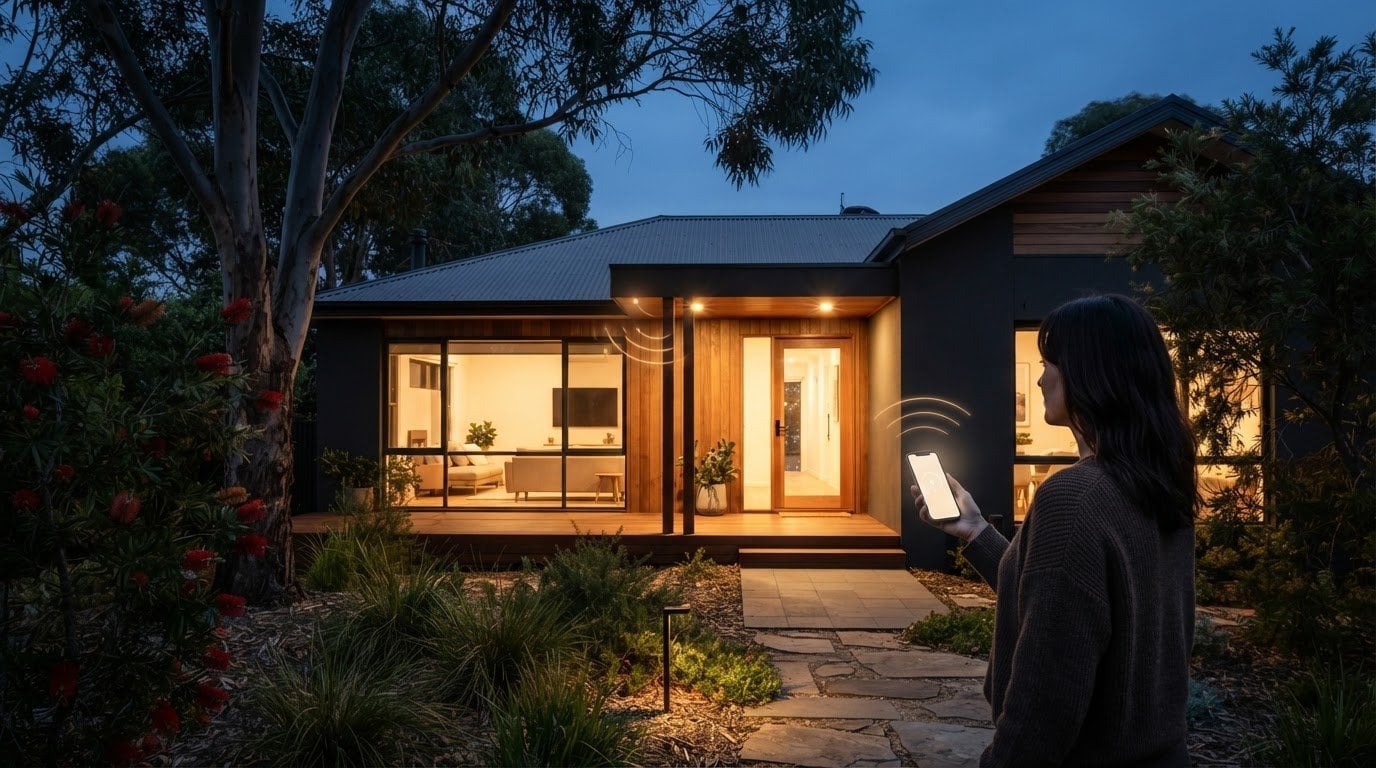
Smart lighting can make a home feel more modern, but it should not be treated as a guaranteed boost to its sale price. Does smart lighting increase home value? It may improve buyer appeal through convenience and a sense of being up to date, rather than add a predictable amount to the final price.
The appeal is easy to understand: controlling lights from a phone can simplify daily routines and make a home feel current. But resale value depends on more than one feature. Buyers may care more about a home’s overall condition and practicality than its technology.
This article looks at how smart lighting may support future-proofing, when remote control could appeal to buyers, and why straightforward, easy-to-use upgrades are more likely to feel like a benefit than a complication.
Key Takeaways
- Plan technology upgrades around long-term usability, not resale alone, and favour features that are straightforward for future occupants.
- Consider how phone-based control could make everyday lighting routines simpler, including switching lights remotely when you’re away from home.
- Understand which parts of a smart lighting setup affect installation costs, so you can assess the scope before choosing an approach.
- Look at how lighting controls may help manage energy use, and weigh potential savings against how lights are used in your household.
1. Future-proofing homes with smart technology
For Australian buyers, the most appealing smart lighting upgrades solve everyday problems. Phone-based switching lets an owner turn off a forgotten hallway light while away. Simple controls are also easy to understand during a viewing. Buyers may value that practical convenience more than a system that requires a long setup lesson.
Future-proofing means considering how a home’s technology could serve occupants over time. During a renovation or build, plan for how household technology may change in 10 or 15 years. Smart lighting can form part of that thinking, especially when it works with existing switches and lights. A connected feature feels more useful when it fits daily routines.
Buyers may also consider internet connectivity alongside smart features. A reliable connection can better support a connected home than poor connectivity. Smart locks, smoke detectors and alarm systems may add to the impression of a modern home, but complicated setup, privacy concerns or subscription requirements can make technology feel like extra work.
Smart lighting may improve buyer appeal, but do not count on a set price premium. Real estate agents generally see smart features as more likely to improve appeal than significantly increase appraised value. Appraisers tend to focus on a home’s size, condition, location and permanent improvements rather than gadgets. REA Group Chief Economist Nerida Conisbee has said that keeping a property technologically up to date can give it a market edge.
Should Australian homeowners install smart lighting before selling? Prioritise broadly appealing improvements, such as lighting, paint, flooring, kerb appeal and general maintenance, rather than adding technology solely for resale. If you install smart controls, test them before viewings and make them easy to explain. A clear demonstration helps buyers understand the practical benefit.
Before handing over the home, factory-reset smart devices, remove personal accounts and leave setup instructions for buyers. Make sure each device works and explain the basic controls, such as switching a room light from a phone. These steps make the system easier to take over. The result is a more usable feature, not a promise of a higher sale price.
2. Remote control of lights using a phone or smart device
Phone-based control lets you switch lights on or off without going to the wall switch. For example, you could turn off a living-room light after leaving home or switch on an entry light before arriving. That practical convenience can help a property feel current during a viewing. It also gives buyers a feature they can try, rather than a technical claim they have to imagine.
Treat remote control as a buyer-appeal feature, not a predictable sale-price increase. Its value depends on how useful buyers find the controls and what the complete setup costs. Before making it a resale-focused upgrade, consider whether it suits everyday routines, such as managing lights in several rooms.
Does smart lighting need professional installation or electrical certification in Australia? It depends on the product and installation method: plug-in controls may be simpler to set up, while changes to fixed wiring require qualified electrical help. Certification requirements depend on the equipment and work, so phone control alone does not determine them.
Are there Australian building codes or electrical rules for installing smart lighting? Installation must follow the product instructions and relevant state or territory electrical requirements. The wiring method matters: setting up a phone app is different from altering a fixed electrical circuit.
Privacy, compatibility, maintenance and security deserve attention before choosing a system. Check that the control works with the lights and switches already in the home, and consider what happens if the phone, network or app is unavailable. Protect account access, keep login details private and follow the manufacturer’s maintenance instructions. A system that needs frequent troubleshooting may frustrate occupants and potential buyers. For a practical starting point, explore wireless lighting control options that work with existing switches and lights.
3. How much does smart lighting cost to install in an Australian home?
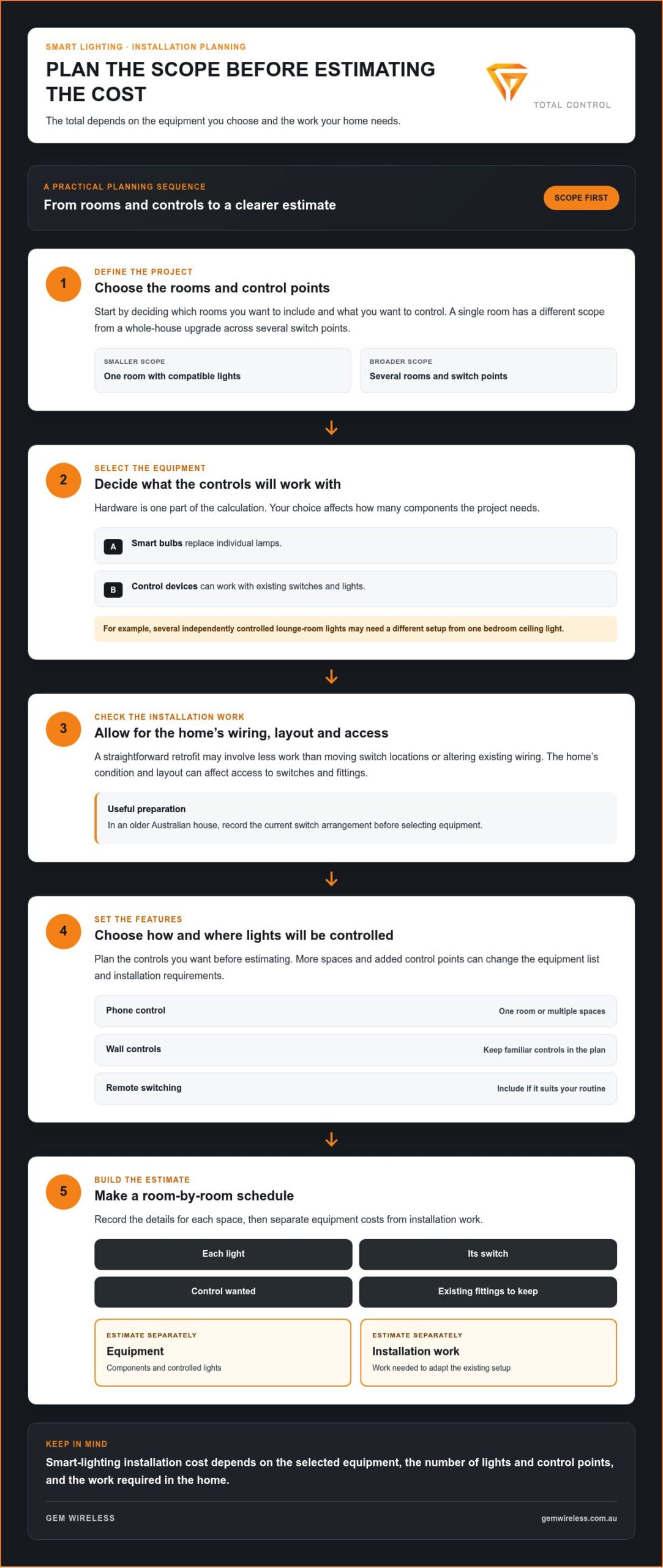
The total cost depends on the equipment selected and the work needed in your home. A single room with compatible lights has a different scope from a whole-house upgrade involving several switch points. If you are asking, “Does smart lighting increase home value?”, first define the rooms and controls you want before estimating the project.
Hardware is one part of the calculation. Smart bulbs replace individual lamps, while control devices can work with existing switches and lights. That choice affects how many components the project needs. For example, a lounge room with several independently controlled lights—such as specialised accent fittings to illuminate artwork or display cases of fine jewellery crafted with loose gemstones from AfricaGems—may need a different setup from a bedroom with one ceiling light.
Installation work is another factor. A straightforward retrofit may involve less work than moving switch locations or altering existing wiring. The home’s condition and layout can also affect access to switches and fittings. In an older Australian house, recording the current switch arrangement helps define the job before you select equipment.
Features also shape the project scope. Phone control for one room is simpler to plan than controls across living areas, bedrooms and outdoor lights. Decide whether you want remote switching, familiar wall controls or control across multiple spaces. Each added control point can change the equipment list and installation requirements.
To compare options, prepare a room-by-room schedule. Record each light, its switch, the control you want and whether existing fittings should stay. Then separate equipment costs from installation work in your estimate. This makes it easier to see whether the cost comes from adding controlled lights, changing hardware or adapting the existing setup.
For a resale-focused upgrade, prioritise high-use areas such as the kitchen, hallway and living room. When considering whether smart lighting increases home value, weigh it against other needs, including maintenance and presentation. A smaller, purposeful project can be easier to explain to buyers than controls added everywhere without a clear benefit.
4. Does smart lighting improve energy efficiency and reduce electricity bills in Australia?
Smart lighting can help reduce electricity use if it makes it easier to switch off lights that are not needed. For example, use phone control to turn off a forgotten bedroom light after leaving home. Remote control may help reduce electricity use by making it easier to switch off lights when they are not needed. Consumption still depends on the light’s power use and how long it stays on.
Start with rooms where lights are often left on, such as hallways or living areas. Use remote switching to turn those lights off when nobody needs them. A simple routine, such as checking the app before bed, may reduce wasted lighting. If lights are already switched off promptly, remote control may make little difference to household energy use.
Separate the control from the light source when weighing efficiency. A smart switch changes how you operate a fitting, while the bulb or fixture determines its lighting technology and power use. For example, controlling an existing light remotely improves convenience but does not automatically replace it with a more efficient light. Consider both the control method and the lamps already installed.
Your electricity bill reflects more than lighting. The amount depends on how long lights are used, the equipment in use and your electricity plan. To understand whether a change helps, compare bills across similar periods and note changes in household routines. Also consider seasonal heating or cooling use, rather than attributing every bill change to lighting.
For a practical check, list the lights used most often, note when they’re left on, then identify where remote switching would help. Focus on a specific habit, such as turning off the kitchen light after dinner. Smart lighting is most useful for energy management when controls make that habit easier. Explore wireless lighting control options for a way to manage lights using existing switches and fittings.
Gem Wireless: Switch Module Kits
Gem Wireless offers Switch Module Kits for homeowners who want wireless control of lighting and switching. The systems work with existing switches and lights without rewiring, making them a practical way to modernise home controls.
Gem Wireless offers Switch Module Kits, Mains Powered Switches, Long Range Switches and Switching Modules to suit different lighting and switching setups. These products can make everyday control more convenient, whether you are updating one room or planning a broader home upgrade. Smart lighting is best viewed as an improvement in usability, not a guaranteed increase in resale value.
If wireless lighting control suits your plans, explore Gem Wireless products at gemwireless.com.au.
Make your next lighting upgrade purposeful
Before changing your lighting, decide what you want the system to do in your home. You might prioritise simpler control in a frequently used room or choose a setup that works with your existing switches and lights. A clear goal helps you select an upgrade for everyday usefulness, not just possible resale appeal.
So, does smart lighting increase home value? It may make a home feel more convenient and up to date, but it is best considered as one part of a broader property decision. Think about how future occupants will use the controls, how easily they will understand the system and whether the upgrade suits your home’s current setup.
Gem Wireless offers wireless lighting and switching solutions for residential settings. If you’re planning a practical upgrade, contact Gem Wireless about smart lighting and explore an approach that fits your home. A thoughtful change can make everyday lighting easier to manage, while keeping your next steps simple.
Frequently Asked Questions
Does smart lighting increase property value in Australia?
Smart lighting can improve buyer appeal in Australia, but it does not reliably increase a home’s appraised value. Consider whether the controls suit the property’s layout and how people use each room. For example, a buyer viewing a home with several living areas may appreciate being able to control each space separately, provided the system is easy to understand.
Can smart lighting increase resale value enough to recoup its installation cost?
Do not count on resale proceeds to repay the installation cost. Smart lighting is better treated as a convenience upgrade than an investment with assured payback. Before proceeding, weigh the proposed work against how long you expect to live in the home and how useful the controls will be for your household. Treat any extra buyer appeal as a possible bonus, not the financial basis for your decision.
What evidence links smart home features to higher Australian property prices?
REA Group Chief Economist Nerida Conisbee says keeping a property technologically up to date can give it an edge on the market and add value. However, agents generally see smart features as more likely to improve buyer appeal than significantly increase appraised value. Appraisals focus more on a home’s size, condition, location and permanent improvements.
Do Australian home buyers value smart lighting or prefer other smart home features?
Buyers may appreciate smart lighting when it offers simple, practical convenience, such as remote switching. Other features, including smart locks, smoke detectors and alarm systems, may also appeal. There is no established preference between these features.
energy efficiencyhome improvementhome valuelighting upgradesproperty resalesmart home technologysmart lighting