- Empty cart.
- Continue Shopping
Quick Lighting Upgrades Before Selling for a Brighter Home
- Posted on
 Strong Digital
- 0
- Categories: Uncategorized
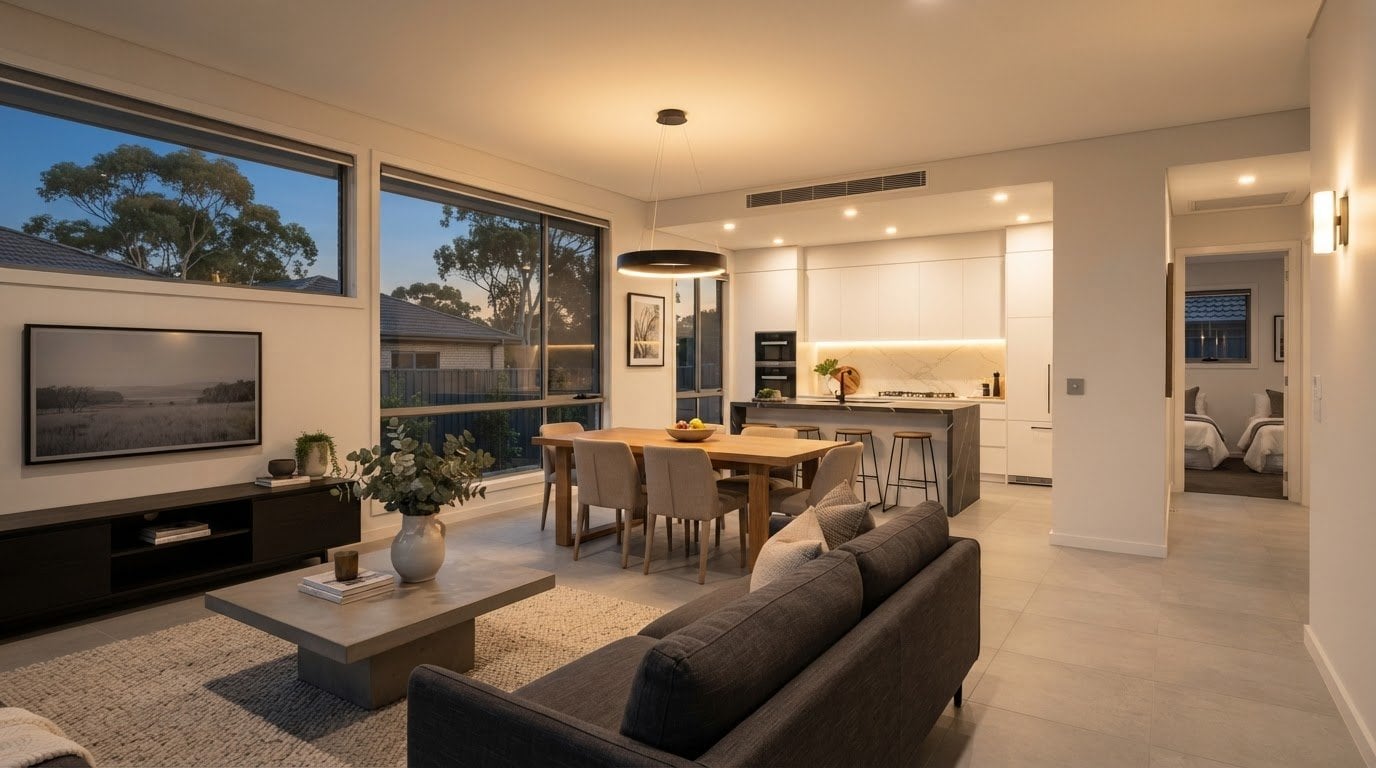
Replace dated or damaged lights in the rooms buyers notice first instead of changing every fixture. Quick lighting upgrades before selling can also include adding a dimmer to the main living area and improving light in the kitchen, dining room and living spaces. Aim for a brighter, more cohesive feel, not a costly overhaul.
It’s reasonable to wonder whether new fittings will make a difference or whether a few simple adjustments are enough. Often, selective changes work best: refresh a fitting that draws attention, and make sure each room feels evenly lit and welcoming.
This guide explains when replacement makes sense, how to use a dimmer and how to choose lighting that shows off your home’s best features. It also covers where LED downlights may fit and how to avoid over-upgrading before you sell.
Key Takeaways
- Prioritise outdated or tired-looking fittings in visible rooms instead of replacing every light automatically.
- A dimmer can give the main living area more flexibility for different times of day and activities.
- Use consistent bulb colour and brightness to make kitchens, dining areas and living spaces feel more cohesive.
- Weigh the visual benefit of LED downlights against the scope of work before committing to an upgrade.
1. Should I replace my outdated light fixtures before selling?
Yes, replace dated or damaged fittings where they stand out, but don’t automatically change every light. Builder-grade fixtures from 2001 can make a room feel tired, while a brass-and-frosted-glass chandelier from 1995 may look dated beside more current finishes. Start with the kitchen, entryway, dining area and bathrooms, where fittings are visible during inspections.
Choose replacements to suit the room, existing finishes and nearby lights. A simple flush mount can refresh a kitchen or laundry without competing with the space. In a foyer, rehanging a fitting may be enough; replacement makes more sense if it clashes with an updated dining chandelier. Aim for a coordinated look, not identical fittings throughout the home.
For warm-white home lighting, choose bulbs with a colour temperature of 2700 to 3000 Kelvin. Use the same colour temperature in each socket in a room, then match brightness by checking lumens rather than watts. Consistent bulbs can make existing fittings feel more cohesive, without replacing them all.
The most noticeable upgrades are often selective replacements in high-visibility rooms, consistent bulbs and working lights. These changes help present your home clearly, but don’t guarantee a higher sale price. Fixture replacement costs depend on how many fittings you change, their type and whether the work goes beyond a like-for-like swap. Address visible problems before considering a whole-home refresh.
For safety, treat changing a fixed light fitting as electrical work. Use a licensed electrician for work beyond a like-for-like replacement, and don’t attempt electrical work yourself. A straightforward bulb change is different from changing a fixed fitting. Keep the scope simple: identify dated or damaged lights, decide which need replacement, and leave more involved work to a qualified professional.
2. Adding a dimmer to the main living area
A dimmer in the main living area can be a practical upgrade if one isn’t already fitted. It lets you adjust brightness for different activities, from reading on the sofa to hosting dinner. Before making changes, consider how the space is used and where the light falls. A lounge with one central ceiling light may feel harsh at full brightness, while softer light can create a more relaxed evening setting.
Consider how buyers will experience the living area during inspections. Good lighting should make the room feel comfortable and its layout easy to see. Test the lights at different times of day, then decide whether adjustable brightness would help. A dimmer, for example, can provide a brighter setting for daytime tidying and softer light in the evening. It won’t fix a poorly positioned fitting or a dark corner, so assess the whole room before deciding.
Decide which lights you want the dimmer to control. If the living area has several switches or separate lighting zones, work out whether you need to adjust one group or more. Keep the setup intuitive: visitors should be able to switch on the main light without guessing which control to use. A familiar arrangement is easier to demonstrate during a viewing than a complicated control system.
For quick lighting upgrades before selling, focus on a useful improvement rather than adding controls for their own sake. A dimmer makes sense when the main living area would benefit from adjustable brightness and the existing light works well. If a fitting needs replacing or the change goes beyond a like-for-like swap, use a licensed electrician. Keep the control easy to operate, and show the room brightly for daytime inspections and with softer light for evening viewings.
3. Improving lighting in kitchens, dining areas and living spaces
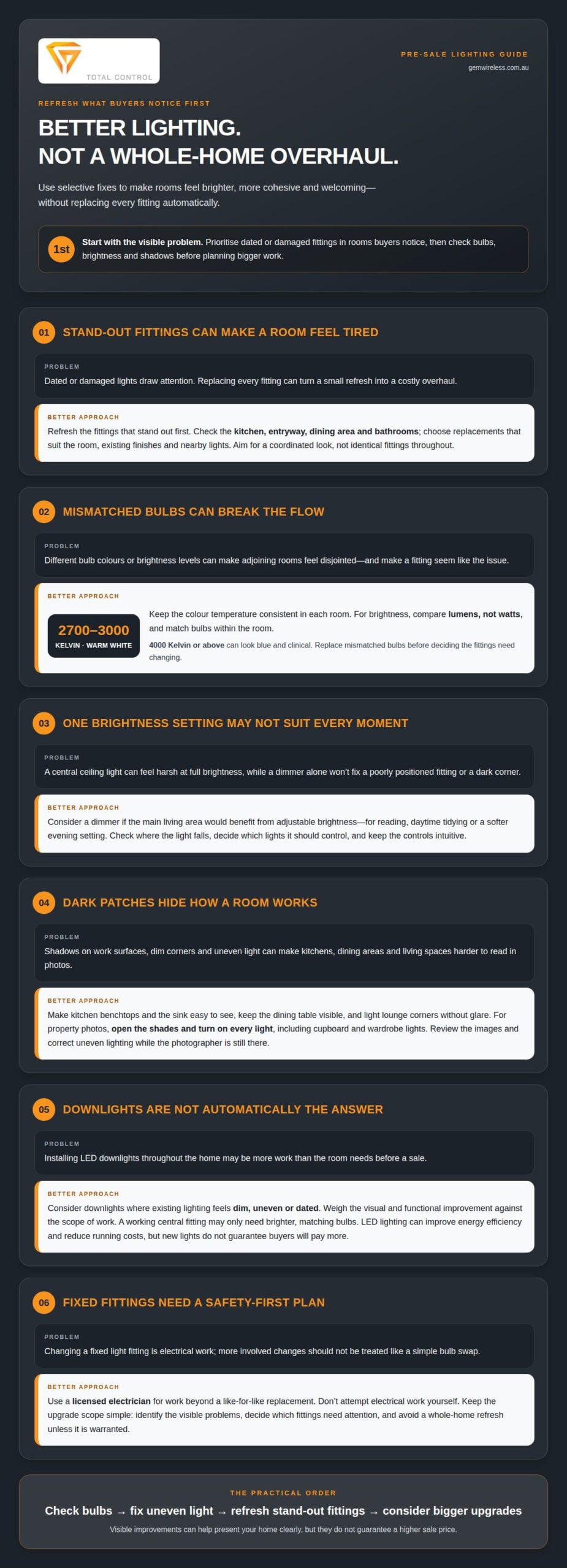
Use lighting to help buyers understand how each room works. In the kitchen, make the benchtops and sink easy to see, then check whether the dining table and living area feel evenly lit. A single bright ceiling fitting can leave corners dim. Before listing photos, look for shadows on work surfaces, dark corners and bulbs that appear different from one another.
For kitchens and bathrooms, warm-white bulbs between 2700 and 3000 Kelvin create a softer feel. Keep the colour temperature consistent within each room, rather than mixing warm and cool bulbs. Bulbs at 4000 Kelvin or above can look blue and clinical. Consistency matters across adjoining spaces, too: a kitchen opening into a dining area can feel disjointed if its light colour changes sharply at the doorway.
Brightness matters, too. Match bulbs within a room and compare their lumens, not their watts. Matching bulbs help prevent one fitting from looking noticeably brighter than another. In an open-plan kitchen and living space, check the overall effect from the entry and the main seating area. Replace mismatched bulbs before deciding the fittings themselves need changing.
For property photos, open the shades and turn on every light, including cupboard and wardrobe lights. This reduces dark patches and helps the camera capture the room’s features. In the kitchen, reduce shadows across the island; in the dining area, make the table visible; in the lounge, light the corners without creating glare. These steps can make rooms look brighter and more open in photos, though lighting cannot change their actual dimensions. Review the images on screen before the shoot ends and correct uneven lighting while the photographer is still there.
4. Are LED downlights worth installing before selling?
LED downlights may suit rooms where existing lighting feels dim, uneven or dated. LED lighting can also improve energy efficiency and reduce running costs. But installing downlights throughout the home isn’t automatically the best pre-sale choice. Buyers may appreciate a bright, well-presented room without paying more simply because its lights are new.
Start by identifying the problem in each room. A dark kitchen work area may need more even light, while a lounge with a working central fitting may only need brighter, matching bulbs. Consider whether downlights would improve the room’s appearance and function, rather than installing them just to follow a trend. Weigh the result you want against the disruption of changing fixed fittings.
Placement matters as much as the fitting. In the kitchen, aim to reduce shadows across benchtops. In a living area, avoid layouts that leave corners dim or create glare from seating positions. Check the effect from the doorway and the main places people sit or work. Before deciding whether new fittings are needed, turn on the lights and look for uneven patches as they might appear in listing photos.
Keep the finish consistent with the rest of the home. Matching colour temperature and brightness can help adjoining rooms feel cohesive. Downlights won’t improve a room if they’re poorly positioned, too bright or mismatched with nearby fittings. If the existing light presents the room well, focus on simple adjustments instead of replacing it.
For quick lighting upgrades before selling, weigh the visible benefit against the work required. Fixed fitting changes beyond a like-for-like replacement should be handled by a licensed electrician. If your goal is to control existing lights without rewiring, explore wireless lighting control options as a separate upgrade from installing downlights.
Gem Wireless: Switch Module Kits
Gem Wireless offers Switch Module Kits for homeowners who want wireless control of existing lighting or switching systems. The products work with existing switches and lights, with no rewiring, pairing or programming required. They may suit a home where the fittings already look presentable but controlling the lights could be more convenient.
Gem Wireless also offers Mains Powered Switches, Long Range Switches and Switching Modules. These options provide wireless lighting and switching control without making fixture replacement the only way to update a setup. Choose an option that suits the control change you need, rather than adding features that won’t help prepare your home for viewings.
For details about wireless lighting control, visit Gem Wireless online.
Choose the next upgrade with purpose
Before arranging changes, decide what you want buyers to notice and what needs to work more smoothly during inspections. Treat quick lighting upgrades before selling as a focused presentation decision, not a reason to renovate every room. A short priority list can keep the work aligned with your home’s needs.
If lighting control is part of your plan, Gem Wireless offers Switch Module Kits, Mains Powered Switches and Long Range Switches. These wireless options work with existing switches and lights, with no rewiring, pairing or programming required. They’re useful when you want to change how lighting is controlled, rather than replace fittings for appearance alone.
Choose the next step that solves a real issue in your home. For information about lighting control options, contact Gem Wireless. A considered update can help your home feel ready for its next chapter.
Frequently Asked Questions
Should I replace my outdated light fixtures before selling?
Yes, replace a fitting if it looks conspicuously dated, damaged or out of place. You don’t need to change every light just because it’s old. If a dining pendant draws attention away from the table, for example, replacing it may be more worthwhile than updating discreet hallway lights. Judge each fitting by its condition and visibility during a viewing.
What quick lighting upgrades make a home more appealing to buyers in Australia?
Start with lighting that improves the home’s first impression and makes key areas easy to see. Exterior lighting can strengthen street appeal, while a clear, welcoming entry sets the tone as buyers arrive. Inside, make sure lights work and suit the space. Check the path to the front door at dusk, then view the entry from the street to spot dark or uninviting areas.
How much do common lighting upgrades cost in Australia?
Costs depend on the fittings, the number of changes and the work involved. Replacing an existing pendant is different from adding downlights or changing a switch. Materials and electrician labour also affect the total, particularly when work goes beyond a like-for-like replacement. Compare the scope of each upgrade and prioritise changes that solve a clear presentation or usability problem.
What is the cost of replacing light fittings before selling a house?
The total depends on how many fittings you replace, their style and whether the work goes beyond a like-for-like change. A simple swap differs from relocating a fitting or altering the electrical setup. Make a room-by-room list and separate essential replacements from optional updates. This gives you a practical basis for comparing the materials and labour involved in each option.
dimmer switcheshome improvementhome lightinghome stagingLED downlightslighting upgradespre-sale preparation