- Empty cart.
- Continue Shopping
Best Way to Control Garden Lights: 2026 Practical Guide
- Posted on
 Strong Digital
- 0
- Categories: Uncategorized
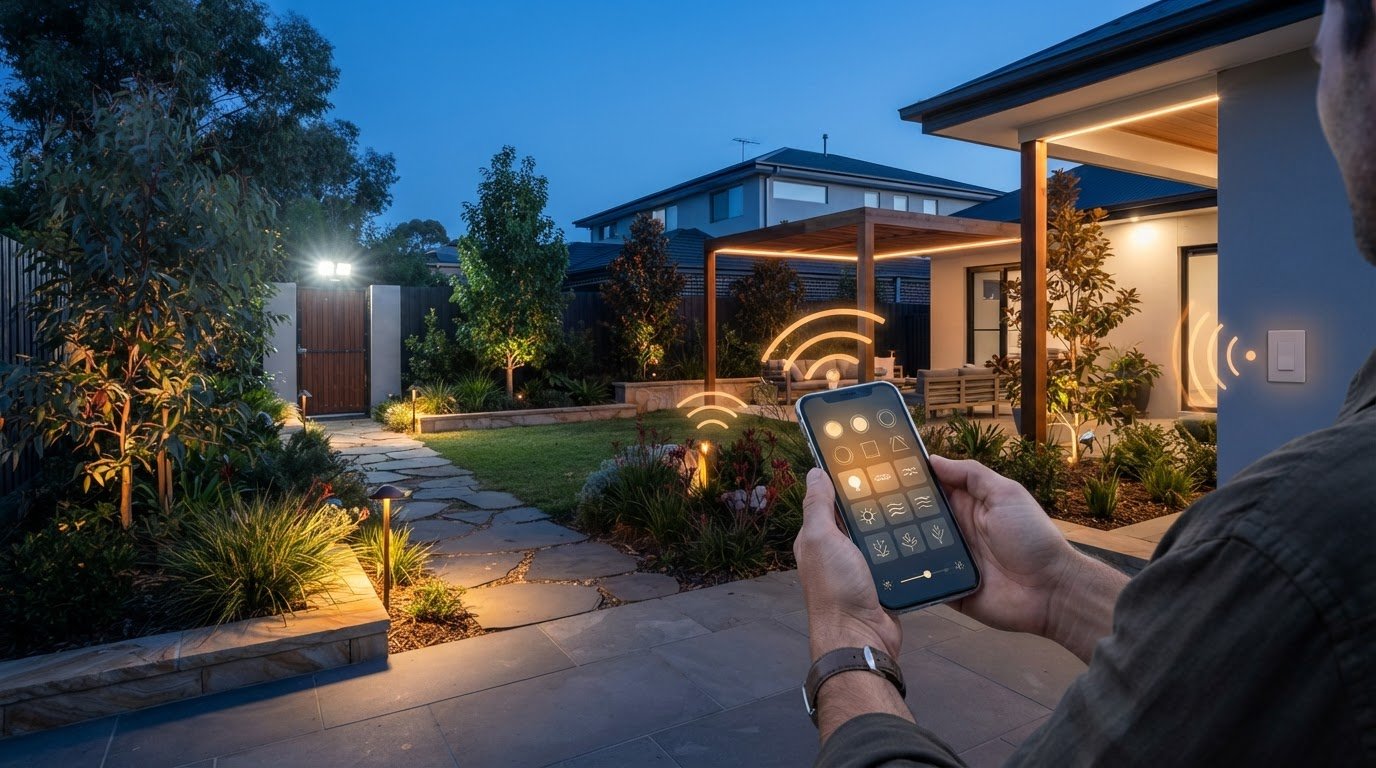
The best way to control garden lights may be a simple timer, not a full smart-home setup. If you’re tired of switching lights on and off by hand, it’s tempting to choose the newest technology. But the right control depends on your lights, garden layout and routine. A mismatch can add complexity without making evenings easier.
You want dependable lighting without unnecessary cabling or disruptive work. Options include timers, daylight or motion sensors, app-based smart controls and wireless switches. Each has trade-offs in convenience, flexibility and compatibility with your current system. Path lights used every evening may need a different control from security lighting that responds to movement.
This guide compares the options and explains what to plan before choosing: where the lights are, whether scheduled or on-demand switching suits you, and how the controls fit your existing setup. You’ll also learn how wireless switching hardware can help when adding switch wiring is impractical, and how it differs from a smart-home app. The goal is a simple, reliable setup that suits your outdoor space.
Key Takeaways
- The best way to control garden lights depends on what each light needs to do, where it sits and how you use the space.
- Compare manual switches, timers, photocells, motion sensors, smart controls and wireless switches to find the right balance of convenience and flexibility.
- Plan for outdoor conditions: distance, walls, structures and interference can affect wireless performance.
- Map your lights and existing setup before choosing controls. Different areas of one garden may benefit from different approaches.
- Wireless switching can add a convenient switching point without running new switch wiring. Compatibility depends on the existing lights and circuit.
Best way to control garden lights: start with how you use the space
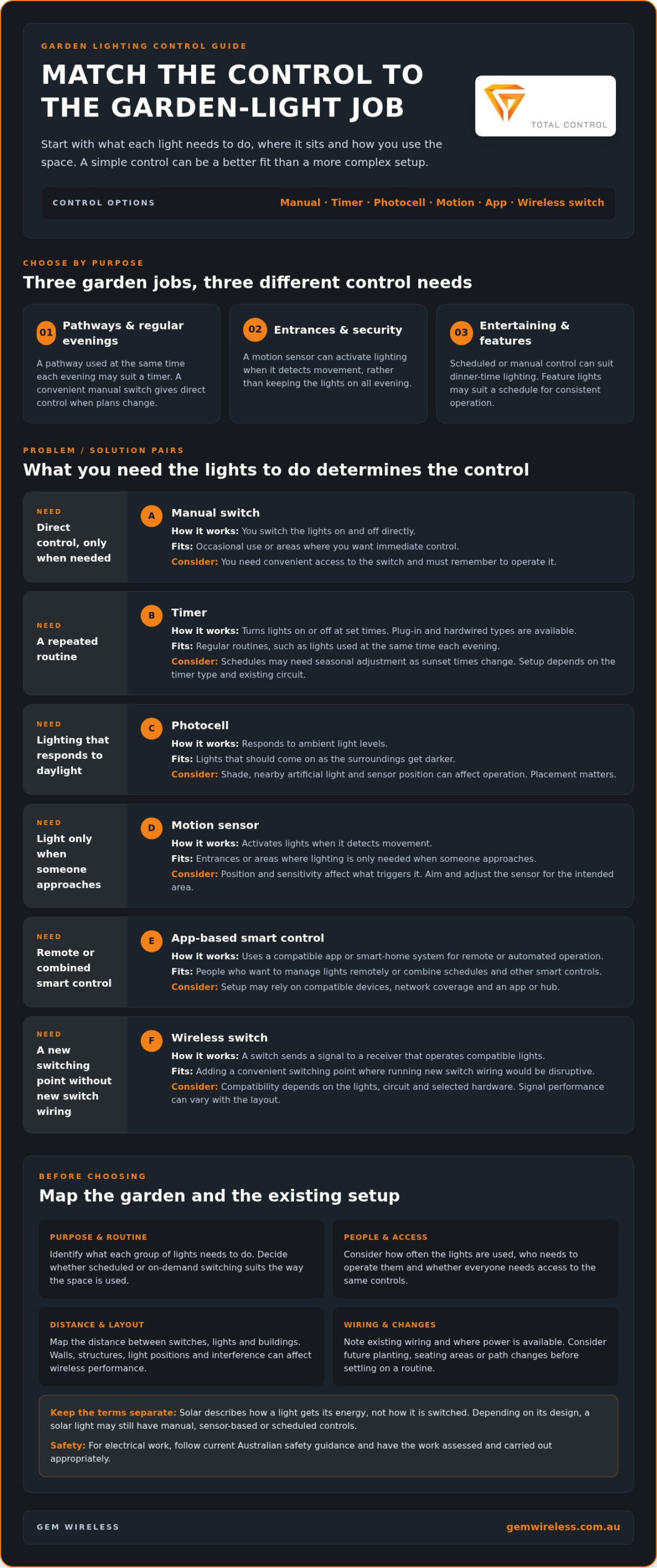
The best way to control garden lights depends on their purpose, position and how you use the garden. A pathway light used each evening has a different job from a security light that should come on when someone approaches. Start by identifying what each group of lights needs to do, then decide how it should switch on and off.
What does a garden-light control do? It determines when a light turns on or off, whether through a manual switch, a set schedule or a trigger such as movement or changing daylight.
Which garden lighting jobs need different controls?
Match the control to the task. Pathways, entrances and frequently used outdoor areas need dependable light when people are moving around. A timer can suit a regular evening routine; a convenient manual switch gives you direct control when plans change.
Security lighting may suit a motion sensor, which activates the lights when it detects movement rather than keeping them on all evening. Entertaining areas often work well with scheduled or manual control, so you can light the space for dinner and switch it off afterwards. Feature lighting, such as a light aimed at a tree or garden detail, may suit a schedule if you want it on at a consistent time.
These are different control choices, not different light sources. A light’s source, such as an LED, describes how it produces light; its control method determines when it operates. For a broader overview of techniques and equipment, see this introduction to landscape lighting.
What should guide your control choice?
Think about how often the lights are used and who needs to operate them. A frequently used entertaining area may need a straightforward switch, while a pathway used at the same time each evening could suit automatic operation. Consider whether everyone who uses the space needs access to the same controls.
Next, map the distance between the switch, lights and relevant buildings. Walls, structures and the position of the lights can affect which control setup is practical. Note the existing wiring and where power is available, too. If adding switch wiring would be difficult, wireless switching hardware designed to work with existing switches and lights can offer a retrofit approach. It is separate from app-based smart-home control.
Finally, allow for changes to the garden. New planting, a future seating area or a moved path could change where light is useful. Planning around likely changes can help you avoid locking every light into one routine. For electrical work, follow current Australian safety guidance and have the work assessed and carried out appropriately.
Compare garden-light controls: timers, sensors, smart systems and wireless switches
The best way to control garden lights depends on whether you want a simple on-off routine, an automatic response to conditions or remote control. Compare how each option works and what it needs before choosing. A light’s power source is a separate consideration: solar describes how a light gets its energy, not how it’s switched. Solar lights may still have manual, sensor-based or scheduled controls, depending on their design.
| Control | How it operates | Suitable use | Limitations and setup considerations |
|---|---|---|---|
| Manual switch | You switch lights on and off directly. | Occasional use or areas where you want immediate control. | You need convenient access to the switch and must remember to operate it. |
| Timer | Turns lights on or off at set times. Plug-in and hardwired types are available. | Regular routines, such as lights used at the same time each evening. | Schedules may need seasonal adjustment as sunset times change. Setup depends on the timer type and existing circuit. |
| Photocell | Responds to ambient light levels. | Lights that should come on as the surroundings get darker. | Shade, nearby artificial light and sensor position can affect operation. Placement matters. |
| Motion sensor | Activates lights when it detects movement. | Entrances or areas where lighting is only needed when someone approaches. | Position and sensitivity affect what triggers it, so aim and adjust the sensor for the intended area. |
| App-based smart control | Uses a compatible app or smart-home system for remote or automated operation. | People who want to manage lights remotely or combine schedules and other smart controls. | Setup may rely on compatible devices, network coverage and an app or hub. |
| Wireless switch | A switch sends a signal to a receiver that operates compatible lights. | Adding a convenient switching point where running new switch wiring would be disruptive. | Compatibility depends on the lights, circuit and selected hardware. Signal performance can vary with the layout. |
When do timers, photocells and motion sensors make sense?
Timers suit predictable routines, but a fixed schedule won’t automatically follow seasonal changes in daylight. A photocell responds to ambient light instead, though trees, eaves or nearby lights can affect what it detects. Motion sensors suit trigger-based lighting. Adjust their position and sensitivity to reduce missed movement or unwanted activation.
How is wireless switching different from app-based smart lighting?
Wireless switching uses a switch-and-receiver link to operate compatible lights. It can add a switching point without running a conventional switch cable, but it doesn’t inherently mean internet access, phone-app control or a subscription. Smart systems use connected software for features such as remote access and app-managed schedules. For a retrofit switching option, explore wireless switching hardware designed to work with existing switches and lights. Choose hardware for the specific setup, and don’t assume a component is suitable for outdoor exposure unless its rating says so.
Will garden-light controls work outdoors? Plan for distance, weather and safety
Garden-light controls can work outdoors when the system suits the installation. Performance depends on more than the control type: distance between components, obstructions, weather exposure and the electrical setup all matter. Keep two questions separate: can the control signal reach its receiver, and are the electrical components suitable for their installation location?
That distinction matters with wireless switching. A wireless signal doesn’t make a switch or receiver weatherproof. Check the equipment’s documented suitability for its location and plan to protect components from the conditions they’ll face. The best way to control garden lights is one that works reliably in the actual layout, not just on paper.
What affects wireless control range in a garden?
Signal reach can be affected by the receiver’s position, distance and obstacles along the route. Brick walls, metal structures, dense building materials and other sources of interference may weaken communication. A switch that works well in one spot may be less reliable from another.
Plan the path between the switch and receiver, including walls, sheds and other structures. Don’t rely on an advertised range alone, as real-world conditions can differ. Where possible, consider receiver placement as part of the overall lighting layout. Wireless switching hardware can add a control point without running new switch wiring, but the existing lights, circuit and selected equipment still need to be compatible.
What should you consider for outdoor electrical safety?
Low-voltage garden lighting and mains-powered lighting are different electrical arrangements. Don’t assume a control or fitting suitable for one is suitable for the other. Consider where power supplies, connections and controls will sit, how exposed they’ll be to rain or irrigation, and whether suitable enclosures and protective devices are needed for the installation.
In Australia, electrical work requirements can vary by state and territory. Follow current local requirements and use a licensed electrician for mains electrical installation or alterations. This is especially important before changing wiring or adding controls to a fixed circuit. Low-voltage equipment also needs to be installed according to its instructions and in conditions it’s designed to handle.
Before choosing hardware, note the lighting type, circuit arrangement, likely receiver location and exposure to weather. Treat signal reliability and weather protection as separate checks. Neither should be assumed just because a switch is wireless.
How to choose and plan garden-light controls in four steps
A simple plan helps you match each light to a control that fits your garden. The best way to control garden lights may involve more than one method: for example, a timer for regular evening lighting and a motion sensor for an entrance.
- Define the job. List each lighting zone and its purpose, such as guiding people along a path, lighting an entry or highlighting a garden feature. Note when each zone needs to operate and who needs to control it.
- Map the setup. Mark existing switches, light circuits, power sources and possible receiver positions. Note the distance between each proposed control point and receiver, plus walls, sheds or other obstructions that may affect a wireless signal. For more on distance planning, read the long-range wireless switching guide.
- Match the control. Choose a timer for predictable use, a photocell for operation based on ambient light, or a motion sensor where movement should trigger the lights. A manual or wireless switch may suit zones where you want direct control. Match the control to the specific light circuit and its intended job.
- Plan the work. Consider whether existing wiring and access to power support your choice. If adding a switch location would mean disruptive cable runs, wireless switching hardware may provide a retrofit option for compatible lights and circuits. See the no-rewire lighting control guide for more on this approach. Plan electrical work around current Australian requirements.
Before settling on a setup, use this quick checklist:
- Existing switches: Where are they, and are they convenient to reach?
- Light type and circuit: What do you need to control, and how is it powered?
- Receiver location: Where could it sit in relation to the lights and switch, with obstructions in mind?
- Operating habits: Do you prefer a schedule, automatic response or hands-on switching?
Keep zones separate if their jobs differ. A pathway used nightly and feature lights switched on only for gatherings may be easier to manage with different controls. For a retrofit switching option, explore wireless switching hardware designed to work with existing switches and lights without rewiring.
A practical wireless switching option for garden-light control
A wireless switch can add a more convenient place to operate compatible garden lights without running new switch wiring to that location. It’s a practical retrofit option when an existing switch is awkward to reach or installing a new cable through walls or finished areas would be disruptive.
The basic arrangement uses a wireless switch to communicate with a receiver connected to the lighting setup. The switch provides the control point; the receiver operates the compatible lights. This is switching hardware, not automatically an app-based smart-home system, and it doesn’t imply phone control or a software subscription.
When can wireless switching suit garden lights?
Consider it if you regularly cross the garden to reach the existing switch, or want a control point closer to an entrance or outdoor area without adding a conventional switch cable. Before choosing hardware, identify the lights and circuit it needs to work with, then consider where the receiver would be located.
Compatibility depends on the existing lights, circuit and correctly selected hardware. The receiver and its installation environment must suit the circuit and location. Don’t assume wireless means weatherproof: check the equipment’s documented suitability for its intended position, and treat electrical safety separately from signal performance.
What is the next step after choosing a control method?
Use your garden plan to make the decision clear. Match each lighting zone to its purpose, decide whether you want scheduled, sensor-triggered or manual operation, and consider the distances and obstacles between the proposed switch and receiver. Then make sure the selected control suits the lighting setup and its installation conditions.
For mains-powered lights, have installation or wiring changes handled by a licensed electrician in line with current requirements in your state or territory. This helps keep the control choice practical as well as safe.
If avoiding new switch wiring is a priority, explore Gem Wireless switching solutions for a retrofit approach designed to work with existing switches and lights. Review the lighting purpose, circuit and receiver location as you compare your options.
Make your garden lighting easier to live with
The best way to control garden lights is the one that matches each light’s purpose, your garden’s layout and your everyday routine. Timers suit predictable schedules, sensors respond to daylight or movement, and wireless switches can add a convenient control point where running new switch wiring is impractical.
Before choosing, map the lights, switches and receiver positions. Consider distance, obstructions and the conditions where each component will be installed. The right setup may use different controls for different garden zones rather than forcing every light into the same routine. For mains electrical work, use a licensed electrician and follow current requirements in your state or territory.
Gem Wireless offers switching hardware and kits designed to avoid rewiring and work with existing switches and lights. Products are available through a stockist network serving Australia and New Zealand. Explore Gem Wireless switching solutions for a practical retrofit option for your lighting setup. With a clear plan, you can make outdoor lighting simpler to operate and better suited to how you use your garden.
Frequently Asked Questions
What is the best way to control garden lights?
The best way to control garden lights depends on how each area is used, your layout and your routine. Timers suit predictable schedules, photocells respond to ambient light, and motion sensors activate lights when movement is detected. A manual or wireless switch gives direct control. You can combine methods, such as scheduling pathway lights while using a sensor for an entrance.
Can I control garden lights without running new wiring?
Yes, wireless switching can add a convenient switch location without running new switch wiring. Gem Wireless hardware and kits are designed to work with existing switches and lights. The right setup depends on the existing circuit, lights and selected hardware. Wireless switching hardware is different from app-based smart lighting, and it doesn’t automatically include phone control or a software subscription.
Are timers or photocells better for garden lights?
Neither is universally better; choose based on how you want the lights to operate. A timer follows set times, which can suit a regular evening routine but may need adjustment as sunset times change. A photocell responds to ambient light, switching lights on as it gets darker. Shade, nearby artificial lighting and sensor position can affect its response.
Can motion sensors control outdoor garden lights?
Yes, motion sensors can switch compatible outdoor lights on when they detect movement. They’re useful for areas such as entrances where lighting is only needed when someone approaches. Placement and sensitivity affect what triggers the sensor, so position it to cover the intended area. Check that the sensor and connected equipment suit their location and the lighting circuit.
Will a wireless light switch work through walls and outdoors?
It may, but performance depends on the switch-to-receiver path and installation. Distance, walls, building materials, metal structures and interference can affect signal reach. Plan where the receiver will sit and consider obstructions between it and the proposed switch, rather than relying only on an advertised range. Wireless signal performance is separate from weather protection, so check that the equipment suits its installed environment.
Do garden lights need a weatherproof switch or receiver?
Switches and receivers installed outdoors or in exposed locations need to suit the conditions there. Rain, irrigation, damp and direct exposure can affect equipment, so check its documented environmental rating and installation instructions. Don’t assume a wireless component is weatherproof simply because it operates without a cable. For mains wiring or installation changes in Australia, use a licensed electrician and follow current state or territory requirements.
Can solar garden lights be controlled with a timer or wireless switch?
It depends on how the solar lights are designed. Solar describes their power source, not their control method. Some models have built-in controls, while others may offer a separate timer or remote. A wireless switch can only operate solar lights if it’s designed to work with that particular system. Check the light’s instructions and don’t assume mains switching hardware will control a self-contained solar unit.
garden designgarden lightinghome improvementlighting controlsoutdoor light timersoutdoor lightingsmart lightingwireless switches