- Empty cart.
- Continue Shopping
Wireless Switch for Exhaust Fans: How It Works and What to Check
- Posted on
 Strong Digital
- 0
- Categories: Uncategorized
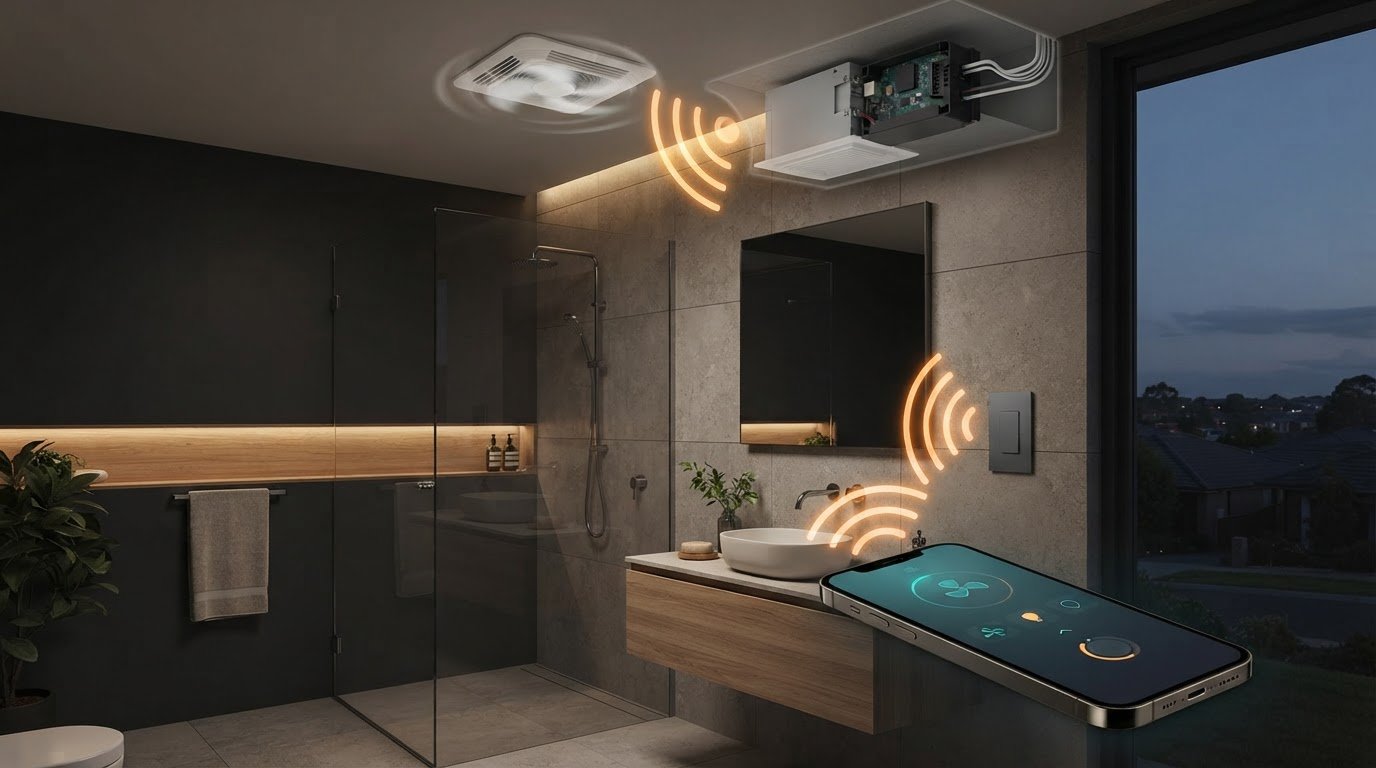
Could you add a wireless switch for exhaust fans without replacing the fan or running new switch wiring? Wireless control can provide another way to operate an existing fan, but compatibility comes first. A wireless switch sends a signal to a receiver connected to the fan’s circuit. The receiver, not the switch alone, does the switching, so the fan and module must suit each other.
It’s easy to expect more than a basic on/off setup can do. Switching a fan on and off is different from changing its speed or adding a timer. Those functions need hardware designed to support them. Wireless control may avoid running new switch wiring, but fitting a receiver can still involve electrical work. Don’t assume a retrofit is a DIY job.
This guide explains how wireless switching works, what to check on your fan and module, and where the limits may be. You’ll also learn when to ask a licensed electrician to assess the setup, so you can weigh up a more convenient control point without overlooking safe installation.
Key Takeaways
- A wireless switch for exhaust fans may add a more convenient control point, but suitability depends on the fan and switching module.
- Decide whether you need another on/off control, a timer function or speed adjustment before choosing hardware.
- Note the fan’s make, model, voltage and stated control requirements so compatibility can be checked.
- Compare the module’s specifications with the fan’s load and control arrangement. Don’t assume a general switching module will suit.
- Ask a licensed electrician to assess installation requirements. Gem Wireless sells switching hardware, not electrical installation services.
What is a wireless switch for exhaust fans, and what does it change?
A wireless switch pairs a control, such as a wall switch or remote, with a compatible receiver or switching module. Instead of relying on a new wire from the control point to the fan circuit, the control sends a wireless command to the receiver. This can help if the existing switch is awkward to reach or you want another control point without running switch wiring.
The fan itself doesn’t become wireless. It still needs its power supply, and the receiver must be designed for the fan’s load and control arrangement. Check compatibility between the fan, module and existing circuit before choosing hardware. A wireless signal won’t make an unsuitable module safe or suitable, and fitting a receiver may still require electrical work.
How does wireless exhaust fan switching work?
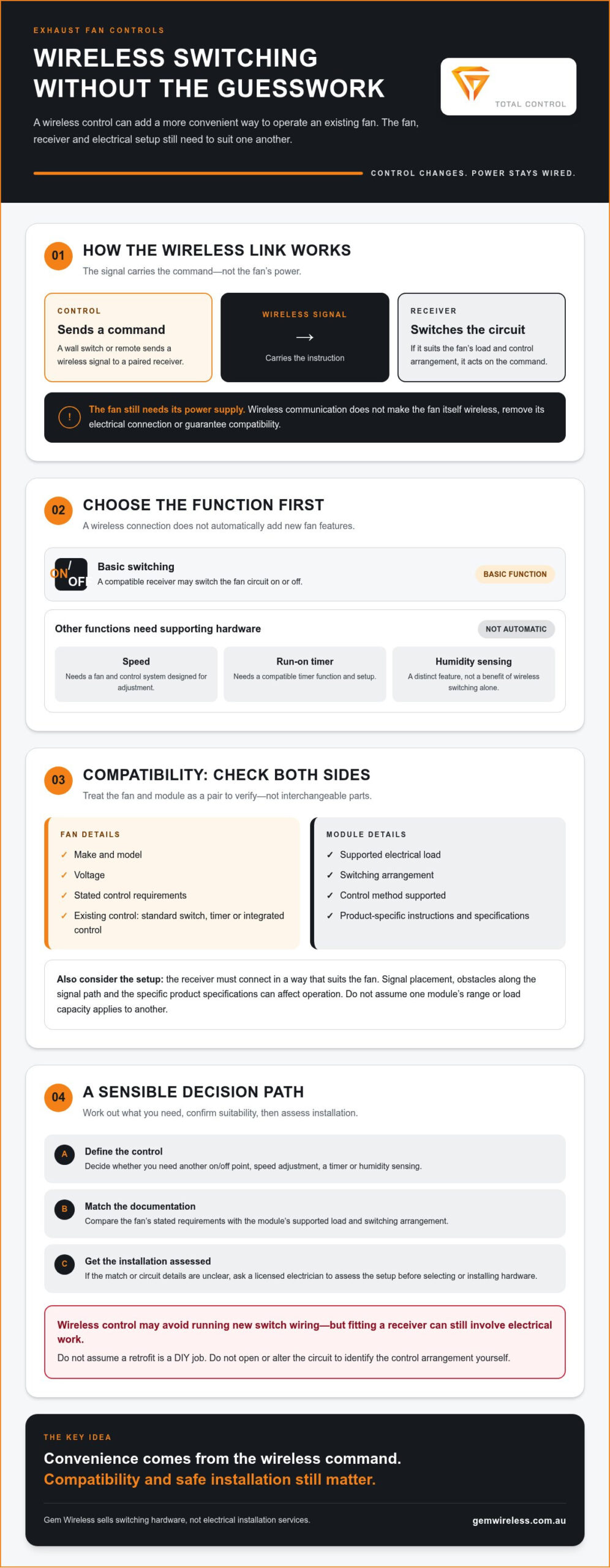
The control sends a radio signal to a paired receiver, which switches the fan circuit if the setup supports that load. This is the basic principle behind how wireless switches work: a transmitter sends a command and a receiver responds. The wireless link carries the instruction, not the power. Many exhaust fans still rely on mains electricity to run, so wireless communication doesn’t remove the need for a compatible, correctly installed electrical connection.
Which exhaust fan controls are you trying to add?
Start with the function you need. A basic wireless switch may provide on/off control, but it won’t automatically add speed adjustment, a run-on timer or humidity sensing. Those functions need a fan and control system designed to support them. Before comparing options, note the fan’s make and model and identify its existing control, such as a standard switch, timer or integrated control.
This check helps narrow the options. A receiver intended for simple switching may not suit a fan with electronic controls or multiple functions. Look for the fan’s stated control requirements and the module’s specifications, including its supported load and switching arrangement. If you can’t confirm a match from the documentation, ask a licensed electrician to assess the setup before selecting or installing hardware.
Wireless switching changes how a command reaches the circuit. It can make control more convenient, but it doesn’t replace the fan’s power supply or guarantee compatibility. Treat the fan and module as a pair to verify, not interchangeable parts.
How a wireless switch controls an exhaust fan: where its limits are
A wireless switch for exhaust fans changes how the on/off command reaches the fan circuit. It doesn’t remove the fan’s need for electrical power or guarantee that any receiver can operate any fan. The control, receiver and fan must work together, and wiring at the fan or circuit may still need assessment before a retrofit.
Think of the wireless control as a sender and the receiver as the part that acts on its command. When you press the control, it sends a signal to a paired receiver. If the receiver is designed for the fan’s electrical load and switching arrangement, it can switch the circuit. The fan then runs on its own power supply. This switching function is separate from the ventilation role described in ASHRAE’s residential ventilation standards.
What happens between the wireless control and fan?
The signal has to reach the receiver, and the receiver has to be connected in a way that suits the fan. Placement, obstacles along the signal path and the product’s specifications can affect whether the setup works as intended. Don’t assume a stated range or load capacity from one module applies to another. Check the documentation for the specific hardware and have the installation requirements assessed before proceeding.
Can a wireless switch add speed control or a run-on timer?
Not by itself. Basic on/off switching tells a compatible receiver to energise or stop the fan circuit. Speed adjustment and a run-on timer require controls and a fan designed to support those functions. Humidity sensing is another distinct feature, not an automatic benefit of making a switch wireless.
Before choosing a module, check whether the fan uses a simple switched input or a dedicated controller. A function built into the fan may not be interchangeable with a separate timer or speed control. Read the fan instructions alongside the module specifications, and confirm that the control method and electrical load match. If the details are unclear, ask a licensed electrician to assess the setup. Don’t open or alter the circuit to identify it yourself.
Gem Wireless sells switching hardware, including switching modules and switch module kits, but suitability for a particular exhaust fan must be confirmed against its specifications. Once you’ve identified the fan’s control type and the function you want, you can review Gem Wireless switching hardware. First confirm what the fan supports, then check whether a wireless receiver can provide the control you need.
Wireless switch, timer or existing control: which exhaust fan option fits?
Choose a control based on the job you need it to do. A wireless switch for exhaust fans may add an accessible on/off point, while a timer or dedicated fan controller serves a different purpose. Wired and wireless approaches can both be suitable. The fan, circuit and installation requirements determine what’s practical.
| Option | What it does | What to check | May suit when |
|---|---|---|---|
| Wireless on/off control | Sends a command to a compatible receiver to switch the fan circuit. | Fan load, control type, receiver specifications and installation requirements. | You want another convenient control point and the fan supports the switching arrangement. |
| Timer | Keeps the fan running for a set period after activation, if designed for that function. | Whether the fan supports a timer and whether it is built in or requires a compatible control. | You want a run-on period rather than just immediate on/off control. |
| Existing or dedicated fan controller | Operates the fan using its intended controls, which may include speed settings or other functions. | Fan instructions and the controller type specified for the model. | The fan has speed settings, electronic controls or specialised functions. |
When might wireless on/off switching make sense?
An extra control point could help if the existing wall switch is inconveniently placed or you want to operate the fan from another spot. But wireless control doesn’t automatically remove wiring work or the need for an electrician. A receiver may still need to connect to the fan circuit, and suitability depends on that circuit and the module’s specifications. For more context on module types, see the wireless switching modules guide.
When should you keep or choose a dedicated fan controller?
If your fan has speed settings or specialised controls, its intended controller may be essential. A standard wireless on/off command won’t necessarily reproduce those functions. Likewise, a timer’s run-on feature is different from switching the fan on and off remotely. Check the fan instructions before comparing hardware. A relay can switch a circuit, but a general explanation of wireless relay operation doesn’t establish that a relay suits a particular fan.
Control requirements can also depend on the installation and applicable rules. This ventilation and indoor air quality reference describes requirements in its own jurisdiction, so don’t treat it as Australian compliance advice. Confirm requirements for your installation with a licensed electrician. Wired and wireless options both need the right control and safe installation. Wireless describes how the command travels, not whether electrical work is unnecessary.
Checks before adding a wireless switch to an exhaust fan
Before choosing a wireless switch for exhaust fans, gather information about the fan and its controls. This helps you compare the right specifications and gives an electrician useful context. You don’t need to open the fan or touch wiring to do these checks.
A practical fan and module compatibility checklist
- Identify the fan: Record its make and model, plus the voltage shown on its label or in its documentation, if available.
- Note the existing controls: Is it basic on/off, timer-controlled, speed-controlled, or part of a combined fan and light unit? Record any stated control requirements.
- Compare specifications: Check the fan documentation against the chosen module’s verified electrical ratings and installation instructions. The module must suit the fan load and intended switching method.
- Consider the existing setup: Ask how the wall switch, isolator and any required fan controls will remain configured. A new control point shouldn’t compromise the fan’s intended operation.
If you can’t confirm a match from the documentation, don’t guess. Specifications vary, and a switching module that suits one setup may not suit another.
When should a licensed electrician assess the setup?
Ask a licensed electrician to assess any mains wiring, circuit changes or uncertainty about how the circuit can be safely isolated. Don’t open, alter or work on wiring yourself. Australian requirements can depend on the work and jurisdiction, so check current guidance for your situation rather than relying on a general online description.
The switch’s power source is another detail to understand. A mains-powered control and a battery-powered control differ in how the control itself receives power. That doesn’t confirm whether the receiver suits your fan. For a general comparison, see the mains-powered versus battery switch guide.
Once you’ve recorded the fan details and identified the control function you need, you’ll be better placed to review suitable hardware. Gem Wireless sells switching modules and related wireless switching hardware, but a specific module’s suitability for your fan still needs to be checked. Explore Gem Wireless switching modules as a category, then confirm specifications and installation requirements before selecting one.
Choosing a wireless exhaust fan switching solution: sensible next steps
Make the choice in order: decide which control function you need, confirm the fan supports it, then check the module specifications and installation requirements. A wireless switch for exhaust fans may offer a useful extra control point, but it isn’t a universal replacement for a fan’s existing controller. Don’t treat a module as compatible until its exact specifications have been checked against the fan.
How to assess switching hardware before you choose
Start with the fan’s make, model and existing controls. Then compare its documentation with the module information. Check that the control method matches, the module’s stated ratings suit the fan, and the product instructions cover the intended setup. If you want a timer or speed adjustment, confirm that both the fan and control are designed to provide that function. A basic on/off module won’t necessarily add it.
Consider how the wireless control itself is powered, too. A mains-powered switch and a battery-powered control have different operating requirements. Review the supplied documentation to see what each option involves, rather than assuming one is automatically more suitable. Gem Wireless sells switching hardware, including switch module kits, mains-powered switches, long-range switches and switching modules. It doesn’t sell electrical installation services or smart-home software subscriptions.
What to do if the fan or wiring details are unclear
Look for the fan’s model information and details of its existing controller in the product documentation or on accessible labels. Don’t open the fan, alter wiring or try to establish circuit isolation yourself. If the fan’s control type, mains wiring or installation requirements are uncertain, ask a licensed electrician to assess the setup and confirm what is appropriate for your situation.
Keep the next step practical: shortlist hardware only after you know the function you want and have checked the relevant operating requirements, ratings and installation constraints. Then confirm that the chosen module suits the specific fan and switching arrangement. If you’re ready to review hardware options, explore Gem Wireless switching solutions. Use this as a starting point for comparing switching hardware, not confirmation that a particular module will work with your exhaust fan.
Make your next switching decision with confidence
A wireless switch for exhaust fans can make control more convenient, but the right choice starts with the job you want it to do. Decide whether you need simple on/off switching, a timer or another fan function. Then check the fan’s control requirements against the specific module’s documentation. Don’t assume wireless control removes the need for wiring work or confirms compatibility.
If the fan model, circuit or installation requirements aren’t clear, ask a licensed electrician to assess the setup. Gem Wireless offers wireless switching hardware and modules directly and through stockists across Australia and New Zealand, but suitability for a particular fan must be verified.
Ready to compare options? Explore Gem Wireless switching solutions and review the relevant specifications. With the right checks, you can make a considered choice and move towards more convenient fan control.
Frequently Asked Questions
Can I use a wireless switch with an exhaust fan?
Yes, if the fan, receiver and switching arrangement are compatible. A wireless switch for exhaust fans can provide another way to send an on/off command, but the fan still needs its power supply and a suitable connection. Check the fan’s model and control requirements against the module specifications. If you can’t confirm the match, ask a licensed electrician to assess the setup before choosing hardware.
Does a wireless switch for an exhaust fan need a receiver?
Usually, the system needs a receiver or switching module to receive the wireless command and operate the fan circuit. Some controls may have a receiver built in, so check the product documentation rather than assuming it’s a separate component. The receiver must suit the fan’s load and switching method. Confirm the complete control-and-receiver setup is compatible before purchase or installation.
Can a wireless switch control an exhaust fan speed?
Only if the fan and wireless control are specifically designed to support speed adjustment. A basic on/off switch sends a run or stop command. It doesn’t automatically vary the fan’s speed. Check whether your fan has a dedicated controller or specified speed settings, then compare its instructions with the module documentation. Don’t substitute a general switching module for the fan’s intended controller without confirming compatibility.
Can I install a wireless exhaust fan switch without rewiring?
Possibly, but wireless control doesn’t guarantee a wiring-free installation. It may avoid running new switch wiring to an additional control point, while the receiver may still need to connect to the fan circuit. The work depends on the existing setup and chosen hardware. Don’t open or alter mains wiring yourself. Ask a licensed electrician to assess installation requirements before proceeding.
Will a wireless switch work with a bathroom exhaust fan and light?
It may, but check how the fan and light are controlled. A combined unit might have separate inputs, a shared control or an integrated controller, and a simple on/off module may not operate each function as intended. Find the unit’s make and model, read its control requirements, then compare them with the module specifications. Ask an electrician to assess the wiring arrangement if it’s unclear.
Does an exhaust fan still need an isolator with a wireless switch?
Don’t assume a wireless switch replaces an isolator or any other required control. The appropriate arrangement depends on the fan, circuit, installation and applicable requirements. A wireless control sends a command. It doesn’t establish how the circuit should be isolated for maintenance or other work. Ask a licensed electrician to check the existing setup and confirm what controls need to remain in place.
What should I check before buying a wireless switch for an exhaust fan?
Record the fan’s make, model and voltage where available, then note whether it uses basic on/off switching, a timer, speed control or an integrated fan-and-light setup. Check the module’s documented ratings, operating requirements and installation instructions against the fan’s specifications. Confirm the intended switching function and ask an electrician about uncertain wiring or installation needs. Don’t rely on a general compatibility claim alone.
bathroom ventilationexhaust fan controlhome electricallicensed electricianretrofit switchessmart switchingwireless receiverwireless switch for exhaust fans