- Empty cart.
- Continue Shopping
Wireless Switching Modules: The 2026 Australian Guide to Retrofit Control
- Posted on
 Strong Digital
- 0
- Categories: Uncategorized
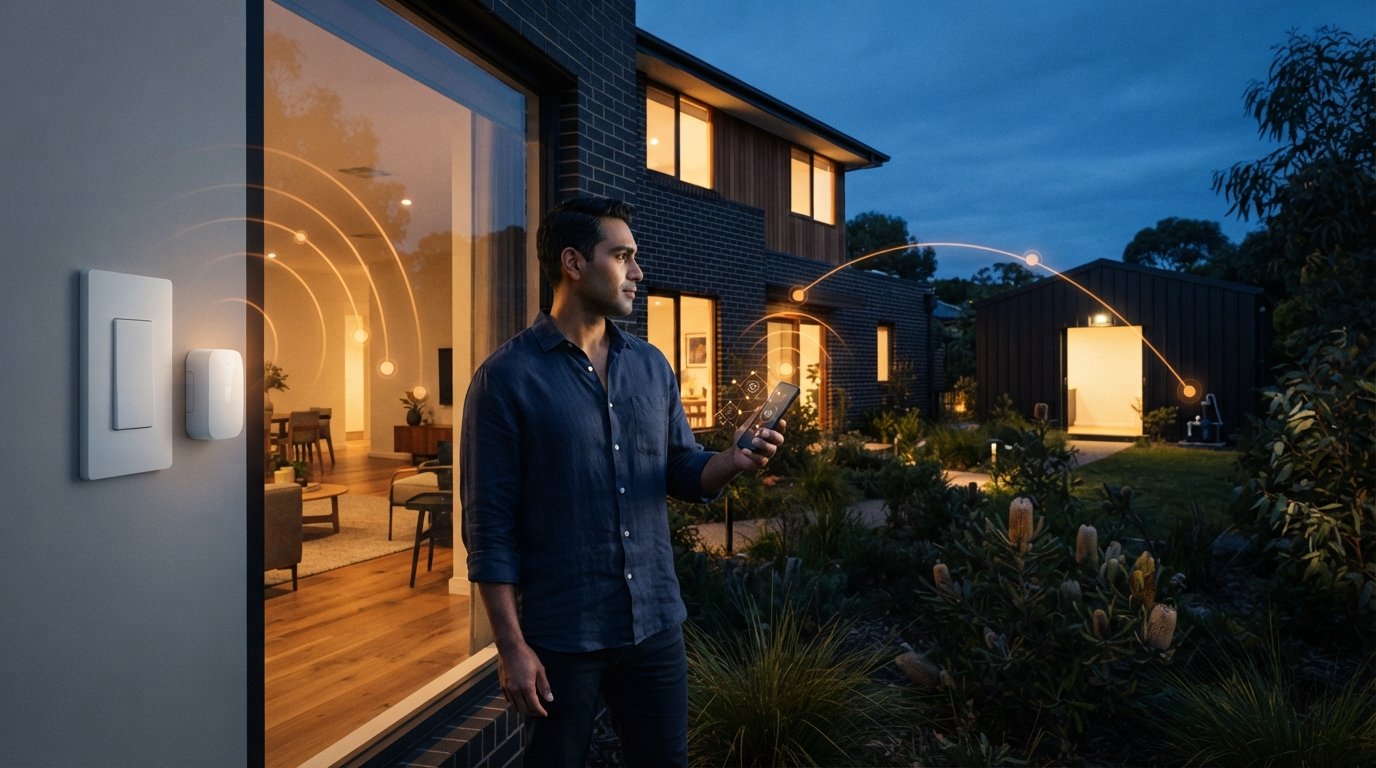
Why should adding a single light switch to your brick wall cost more than the light fitting itself? In Australia, the high cost of electrical labour and the risk of damaging internal walls often make simple upgrades feel like major construction projects. Wireless switching modules change this dynamic by removing the need for invasive cabling. These modules allow you to modernise your home or business without the mess of chasing wires through plaster or brickwork. It’s a pragmatic solution for those who value efficiency and want to avoid the stress of a traditional electrical overhaul.
We agree that your property should be easy to manage without requiring a massive budget for rewiring. This guide shows how wireless switching modules eliminate the need for expensive electrical work while providing total control over every corner of your Australian property. We’ll preview the latest in long-range technology for sheds and outdoor pumps, explain how these kits integrate with your existing switches, and show you how to achieve a professional finish without the typical renovation headaches. You’ll discover a faster, cleaner way to bring your home into 2026.
Key Takeaways
- Minimise renovation expenses by bypassing the high cost of Australian electrical labour and avoiding damage to internal brick or heritage walls.
- Master the core technology behind wireless switching modules to understand how receivers and transmitters communicate without the need for physical copper cabling.
- Evaluate the differences between battery and mains-powered options to ensure your retrofit control is as reliable as a traditional wired system.
- Solve signal range issues in modern buildings and learn the best methods for extending control to outdoor pumps or detached sheds.
- Streamline your project using professional “plug and play” kits that integrate seamlessly with your property’s existing switches and light fittings.
The Evolution of Australian Lighting: Why Wireless Switching Modules are Essential
Renovating an Australian home usually involves a sharp reality check regarding electrical costs. Traditional methods require running physical copper cables through wall cavities; a task that is simple in a new build but often a nightmare during a retrofit. This is where wireless switching modules provide a decisive advantage. Unlike complex smart home ecosystems that require proprietary hubs and constant software updates, these modules focus on reliable, direct hardware control. They transform a complicated electrical project into a simple, high-performance component upgrade.
Modern lighting control systems have shifted away from rigid, hardwired circuits toward more flexible architectures. This evolution is particularly important in the Australian market, where labour costs for licensed electricians continue to rise alongside the price of raw materials like copper. By choosing a modular approach, you remove the friction between your vision for a space and the technical limitations of the building.
The High Cost of Traditional Rewiring
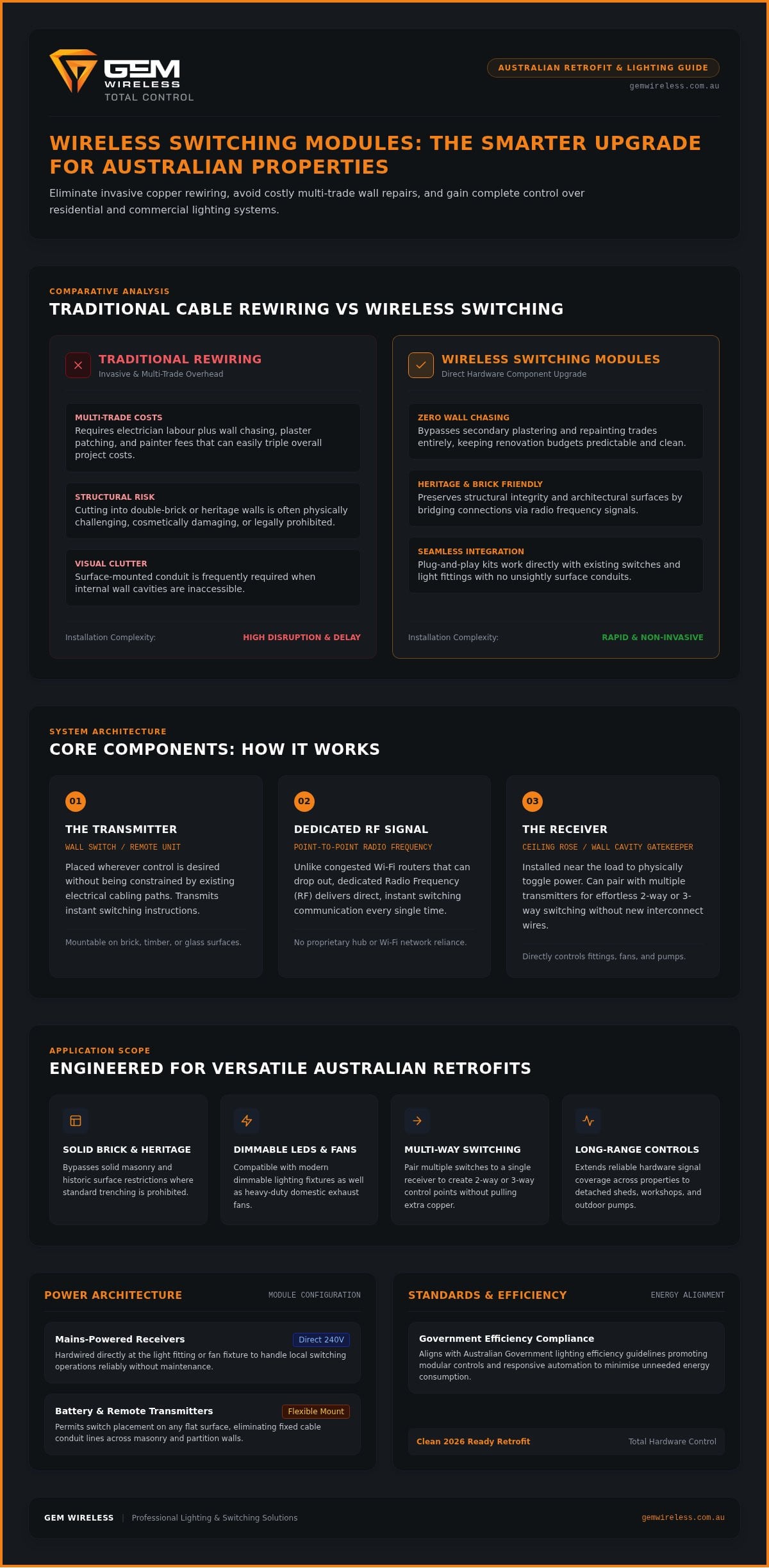
Installing a new switch the traditional way involves far more than just an electrician’s hourly rate. You are also paying for the “chasing” of walls. If you want a new switch on a solid wall, you must pay for the cable run, then hire a plasterer to patch the groove and a painter to match the original finish. These hidden costs can easily triple the price of a simple light installation. Wireless solutions eliminate these secondary trades entirely. Builders and renovators now prioritise these kits because they shorten project timelines and keep budgets predictable. It is a faster way to achieve a professional result without the mess.
Modernising Heritage and Brick Properties
Australian properties often feature double-brick construction or heritage-listed interiors where cutting into surfaces is either physically impossible or legally prohibited. These structural barriers create “dead spots” where running new wires is a non-starter. Using wireless switching modules bypasses these constraints by using stable radio signals to bridge the gap between the switch and the light fitting. This technology is equally valuable in commercial retrofits and retail shopfitting. It allows for a sophisticated, modern layout without the structural damage or the need for unsightly surface-mounted conduit. You preserve the aesthetic integrity of the building while gaining total control over its functionality.
Understanding the Core Components: How Wireless Switching Modules Work
To understand why these systems are so effective, you need to look at the two distinct components: the receiver and the transmitter. Together, they form the wireless switching modules that manage your power. The receiver is the actual switching hardware that connects to your light fitting, while the transmitter is the wall switch or remote that you interact with. This separation is what makes the system so flexible. By removing the physical copper link between the two, you gain the ability to place controls exactly where they are needed, rather than where the wiring allows.
Reliability comes from the use of dedicated Radio Frequency (RF) signals. Unlike Wi-Fi, which can become congested or drop out when the router is busy, RF provides a stable, point-to-point connection. This ensures your lights turn on instantly every time. These systems align with Australian Government lighting efficiency guidelines, which encourage the use of sensors and automated controls to reduce unnecessary energy consumption. Modern modules are engineered to be compatible with almost any Australian light fitting, including dimmable LEDs and heavy-duty exhaust fans.
The Receiver: The Brains Behind the Light
The receiver is typically installed inside a ceiling rose or tucked into a wall cavity near the light fitting. It acts as the gatekeeper for electricity, receiving the signal from the switch and physically toggling the power. One of the biggest advantages is the ability to pair multiple transmitters to a single receiver. This allows for two-way or three-way switching without ever having to pull a new cable between the switch points. If you’re ready to simplify your next project, explore our range of Switching Modules to find the right fit for your property.
The Transmitter: Total Control from Any Surface
The transmitter is the component that gives you back your freedom. Because it doesn’t need a physical connection to the light, you can mount it almost anywhere. You can stick a switch to a glass partition, a brick pillar, or a timber-panelled wall without needing a bulky mounting block or invasive drilling. These transmitters send a signal with virtually zero latency, providing that tactile “instant-on” feel we expect from traditional switches. For properties with detached structures, using long-range transmitters allows you to control gates, garden lights, or shed pumps from the comfort of the main house.
Comparing Module Types: Mains-Powered vs Battery Options
Choosing the right power source for your transmitter depends on your property’s layout and your long-term maintenance goals. While the receiver always requires a power connection to the light fitting, the transmitter offers more variety. Understanding the trade-offs between battery, kinetic, and mains-powered options is essential for a successful retrofit. This comparison ensures your wireless switching modules perform exactly as needed in your specific environment. These choices often align with broader Australian Government energy efficiency guidance on lighting controls, which highlights how modern systems reduce waste through smarter management.
Mains-Powered Wireless Switches
Mains-powered switches are the gold standard for permanent installations. They are typically installed where a power source is already accessible, such as when you are replacing an old wired switch point with a more flexible control. Because they draw power from the building’s electrical system, you never have to worry about battery maintenance. This makes them the preferred choice for commercial settings, retail stores, and high-traffic residential areas. These units integrate seamlessly with standard Australian switch plates; this allows you to maintain a consistent architectural look across your entire property while gaining the benefits of wireless control. For a detailed breakdown of how a mains powered wireless switch compares to battery and kinetic alternatives in Australian retrofit projects, our dedicated guide covers the mechanical differences and wiring standards in full.
Battery and Kinetic Solutions
For renters or those dealing with difficult surfaces like glass, mirrored splashbacks, or solid stone, battery-powered transmitters offer total freedom. You can mount a switch anywhere without drilling or causing permanent damage to the surface. Battery efficiency has improved significantly, with many modern modules offering several years of service before needing a simple replacement. This makes them a highly practical choice for bedrooms or living areas where you want to add a switch without the mess of a full renovation.
Kinetic switches take this technology a step further. They harvest energy from the physical press of the button to send the radio signal to the receiver. They require no batteries and no wires; this makes them a sustainable, maintenance-free option that never leaves you in the dark. If you are managing a larger Australian acreage, standard signals might struggle with distance or thick external walls. In these cases, Long Range Switches are required. These modules are specifically engineered to reach detached sheds, front gates, or bore pumps that sit far from the main house. They provide the same “instant-on” feel as a standard switch but with the power to punch through structural barriers over much greater distances.
Selection Criteria: Choosing the Right Module for Your Property
Selecting the right hardware requires a clear understanding of your building’s construction and intended use. While the basic function of wireless switching modules is to toggle power, the environment they operate in dictates the specific model you need. For instance, a timber-framed Queenslander offers very different signal challenges compared to a modern apartment with foil-backed insulation or a double-brick heritage home. Professional results depend on matching the module’s capabilities to the structural realities of your property.
Signal Penetration and Range
Standard modules perform exceptionally well through internal timber studs and plasterboard. However, modern Australian construction often uses materials that create a “Faraday cage” effect, where metal cladding or foil insulation blocks radio signals. If your receiver is tucked behind a thick brick wall or inside a metal enclosure, signal strength can drop. In these scenarios, or when controlling a gate at the end of a long driveway, a long-range wireless switch is the only reliable choice. To ensure a stable connection, place your receivers away from other high-interference devices like microwave ovens or large metal appliances.
Matching Modules to Load Types
Every module has a maximum wattage rating. It’s vital to match this to your specific appliances to avoid overheating or hardware failure. Consider these common load requirements:
- LED Lighting: Requires modules designed for low-wattage loads to prevent flickering or “ghosting” when the light is supposed to be off.
- Heavy Loads: Items like pool pumps, garden water features, or industrial exhaust fans draw significant current. You must use a module rated for these inductive loads.
- Compliance: Always ensure your selected components meet AS/NZS 3000 standards. This isn’t just about safety; it’s a legal requirement for electrical installations in Australia.
Beyond power and range, consider the physical environment. Outdoor garden lighting or pump stations require receivers with appropriate IP (Ingress Protection) ratings to handle dust and moisture. For large open-plan living areas or long hallways, look for modules that support multi-way pairing. This allows you to sync three or four switches to one light source without the nightmare of complex intermediate wiring. If you’re unsure which hardware fits your specific renovation, you can view our full range of Switch Module Kits to compare specifications and load capacities.
Implementing Gem Wireless: The Professional Choice for Seamless Control
Gem Wireless has built a reputation among Australian stockists and agents for one reason: reliability. These wireless switching modules aren’t just gadgets; they’re professional-grade tools designed to solve real-world installation problems. The “Plug & Play” nature of the system means you can go from unboxing to operational in minutes. This speed is a massive advantage for contractors who need to move quickly between jobs without sacrificing quality. Whether you’re upgrading a single studio apartment or a sprawling commercial warehouse, the system scales effortlessly. You can start with one room and add modules as your needs evolve, creating a unified control network across the entire property.
Accessing professional support is straightforward through our national stockist network. We’ve done the hard work behind the scenes to ensure that every component works together without friction. This commitment to simplicity empowers you to take charge of your property’s electrical layout without the stress of traditional construction. It’s a modern approach that respects both your time and your budget.
Simple Retrofitting with Gem Wireless
Maintaining the aesthetic of a property is often the hardest part of a renovation. Gem Wireless modules are designed to live behind your existing switch plates, ensuring that your décor remains untouched. There’s no need to hunt for matching hardware or settle for bulky, mismatched sensors. The internal components are built to withstand the harsh Australian climate, from the humidity of the north to the dry heat of the interior. This durability ensures that your investment continues to perform year after year. Gem Wireless enables no rewire lighting control for any property type, allowing you to modernise your home without the traditional mess of dust, debris, and wall repairs. For double-brick and heritage properties where access behind walls is limited, a wireless relay for lights offers a practical retrofit solution that pairs with compatible switches to send lighting commands without new switch cabling.
Getting Started with a Wireless Light Switch Kit
Choosing your first project is the best way to see the value of this technology. Most users start with a high-traffic area like a hallway or a difficult-to-wire space like a detached shed or pool area. Picking the right kit depends on whether you need a simple on/off function or long-range capabilities for external equipment. Gem Wireless supports an extensive national network of stockists; this ensures you have access to local expertise and immediate inventory when you need it. If you’re a builder, designer, or property developer, joining our wholesale partner programme provides the technical support and volume access needed for large-scale implementations. It’s a pragmatic way to add value to any property without increasing the complexity of the build. Ready to start? Explore the full range of wireless light switch kits to find the perfect starting point for your next mess-free renovation.
Take Control of Your Property’s Future
Modernising your Australian property doesn’t have to be a battle against solid brick walls and rising electrical labour costs. By integrating wireless switching modules, you bypass the mess of traditional rewiring while gaining a level of control that was once reserved for expensive new builds. We’ve explored how these systems solve the unique challenges of heritage homes, sheds, and commercial spaces through stable RF technology. These are high-tech solutions at a low cost; they empower you to upgrade your lighting without the stress of structural damage.
Gem Wireless systems are trusted by stockists across Australia because they prioritise simplicity and durability. Whether you need a single kit for a bedroom or long-range modules for an acreage, the right hardware is ready to install. It’s time to stop letting your building’s original wiring dictate your lifestyle and start enjoying a more efficient, flexible home or business environment. Browse our range of professional wireless switching modules to find the perfect fit for your next project. You’ll be surprised at how easy a professional renovation can be.
Frequently Asked Questions
Do I need a qualified electrician to install a wireless switching module?
Yes, you must engage a licensed electrician to install the receiver component of your wireless switching modules. In Australia, any electrical work involving 240V mains power requires a qualified professional to ensure compliance with AS/NZS 3000 safety standards. While the transmitter is often surface-mounted and doesn’t require wiring, the module itself connects directly to your home’s power. This ensures your installation is safe, legal, and fully covered by your building insurance.
Can a wireless switch signal go through double brick walls?
Standard radio frequency signals are designed to penetrate common Australian building materials, including double brick and timber frames. While solid masonry can slightly reduce the effective range compared to open spaces, the signal remains stable for most residential layouts. If you’re dealing with exceptionally thick walls or need to reach a detached structure, opting for a long-range wireless switch ensures the signal remains strong enough to provide an instant response every time you press the button.
Will a wireless switching module work with my existing LED downlights?
Most modern wireless switching modules are fully compatible with existing LED downlights, halogen globes, and even exhaust fans. Because the module acts as a hardware relay, it simply manages the flow of power to the fitting. We recommend checking the minimum and maximum wattage loads of your specific lighting to ensure a perfect match. This compatibility allows you to modernise your property’s control system without needing to replace your current energy-efficient light fittings.
What happens to my wireless switches during a power outage?
During a power outage, your wireless switching system will behave similarly to traditional wired lighting. The receiver requires mains power to operate, so the lights won’t turn on until the power is restored. Once the grid is back online, the modules typically retain their pairing memory, meaning you won’t need to re-sync your switches. It’s a reliable hardware-based solution that doesn’t rely on an active internet connection or a central hub to function correctly.
Can I control one light from multiple wireless switches?
You can easily pair multiple wireless switches to a single receiver module to create two-way or multi-way switching. This is one of the most practical applications for hallways, large open-plan living areas, or master bedrooms where you want a switch at the door and another by the bedside. You simply sync the additional transmitters to the existing module, eliminating the need for the complex “traveller” wires required in traditional electrical installations.
How long do the batteries last in a wireless light switch transmitter?
Battery-powered transmitters are highly efficient and typically last between two and five years depending on how often the switch is used. Most modules use standard coin-cell batteries that are easy to replace without professional help. If you prefer a completely maintenance-free setup, kinetic energy switches are an excellent alternative. These “no battery” options harvest a tiny amount of energy from the physical press of the button to send the signal to the light.
Are wireless switching modules compatible with smart home apps like Tuya or Alexa?
Gem Wireless focuses on providing robust, hardware-based wireless switching modules rather than software-dependent smart home apps. This approach ensures that your lights work instantly without relying on Wi-Fi, internet stability, or third-party cloud subscriptions. By prioritising dedicated radio frequency control, the system avoids the common lag and security vulnerabilities associated with hub-dependent smart devices. It’s a pragmatic choice for those who value long-term reliability and simplicity over complex app integrations.
Can I use a wireless module to control my pool pump or garden lights?
You can certainly use these modules to control pool pumps, garden lighting, or water features. It’s important to ensure the switching module is rated for the specific wattage and inductive load of the pump. For outdoor installations, the receiver must be housed in an appropriately weather-rated enclosure to protect it from moisture and dust. Using a long-range transmitter is often the best way to manage these external loads from inside the main house.
Australian homesDIY electricalelectrical retrofithome automationhome renovationsmart lightingwireless switcheswireless switching modules