- Empty cart.
- Continue Shopping
Convenience Lighting for Elderly Australians: Safe, Accessible Home Solutions
- Posted on
 Strong Digital
- 0
- Categories: Uncategorized
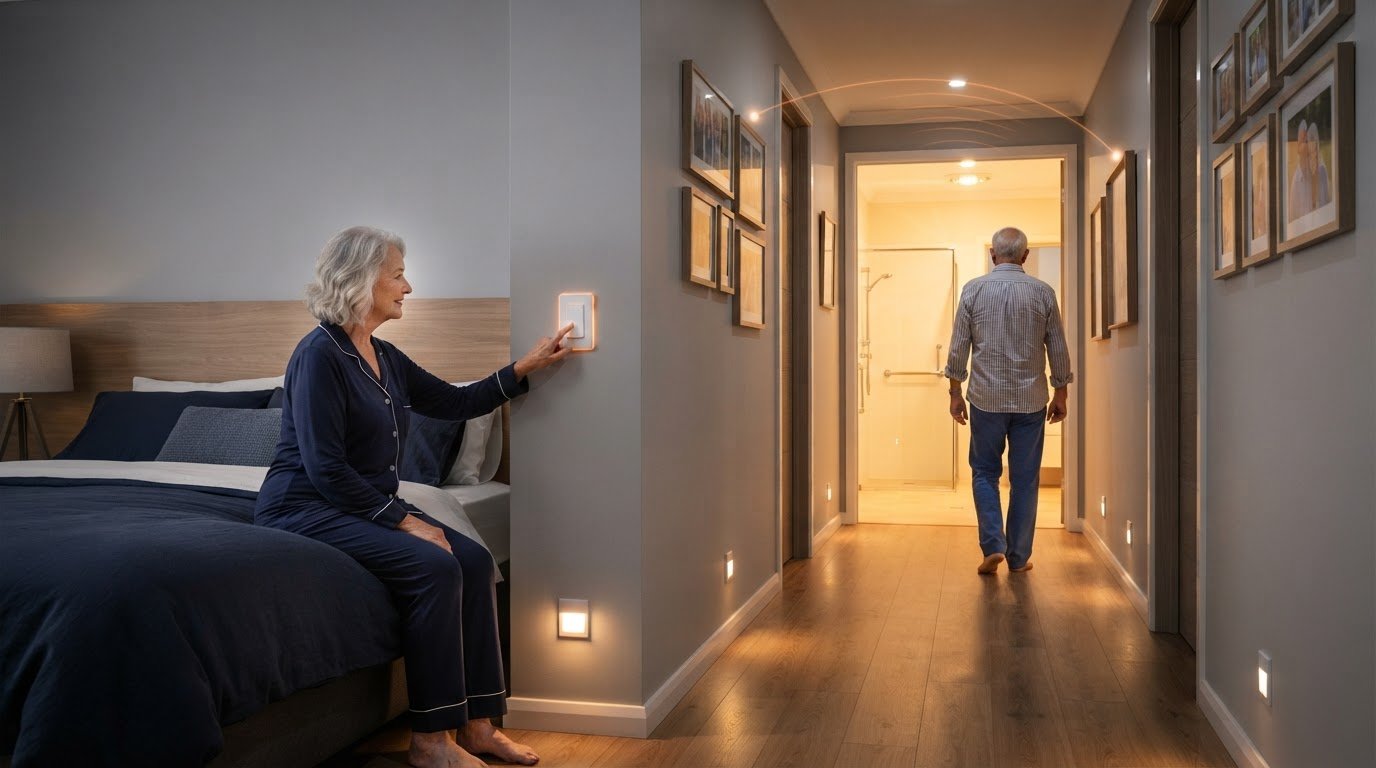
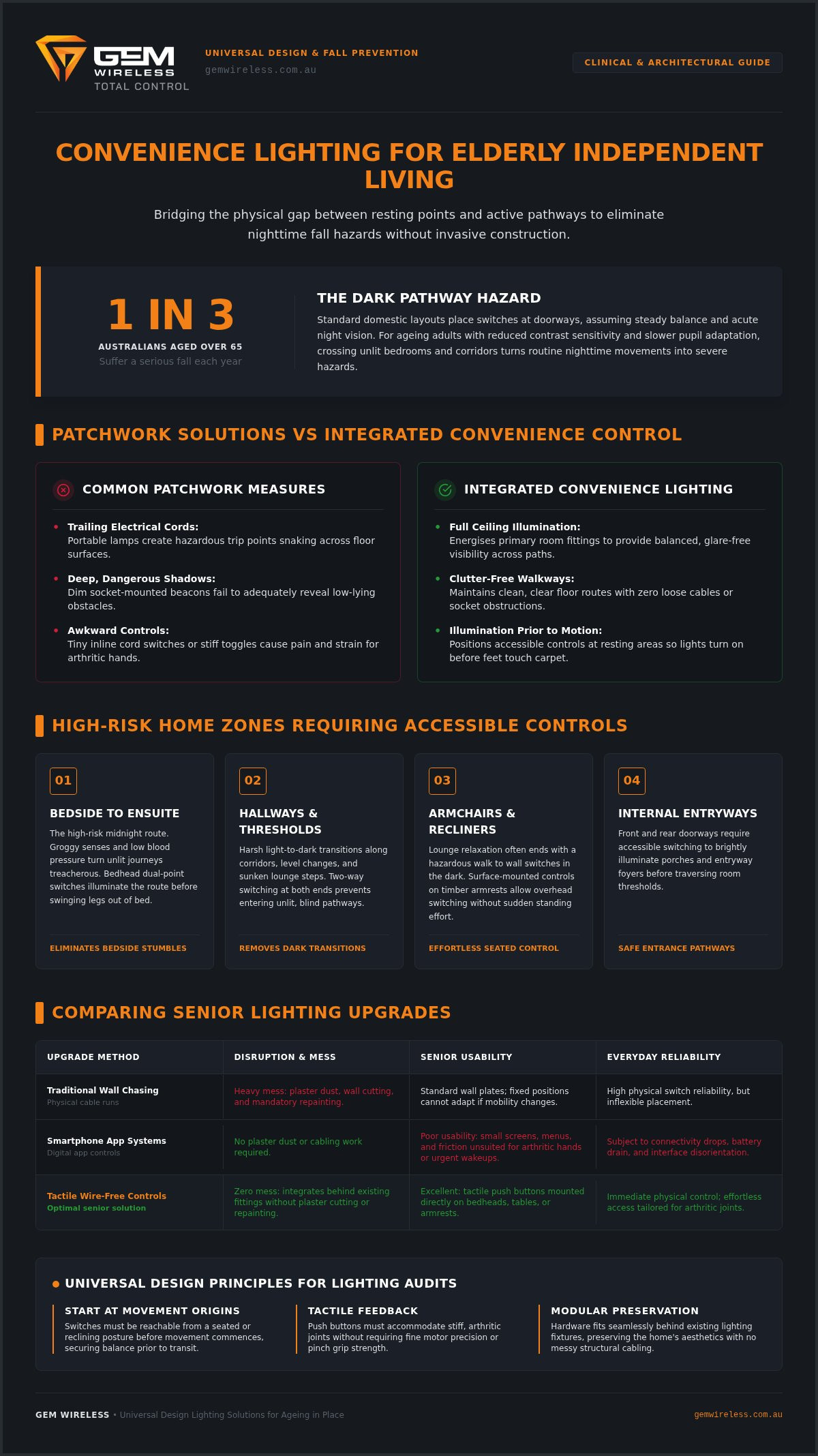
More than one in three Australians aged over 65 suffer a fall each year, and dark hallways between the bed and the bathroom turn routine nighttime trips into genuine hazards. Setting up reliable convenience lighting for elderly family members shouldn’t mean wrestling with confusing smartphone apps or tearing into walls to chase new electrical cables.
Struggling to reach distant, stiff switches in the dark is frustrating and unsafe, especially for arthritic hands. You want to make your home safer without the mess of plaster dust, repainting, or complex digital systems that create more friction than they solve.
This guide reveals how to eliminate nighttime fall hazards and establish effortless, accessible light control directly beside beds, favourite armchairs, and dark passageways. We will walk you through practical placement strategies, tactile switch options, and wire-free solutions that keep existing fittings intact while delivering lasting peace of mind.
Key Takeaways
- Discover how purpose-placed convenience lighting for elderly residents prevents nighttime falls by putting light controls within effortless reach.
- Identify high-risk architectural zones throughout the home, with a focus on securing the nocturnal pathway from the bedside to the ensuite.
- Compare upgrade methods to see why tactile, wire-free push buttons provide greater everyday reliability than complex smartphone apps or invasive wall chasing.
- Learn how to audit existing living spaces and map ergonomic switch locations tailored to limited mobility and arthritic hands.
- Explore how modular wireless switching hardware integrates behind existing fittings without plaster dust, repainting, or messy cabling.
What Is Convenience Lighting for Elderly Independent Living?
Convenience lighting places illumination controls precisely where mobility-impaired individuals need them most, rather than forcing people to cross dark rooms to reach distant wall plates. Simply defined, convenience lighting for elderly independent living is an essential fall-prevention safeguard that bridges the dangerous physical gap between resting areas and active household zones. Grounded in Universal Design principles, this approach supports ageing in place by preserving personal dignity, daily confidence, and immediate environmental control.
Standard architectural layouts routinely position light switches beside entry doors. This design assumes the occupant has steady balance, quick reflexes, and sharp night vision. For an older Australian, that layout forces dangerous unlit journeys across bedrooms and hallways. Effective convenience lighting blends primary overhead illumination with targeted, low-glare visibility, ensuring that rooms brighten before movement begins.
The Critical Link Between Nighttime Visibility and Fall Prevention
Poor lighting accounts for a substantial portion of domestic slip and trip incidents. Ageing eyes suffer from reduced contrast sensitivity and slower pupil adaptation, meaning older adults take far longer to adjust when transitioning from sleep into complete darkness. Stepping out of bed without adequate sightlines leads to misjudged distances, clipped furniture edges, and devastating balance loss. Having direct, tactile light switches mounted at the bedside removes this hazard entirely, eliminating disoriented stumbles before feet even touch the carpet.
Beyond Basic Nightlights: Why Integrated Control Matters
Many families attempt to solve nocturnal visibility using portable floor beacons or standalone plug-in bedside lamps. These patchwork solutions often introduce new risks:
- Trailing electrical cords snake across flooring, creating fresh trip points.
- Dim socket-mounted beacons cast deep shadows that obscure low-lying obstacles.
- Table lamp switches are often tiny, cord-mounted, or awkward to grasp with arthritic joints.
A dim floor light cannot replace the safe, balanced clarity of existing ceiling fixtures. True safety relies on integrated controls that illuminate entire walking routes at once. By positioning functional switch access right at resting points, convenience lighting for elderly residents delivers comprehensive room visibility while keeping floor pathways entirely clear of clutter.
Critical Home Zones Requiring Accessible Lighting Controls
Most residential falls happen along predictable transit routes rather than open living spaces. Older Australians frequently encounter architectural hazards where rooms meet, light levels drop, and balance shifts unexpectedly. Introducing tailored convenience lighting for elderly occupants means mapping these danger zones and mounting switches exactly where movement starts.
Bedside to Bathroom: The High-Risk Midnight Route
Waking up during the night creates immediate disorientation. Groggy senses, low blood pressure, and urgency make stumbling out of bed in total darkness incredibly hazardous. Dual-point switching solves this problem by placing a switch directly onto the bedside table or bedhead. An older individual can illuminate the route before swinging their legs out of bed, ensuring the path to the ensuite doorway is brightly lit before taking a single step.
Hallways and Corridor Thresholds
Accessible lighting design stresses the importance of eliminating harsh light-to-dark transitions along circulation paths. Central corridors, doorways, and changes in floor levels, such as sunken lounge rooms or single steps, turn treacherous when shadowed. Implementing practical no rewire lighting control lets you position two-way switches at both ends of a hallway, removing blind corners without the need to cut into plaster walls.
Living Areas, Reading Chairs, and Entryways
Evenings spent in the lounge often end with an unnecessary safety hazard: getting up from a deep, comfortable chair in the dark to turn off main room fixtures before heading to bed. Accessible controls resolve this issue across several high-use areas:
- Armchairs and recliners: Surface-mounted switches on timber armrests or side tables let seniors control overhead lights without sudden standing efforts.
- Internal entrance points: Wall switches positioned beside front and back doors illuminate porches and entrance halls instantly upon arrival.
- Kitchenette counters: Easy-to-reach controls eliminate deep shadows over food preparation benches.
Securing these critical areas gives older family members complete control over their surroundings. If you are looking to modernise these transition points across an Australian home without structural renovations, exploring modular switch kits from Gem Wireless offers an effortless, tidy path to independent living.
Comparing Senior Lighting Solutions: Rewiring vs Apps vs Wireless Controls
Choosing the right approach to convenience lighting for elderly relatives comes down to three main paths: structural hardwiring, app-based smart devices, or dedicated wireless hardware. Evaluating them side-by-side reveals sharp differences in physical disruption, daily dependability, and practical usability.
| Solution | Installation Impact | Daily Reliability | Senior Usability |
|---|---|---|---|
| Traditional Rewiring | High; requires wall cutting, plastering, and repainting | High; hardwired directly to home mains | Low; switches remain locked in original wall locations |
| Smart Apps & Voice | Low; involves smart bulbs and Wi-Fi pairing | Variable; dependent on internet and cloud servers | Low; steep digital learning curve and confusing menus |
| Wireless Hardware | Zero structural impact; switches mount anywhere | High; direct RF signal independent of Wi-Fi | High; familiar, tactile push-button control |
The Hidden Drawbacks of Traditional Electrical Rewiring
Chasing new cables down brick or plasterboard walls creates severe domestic disruption. Cutting channels produces fine masonry and plaster dust that settles across soft furnishings and irritates sensitive airways. Coordinating separate trades for plaster patching, sanding, and repainting turns a minor safety upgrade into an invasive, multi-day project. Facing this upheaval, many families delay installing critical bedside controls until after a preventable fall occurs.
Why Voice Assistants and Mobile Apps Often Fail Older Users
Smart bulbs and voice assistants sound convenient on paper, yet they often introduce unnecessary friction. Hearing difficulties and natural vocal changes undermine voice recognition accuracy, leaving older residents repeating commands to uncooperative smart speakers. Unstable Wi-Fi connections, sudden software updates, and intricate touchscreen menus cause genuine distress. Household safety hardware must respond instantly to physical touch without requiring digital troubleshooting.
The Tactile Advantage of Wireless Switching Modules
Modern wireless systems eliminate digital friction by pairing modern technology with familiar physical interaction. Compact Switching Modules install cleanly behind existing ceiling roses or light fittings, preserving the home’s original aesthetic. Paired surface switches attach directly to bedheads, timber armrests, or hallway entries using simple adhesive backings. Read our wireless light switch kit guide to see how these modular components deliver accessible, wire-free convenience lighting for elderly Australians without altering wall structures.
How to Plan an Accessible Lighting Layout for Ageing in Place
Designing a safe layout requires assessing real domestic routines and mobility habits rather than sticking to conventional switch positions. Proper convenience lighting for elderly independent living matches control points directly to the resident’s grip strength, eyesight, and physical reach. Following a structured planning process ensures every danger zone is secured without unnecessary hardware.
Step 1: Audit Nighttime Pathways and Shadow Zones
Walk the home alongside your family member after sundown. Observe their natural movement patterns and take note of where they pause, shuffle, or trail a hand along the hallway wall for balance. These hesitation points highlight where shadows pool and vision drops. Mark these locations as priority zones for auxiliary switches, particularly beside the bed, near the lounge chair, and at doorway thresholds.
Step 2: Determine Ergonomic Switch Heights and Placement
Standard Australian wall switches are often mounted between 1200mm and 1300mm above the floor. This height forces uncomfortable shoulder elevation for standing seniors and proves unreachable from a wheelchair. Aim for an ergonomic height between 900mm and 1100mm to allow effortless reach from any posture.
- Bedhead and bedside units: Fix switches within arm’s reach of the mattress edge so lights can be switched without sitting up.
- Seating areas: Adhere slim switch plates directly to the side of timber armchairs or side tables.
- Tactile mechanisms: Select broad push-buttons that give a distinct physical click, helping arthritic hands operate controls without painful pinching.
Step 3: Establish Multi-Way Control Without Running Cables
Safe movement demands multi-way switching. An individual needs to switch an overhead light on from their pillow, walk down an illuminated corridor, and turn it off from inside the ensuite. Creating this functionality traditionally required chasing twin-and-earth cabling through finished walls. Using Switch Module Kits completely bypasses that headache.
By pairing several surface-mounted switches to modern wireless switching modules, you establish seamless multi-way switching across any room in minutes. If you are mapping out a safer home environment for an ageing parent, visit Gem Wireless to plan your accessible lighting upgrade with purpose-built wireless hardware.
Implementing Wireless Switching Hardware for Stress-Free Home Upgrades
Australian families can modernise domestic spaces without enduring the noise, dust, and expense of invasive electrical renovations. Compact Switching Modules tuck neatly behind existing wall plates or inside ceiling roses, leaving original fittings and finishes intact. These discreet receivers pair with surface-mounted controls, making tailored convenience lighting for elderly relatives fast and straightforward to establish.
Selecting the Right Switch Module Kits for Your Property
Selecting suitable hardware starts with matching controls to the room’s layout. Complete Switch Module Kits include both the receiver module and pre-paired push-button switches that stick straight onto bedside tables, timber bedheads, or plasterboard walls.
- Flexible switch hardware: Choose between self-powered kinetic switches that never need battery replacements or reliable Mains Powered Switches for permanent fixtures.
- Independent transmission: Hardware communicates via dedicated radio frequencies, keeping switch operation fully functional even during household Wi-Fi drops or internet outages.
- Rapid setup: A licensed electrician can wire the receiver into the light circuit in one short visit, allowing family carers to position companion switches immediately.
Connecting Outdoor Paths and Detached Living Areas
Outdoor walkways present severe hazards when darkness falls, especially where seniors live in detached granny flats or must cross back gardens to reach laundry facilities. Navigating damp pavers or unlit veranda steps often leads to catastrophic slips.
Deploying long range wireless light switches bridges distances across domestic blocks with ease. An older resident can flick on external security floodlights or garden pathway illumination directly from inside their living area before stepping out into the evening air.
Next Steps: Restoring Confidence and Daily Independence
Practical safety upgrades do not require complicated smart home apps or extensive home modifications. Having dependable, tactile switches within immediate arm’s reach restores personal dignity and removes the fear of moving around the house after dark. For families taking a comprehensive approach to ageing in place—whether reviewing home lighting or looking into mobility scooters for sale brisbane to maintain confidence out in the community—simple, practical tools make all the difference. Engaging a licensed electrician to install wireless receivers alongside existing lighting circuits delivers instant peace of mind, ensuring convenience lighting for elderly family members is dependable, intuitive, and simple from day one.
Create a Safer, More Accessible Home Today
Protecting loved ones from preventable nighttime falls does not require complex smartphone setups or destructive renovations. Creating effective convenience lighting for elderly family members simply means putting light switches exactly where they offer safety, confidence, and effortless reach. By pairing modular wireless receivers with existing Australian light fittings and standard switches, you can upgrade any living space without wall chasing, cabling, or plaster repairs.
Because these tactile switches operate completely independently of Wi-Fi, they deliver rock-solid reliability every single night. Giving older Australians immediate physical control over their room lighting restores self-reliance and brings lasting reassurance to the whole family. Explore Gem Wireless Switch Module Kits today to eliminate nighttime hazards and help your family members age in place with safety, dignity, and independence.
Frequently Asked Questions
Is convenience lighting really necessary if my elderly parent already has a bedside lamp?
Yes, because table lamps rarely provide adequate illumination for safely crossing an entire room. Lamp cords create dangerous trip points across carpets, and small inline switches are tricky to grip in the dark. Implementing dedicated convenience lighting for elderly relatives illuminates main ceiling fixtures instantly, flooding the entire walking route with clear, glare-free light before anyone steps away from the bed.
Can I add an accessible light switch next to a bed without cutting into the wall?
Yes, wireless switch hardware mounts directly onto finished surfaces without opening up walls. Complete Switch Module Kits include slim, battery-free or surface-mounted switches that adhere straight to plasterboard, timber headboards, or bedside tables. They pair wirelessly with a compact receiver module tucked into your existing light fitting, giving full control without chasing cables or creating plaster dust.
How do wireless light switches work if our home experiences frequent Wi-Fi dropouts?
The switches operate entirely independently of home Wi-Fi networks and local internet connections. They send direct radio frequency signals straight to the receiver module inside the ceiling cavity or switch box. Even if your internet connection fails or your home router reboots during a storm, the physical switches continue turning your lights on and off without interruption.
What happens if an elderly relative has arthritis and struggles to press stiff switches?
Modern wireless switches replace traditional, stiff rocker mechanisms with broad, tactile press surfaces designed for low-effort activation. Users do not need tight pinch grip or strong finger joints to operate them; pressing with a palm, knuckle, or forearm easily toggles the circuit. This makes convenience lighting for elderly users suffering from joint pain or reduced hand strength effortless and reliable.
Can we connect one light fitting to two switches at opposite ends of the hallway?
Yes, multiple wireless switches can be linked to a single receiver to create multi-way switching circuits instantly. You can place one switch at the bedroom threshold and another companion switch at the far end of the hallway or inside the bathroom. This allows older occupants to activate pathway lighting ahead of their walk and switch it off from their final destination.
Is an electrician required to install wireless switching module receivers in Australia?
Under Australian electrical safety standards, a licensed electrician must wire the receiver module into the 240V mains circuit at the light fixture or existing switch plate. However, this is a quick job taking very little time per point. Once the receiver is installed, anyone can position and mount the companion wireless switches anywhere in the room without trades.
How much disruption to plaster and paintwork is involved with wireless convenience lighting?
There is zero disruption to wall linings, cornice work, or interior paint. Because the hardware uses wireless signals rather than structural cabling, there is no wall chasing, stud drilling, or messy masonry cutting. Your walls stay completely intact, eliminating the dust, repainting expenses, and multi-day domestic upheaval associated with traditional electrical rewiring projects.
accessible lightingaged care Australiaelderly carefall preventionhome modificationsindependent livingsenior safetywireless light switches