- Empty cart.
- Continue Shopping
Wireless Pool Light Switch: The Complete Guide to Modernising Your Backyard in 2026
- Posted on
 Strong Digital
- 0
- Categories: Uncategorized

You shouldn’t have to dig a trench through your expensive landscaping just to turn on the pool lights from your patio. Many homeowners assume that installing a wireless pool light switch is a complex task that requires tearing up the garden or dealing with messy rewiring. It’s frustrating to be stuck with an inconvenient setup, like walking to the pump shed in the dark just to flick a manual switch. You want a backyard that feels modern and effortless, not a renovation project that causes more stress than it’s worth.
We agree that your outdoor space should work for you, not create more chores. This guide shows you how to control your pool lighting without the cost of trenching or the mess of rewiring your outdoor area. You’ll learn how long-range switching modules provide a reliable solution for even the largest Australian properties. We’ll cover the latest safety standards, how to retrofit your existing setup, and the simple steps to manage your poolside atmosphere from the comfort of your lounge.
Key Takeaways
- Avoid the high cost of electrical trenching and garden repairs by installing a wireless pool light switch to modernise your outdoor area.
- Discover how to control your water features and lighting from the comfort of your patio using a simple transmitter and receiver setup.
- Learn why wiring a switching module into your existing transformer is a faster, cleaner alternative to traditional hardwired switches.
- Map out your signal path effectively by identifying common obstacles like metal pool fences or thick masonry walls for a reliable connection.
- Save on renovation costs with a long-range solution that works for large Australian properties without the mess of rewiring.
What is a Wireless Pool Light Switch and Why Do You Need One?
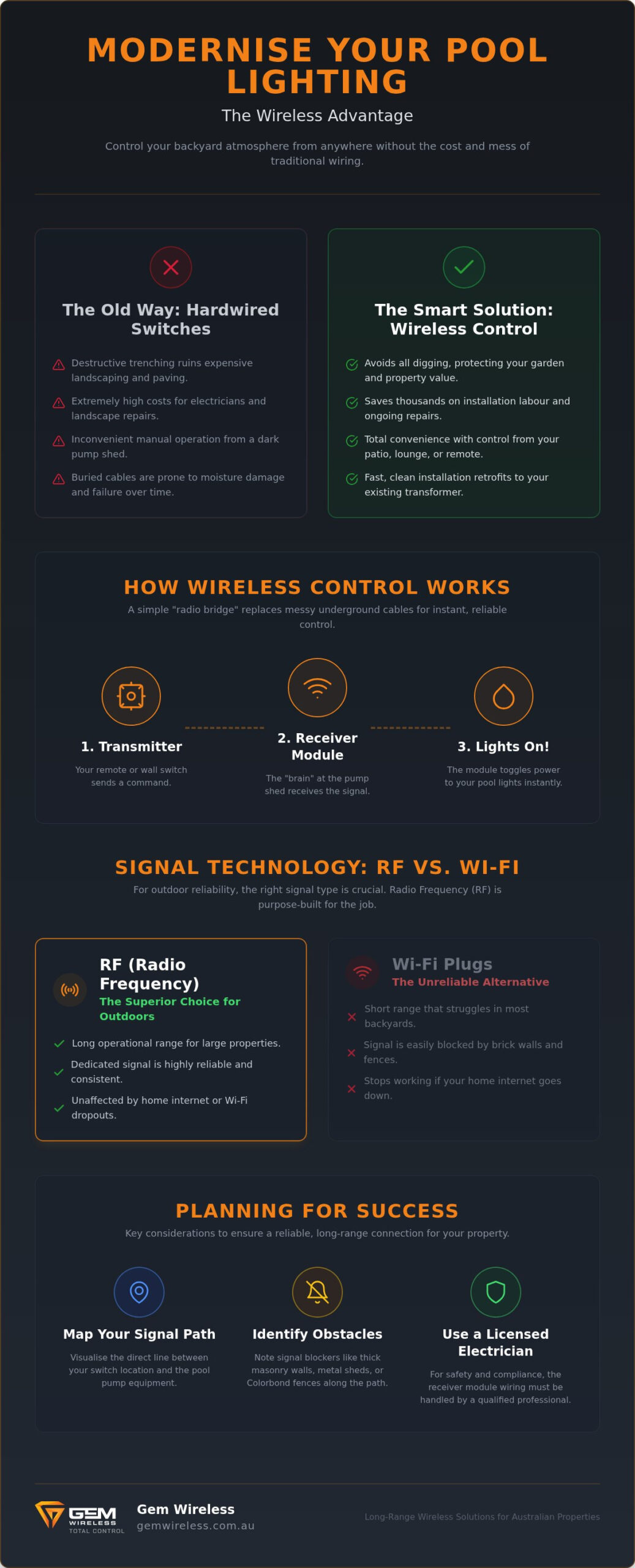
A wireless pool light switch is a smart, two-part system designed to give you total control over your backyard atmosphere without heavy construction. It consists of a transmitter, which is your remote or wall-mounted unit, and a receiver module that sits at the pool’s power source. This technology eliminates the need for a physical cable link between your home and the pool lights. To get a better grasp of how wireless switches work, think of them as a radio bridge that replaces the need for physical copper wiring. By using radio frequency to bridge the gap, you can modernise an older pool setup in minutes rather than days. It’s the ideal way to integrate your water features and lighting into a seamless outdoor experience from the comfort of your lounge.
The Problem with Traditional Pool Wiring
Installing a standard hardwired switch usually involves significant labour and high costs. Most traditional systems require a dedicated underground conduit to run cables from the house to the pump shed. If your backyard is already finished with expensive pavers, timber decking, or concrete, trenching becomes a destructive nightmare. You aren’t just paying for an electrician; you’re often paying for a landscaper to fix the mess. Additionally, underground cables are prone to moisture ingress over time. When a buried wire fails, locating the fault often requires more digging and even higher repair bills. A wireless pool light switch sidesteps these issues entirely, making it a pragmatic choice for any renovation.
Safety and Convenience in the Modern Backyard
The most immediate benefit is the end of the “pump shed trek.” Nobody enjoys walking across wet grass in the dark to find a manual switch. A wireless system brings that control to your patio, lounge, or even your pocket via a keychain remote. This setup also improves safety by keeping high-voltage switching away from the pool area. You can manage multiple control points simultaneously, ensuring the lights are on before you even step outside. It’s a simple upgrade that prioritises your peace of mind. By removing the friction of manual operation, you’ll find yourself using your pool area more often, turning a dark backyard into an inviting retreat with one click.
How Wireless Pool Lighting Control Actually Works
A wireless pool light switch operates through a simple but effective handshake between two main components. The transmitter sends a command, and the receiver module acts as the device that intercepts power to toggle the light. Unlike a standard light switch that physically breaks a copper wire, this system uses invisible signals to bridge the distance. The receiver is typically wired directly into the light’s power circuit at the transformer. This ensures the high-voltage side of the system stays securely housed in your pump shed or weather-proof enclosure while you control it from anywhere in range.
The Receiver Module: The Brain of the System
The receiver module is the critical component that makes the whole system work. It sits between your mains power and the pool light transformer, acting as a gatekeeper for electricity. Modern modules are remarkably compact. They are designed to fit inside existing weather-proof enclosures, meaning you don’t need to add bulky new boxes to your pool area. One of the best features of these wireless switching modules is their versatility. You can pair a single module with multiple switches. This allows you to control the lights from your kitchen, your patio, and a keychain remote simultaneously without any conflict.
RF vs Wi-Fi: Why Signal Type Matters Outdoors
Choosing the right signal type is vital for outdoor reliability. Many DIY hacks suggest using basic Wi-Fi plugs, but these often fail in a backyard environment. Wi-Fi signals struggle to penetrate thick brick walls or reach the far corners of a typical Australian block. If your home internet drops out, your pool lights stop working. RF (Radio Frequency) is the superior choice for outdoor switching. It offers a much longer range and provides a dedicated, direct connection that doesn’t rely on your router. Gem Wireless focuses on RF technology to ensure consistent performance across large properties. This approach ensures your lights turn on every time, regardless of your internet signal strength.
Safety is paramount when dealing with electricity near water. All installations must adhere to strict National Electrical Code (NEC) safety standards to prevent accidents. While the wireless components simplify the user experience, they still interact with mains power. It is essential to have a licensed electrician handle the wiring of the module itself. This ensures your system is not only convenient but also fully compliant with local regulations. If you’re looking for a reliable way to upgrade, exploring modern switching solutions is a great place to start.
Wireless vs. Hardwired Pool Switches: A Practical Comparison
Choosing between a hardwired system and a wireless pool light switch often comes down to the hidden costs of installation. While a standard manual switch might seem cheaper on the shelf, the labour required to install it can be staggering. Hardwired systems demand physical conduits. This means your electrician needs to dig through your garden, lift pavers, or even cut through concrete to lay cable. This “mess factor” is a significant deterrent for homeowners who have already invested thousands in their landscaping. In contrast, wireless modules require zero digging. A professional electrician simply wires the module into your existing circuit, and the pairing process takes only minutes. When evaluating the best approach, it’s helpful to look at how the industry compares different approaches to smart lighting. While some smart home setups focus on individual bulbs, the switching mechanism is often the more robust choice for harsh outdoor environments.
Installation Time and Labour Savings
Traditional wiring projects can easily stretch into several days of labour. An electrician must map out the run, dig the trench, lay the conduit, and then backfill the area. Once they leave, you’re often left with a scarred lawn or mismatched pavers that require a landscaper to fix. A wireless setup is a different story. The installation is typically completed in under an hour. Because there’s no need to run new circuits through the walls of a finished home, you avoid the complexity and risk of damaging internal structures. It’s a clean, surgical upgrade that respects your time and your property.
Flexibility and Future-Proofing Your Setup
A hardwired switch is permanent. If you decide to renovate your patio or change your backyard layout, moving that switch involves another round of digging and rewiring. Wireless systems offer far more adaptability. You can easily add more control points later without running a single extra centimetre of cable. Modern modules are also easier to replace or upgrade as technology moves forward. This flexibility makes them a perfect choice for renters or homeowners who might want to take their system with them to a new property. For those managing larger rural properties, a long range wireless light switch provides these same benefits over distances that would be cost-prohibitive for copper wiring. You get a reliable, high-performance solution that doesn’t lock you into a rigid electrical layout.
Planning Your Wireless Pool Light Setup: Key Considerations
A successful installation starts with a clear signal path. While a wireless pool light switch removes the need for physical cables, you still need to map out how the transmitter and receiver will talk to each other. Most Australian homes use materials that are notoriously difficult for wireless signals to penetrate. Identifying these barriers before you start the installation ensures your system works every time you press the button. If you’re looking to integrate your pool lighting into a larger backyard plan, you might also need a wireless switch for outdoor security lights to keep the whole property managed from one place.
Assessing Signal Range and Obstacles
Signal range is the biggest variable in any backyard setup. Standard modules usually cover a typical suburban block, but larger rural properties require more power. You need to look for two main signal killers: metal and masonry. Metal pool fences act like a shield, while thick brick walls can absorb radio waves. To get the best results, position your receiver module as high as possible inside the pump shed. While line of sight is the gold standard for any wireless device, high-quality RF systems are designed to bounce around obstacles. Just ensure you aren’t burying the module deep behind a metal rainwater tank or inside a heavy steel cabinet. If your property also relies on remote water management, a dedicated wireless pump switch Australia solution can handle those long-distance control challenges without the cost of trenching new cables.
Waterproofing and IP Ratings for Outdoor Gear
Australian weather is unforgiving. Your switching gear must be rated to handle everything from humidity to direct splashes. The Ingress Protection (IP) rating is your guide here. For modules placed in pump sheds or near the pool, look for an IP66 rating. This means the unit is completely dust-tight and can withstand heavy rain or hose spray. It’s a mistake to place a non-rated module in a sheltered spot. Dampness and condensation are silent killers for electronics. Always use a dedicated, weather-proof enclosure and ensure all cable entries are properly sealed with glands. This simple step prevents short circuits and extends the life of your modernised setup. If you want to extend the same no-trench approach across your entire yard, our guide to wireless garden lighting control covers how to automate your full outdoor space without disturbing a single paver.
Getting your planning right from the start saves time and prevents future signal drops. If you’re ready to upgrade your backyard without the hassle of trenching, you can explore our range of wireless switching kits today.
Modernising Your Pool with Gem Wireless Solutions
Gem Wireless is an Australian-owned specialist dedicated to removing the friction from home automation. We provide the hardware that allows you to upgrade your backyard without the destructive cost of traditional electrical work. By using a wireless pool light switch, you can achieve a sophisticated, modern look while keeping your existing lights and infrastructure. Our approach is built on the concept of no rewire lighting control, ensuring that your renovation is defined by convenience rather than chaos. We have designed our systems to be a “set and forget” solution that integrates seamlessly into your daily life.
The Gem Wireless Advantage for Pool Owners
Our focus is on pragmatic solutions that fit into your life. Our switching modules are designed to be compatible with standard Australian hardware, meaning you don’t need to replace your entire pool system to gain remote control. We prioritise reliability above all else. When you press the button on your remote or wall switch, the lights respond instantly. It just works. This level of consistency empowers you to manage your outdoor environment with confidence. You aren’t just buying a gadget; you’re investing in a tool that simplifies your routine and enhances your peace of mind. Our kits include everything needed to bridge the gap between your lounge and the water’s edge, removing the need for complex programming or ongoing maintenance. It’s a smarter way to manage your home.
Simple Steps to Get Started with Wireless Switching
Modernising your backyard is a straightforward process when you have the right components. You don’t need to be a technology expert to get started. Our kits are built for simplicity and designed to work with your existing setup. Follow these three steps to begin your upgrade:
- Identify your transformer: Locate the power source for your pool lights, which is usually found in the pump shed or near the filtration equipment. This is where the receiver will live.
- Select your Switch Module Kit: Choose a kit that matches your range requirements. If your pool is at the back of a large block, our long-range modules ensure the signal never drops out.
- Consult your sparkie: While the wireless pairing is simple, you must always consult a licensed electrician to install the module safely into your mains power circuit.
Because our modules are compact, they fit easily into existing enclosures, keeping the installation time to a minimum. Once your electrician has fitted the module, you can pair it with multiple switches or remotes to suit your lifestyle. It’s a fast, clean, and effective way to bring your backyard into 2026. You get total control without the mess.
Take Control of Your Backyard Experience Today
Modernising your pool area doesn’t have to be a destructive or expensive ordeal. By choosing a wireless pool light switch, you eliminate the need for costly trenching and the mess of digging up your established landscaping. We’ve explored how RF technology provides a more reliable connection than standard Wi-Fi, ensuring your lights respond every time you press the button. Whether you’re retrofitting an older pool or finishing a new build, the flexibility of wireless modules allows you to future-proof your setup without running a single extra cable. For homeowners who want to extend this same convenience beyond the pool, a dedicated approach to wireless garden lighting control makes it easy to automate your entire outdoor space without any trenching.
As an Australian-owned and operated business, Gem Wireless focuses on delivering pragmatic solutions that work for local properties. Our no-rewire technology and long-range RF modules are designed to handle the unique challenges of the Australian backyard. You can View our Range of Wireless Switch Kits for Australian Pools to find the perfect fit for your home. Take the first step toward a more convenient, effortless outdoor space that you can control from the comfort of your lounge.
Frequently Asked Questions
Can I use a wireless switch with my existing pool lights?
Yes, you can. These systems are designed to be retrofitted to almost any existing pool light setup. The receiver module is wired into the power circuit, usually at the transformer, so you don’t need to change your actual light fittings. This makes it an ideal solution for older pools where the original wiring is difficult to access or modify. It’s a simple way to gain modern control without a full renovation.
Do I need a special electrician to install a wireless pool light switch?
You don’t need a specialist technician, but you must use a licensed electrician for the installation. While the wireless pairing is a DIY task, the receiver module interacts with your home’s mains power. A standard licensed sparkie can easily handle the wiring at the transformer or pump shed. This ensures the installation meets Australian safety standards and protects your existing electrical system from potential faults or incorrect wiring.
Will the wireless signal reach from inside my house to the pool pump shed?
Yes, a high-quality wireless pool light switch is built to handle the distances found on typical Australian properties. While standard Wi-Fi often struggles with external brick walls, Radio Frequency (RF) signals have much better penetration. For larger blocks or rural properties, long-range switching modules are available to ensure the signal reaches the pump shed every time. Positioning the receiver higher up can also help bypass common obstacles like metal fences.
Is a wireless pool light switch waterproof and safe for outdoor use?
Yes, the system is safe and designed for outdoor environments when installed correctly. The receiver module should be housed within an IP-rated weather-proof enclosure, such as inside your pump shed or a dedicated electrical box. This setup keeps the high-voltage switching away from the water’s edge. Because the transmitter is often a battery-powered remote or a surface-mounted wall switch, it provides a safe way to manage your lighting in wet conditions.
Can I control multiple pool lights with a single wireless switch?
You can certainly control multiple lights with a single switch. This is achieved by either wiring multiple lights into a single receiver module or by pairing one transmitter with several modules across your backyard. This flexibility allows you to synchronise your pool lights, water features, and even garden lighting. It’s a practical way to create a cohesive outdoor atmosphere with one simple click from your patio or lounge.
What happens if the battery in my wireless switch dies?
If the battery in your transmitter dies, the lights will simply remain in their current state until the battery is replaced. The receiver module at the pump shed is mains-powered, so it doesn’t rely on batteries to function. Most remotes use standard, long-lasting batteries that are easy to find and replace. You can also install a mains-powered wireless wall switch inside your home as a permanent control point that never requires a battery change.
Is RF better than Wi-Fi for controlling pool lights in Australia?
RF is generally superior to Wi-Fi for outdoor applications in Australia. Wi-Fi signals often drop out at the distances required to reach a pool pump, and they can be unreliable if your home internet is down. RF provides a dedicated, direct connection that penetrates masonry and metal more effectively. It doesn’t put extra load on your home network, ensuring your pool lighting remains responsive even at the far end of a large block.
Can I add a wireless switch to a pool that is already finished and paved?
This is the primary reason many homeowners choose a wireless pool light switch. You can add remote control to your pool area without lifting a single paver or digging a trench. Since the communication is wireless, there’s no need to run new physical cables under your finished patio or concrete surrounds. It’s a clean, non-destructive upgrade that modernises your backyard while keeping your expensive landscaping perfectly intact.
Aussie backyardbackyard renovationhome improvementoutdoor livingpool lightingsmart homewireless switch